Pottery Progress

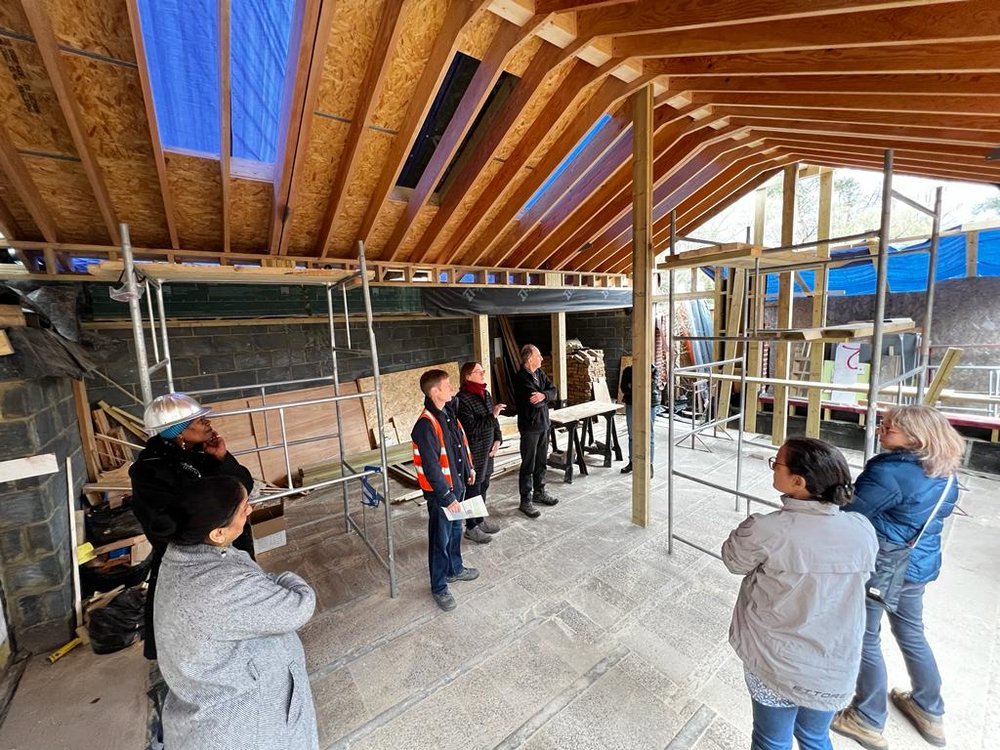
The pottery is finally beginning to take on its true identity and atmosphere. The building is nearing completion, with windows now giving an open view of the gardens, and internal fixtures and fittings making it more recognisable as a studio. In case you missed it, our video telling the ‘Inside story’ of the pottery, in which I interview Ed Burgess, the architect, about his design, is still available on YouTube.

For those involved in setting up the courses, deliveries of equipment and materials over the next few weeks are adding to the excitement and anticipation of opening the facility and welcoming the first students.

August will be a month for fundraising to pay for some essential equipment such as the kiln, wheels and pug mill.  If you have expressed an interest in supporting the pottery in any way, whether as a volunteer or by making a donation, please click on the following link to be taken directly to our crowdfunding page.

On the practical side of things, we are delighted that a technician has been appointed to help with the smooth running of the courses.  Birgit, one of the tutors, has been doing an amazing job, leading on the practical development of the pottery. Among her many organisational tasks and despite all the work involved preparing for her own shows up and down the country, she is busy making plaster batts for future students to use!


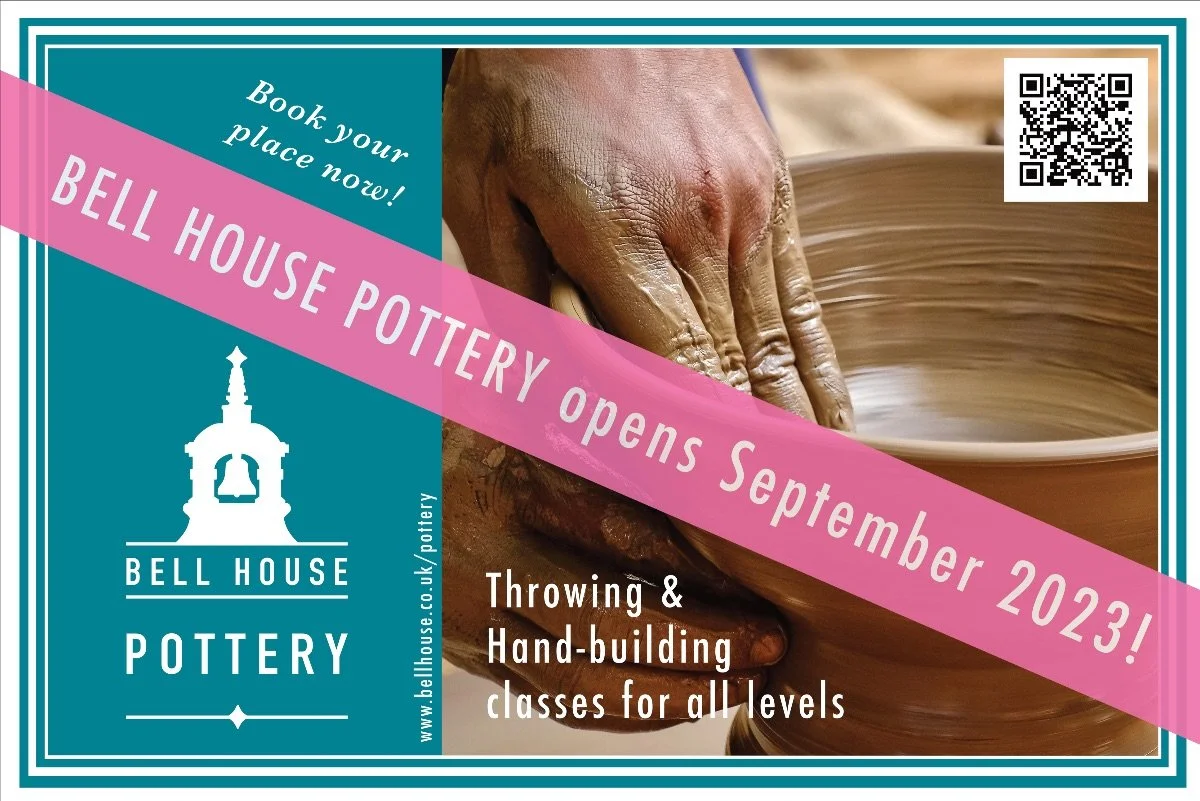
The pottery wheels and other equipment will be arriving at the end of August in good time for the pottery opening. The first courses will start on 19 September. In fact, plans are being developed as far ahead as Christmas, when we hope to join in the usual Dulwich Village festivities with a Bell House Pottery stall. There will also be some whole day masterclasses for more experienced potters. Watch this page to keep up to date with the new courses as they are finalised: www.bellhouse.co.uk/pottery

If you are still thinking about joining in with this new venture there are some spaces, particularly on afternoon sessions in the Autumn. Courses are also now available to book through to the end of November.

In the meantime, if you have already signed up for a class in September, a holiday is a great opportunity to find some inspiration for patterns and designs in objects and nature around you, as demonstrated in the design below- product of a holiday in Cornwall.


Pottery inspired screen print by Jim Belbin


The next news update will be the last before the opening. Time flies.

Jacqui Pick - Volunteer

August 2023

Bell House Autumn 2023 Newsletter


Welcome to the third of our seasonal newsletters. In this Autumn edition, you’ll find a selection of recent news and updates from Bell House, which we hope you will enjoy!


Spread the Word. Dyslexia is a Learning Difference.

Darwin told us: “It’s not the strongest nor the most intelligent species that will survive but those who can adapt to change”. This quote is regularly used to challenge businesses with the sign off - “can you adapt to change?”

Things have certainly changed and thankfully moved on from the early days of dyslexia diagnosis, when dyslexia was generally viewed through a negative lens. Instead of being perceived as a learning disorder, it is now more frequently accepted as a learning difference.

The strengths of the dyslexic brain may have evolved, as humans adapted to a changing environment. Darwin recognised that we need to learn new skills and acquire new habits in order to survive, and to be creative, finding novel solutions through exploration. People with dyslexia are traditionally no more or less intelligent than the general population - they just think differently. This different approach enables them to find new ways of seeing things and approaching problems.*

Despite a more positive understanding of dyslexia, we cannot underestimate the difficulties that people with dyslexia continue to face, particularly within a classroom environment, where there is often a strong emphasis on reading and writing, together with rote learning. Education is thankfully adapting, with the introduction of explorative learning through discovery, invention, creativity, new technology and the provision of specialist support - all of which contribute to more positive educational outcomes.

Whilst teaching and learning methodologies have undoubtedly evolved, dyslexia continues to often be misunderstood. A recent survey found that three-quarters of employees hide their dyslexia at work and some parents can still find it hard to accept that their children have dyslexia.

The 'label of Dyslexia' has definitely benefited from famous people speaking out over the years - just Google dyslexia and learning difficulties to see how many experiences are now being shared.

Such stories are heart-warming, inspirational and enlightening. As more adults and parents recognise how common dyslexia is – affecting approximately 10% of the UK population - the easier it becomes to understand the importance of supporting students and employees with dyslexia, and realising how this support will benefit our society.

And so we need to work hard to promote a better understanding of dyslexia as a learning difference and not as a learning disability, to help ensure that an identification of dyslexia will not cause embarrassment. Through open classroom discussion, today’s children already have a better understanding of dyslexia. We need to spread this understanding to help dyslexia lose its historical negative associations. Beyond any diagnosis or label, it is vital that schools and workplaces also respond to needs, and offer support in order to create environments where everyone can excel. 

Bell House has worked hard on doing just this, with this approach at the forefront of Bell House’s work over the many years in which it has supported Dyslexic parents and their children. On September 30th, from 10am to 4pm, Bell House will host its 5th annual Dyslexia Fair, with the theme of ‘Celebrating Strength and Supporting Challenges’.

*University of Cambridge - Dr Helen Taylor and Dr Martin Vestergaar


Pottery and the Art of Patience

Bell House Pottery is opening its doors in September 2023. This Community Pottery Studio will offer classes for all levels with a focus on enabling learning – which may require some student patience! The following quote from the Pottery team describes the studio’s ethos.

"It may surprise our students, but we want their takeaway from a class in the pottery studio to come from the process of learning the skills of working with clay. It’s not what they can ‘make to take away’ but rather what each student can ‘take away, emotionally and in self-learning’.”

Their hope is that students will develop an acceptance of “this is what I’m learning” and that “with help I’ll get there - in my own time.”

This collaborative and supportive environment will become a safe place for students to express some inner thoughts and ideas which we hope will lead to some very surprising conversations encouraged by this openness.

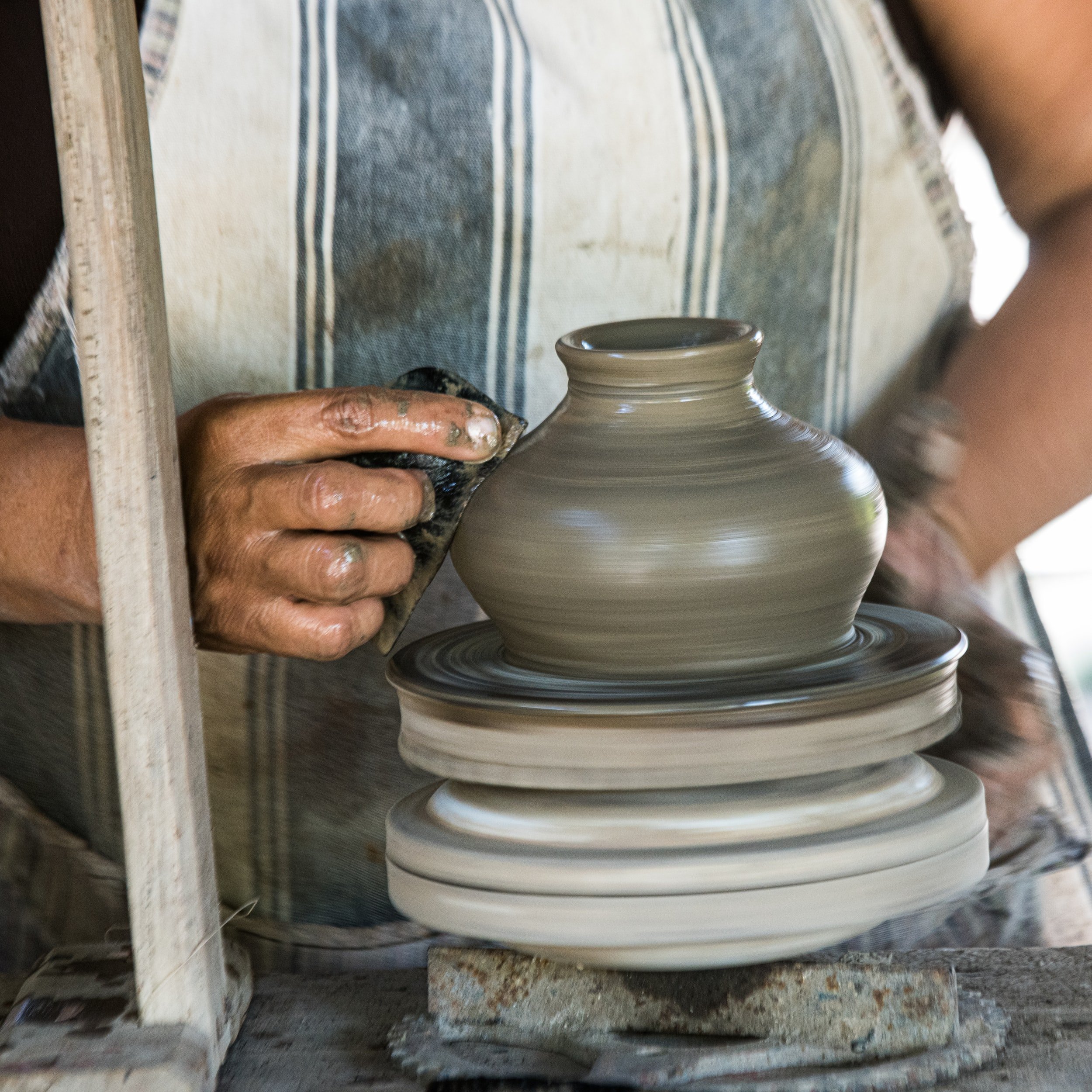
Ceramicists talk about their ‘core’ - this is not just about their inner beliefs and centre of creativity and ideas - but literally about their body core. You need strength to throw on a wheel and work the clay - often maintaining the same position for hours. Back, arm and shoulder aches are common ailments. A strong core and arm muscles are key to developing the correct potter’s posture! Experienced ceramicists say there is sanity in the repetition of their work - their muscle memory takes over and enables total absorption in the process. Conceptual thinking comes into play, only after the physical process.

Working with clay takes patience - to learn the skills and tools of pottery, to build up the muscles and muscle memory, to learn that the work will come from your central core, - your centre - from your physical strength and emotionally from within. And patience for the practical processes of building, throwing, firing and glazing.

The teachers at the Community Pottery state that their primary goal is to teach the practice and process of ceramics. And when these skills have become embedded, each student will begin to express themselves. And importantly learn that not everything they produce is worth saving. The very process of accepting this ‘waste’ and then recycling the clay, is most liberating!

And how is clay recycled? With a Pug Mill - which happens to be most expensive purchase of the Community Pottery Studio but will be worth every penny!

Teachers running classes this Autumn include:

  • Birgit Pohl - birgitpohlceramice.com

  • Joanna Szwej-Hawkin - asiaceramics.co.uk

  • Kyra Stratoudaki - @kyrastratoudaki_ceramics 

  • Schneider - schneiderschneider.com 


Bell House New Print Room & Bindery

Whilst we’ve been applying the final touches to the new-build Pottery Studio in the Lodge, we’ve also been busy down in the basement of Bell House. This latest project has involved lorries delivering strange heavy lumps of metal to be lowered down the concrete stairs by teams of skilled men using chains and ropes.

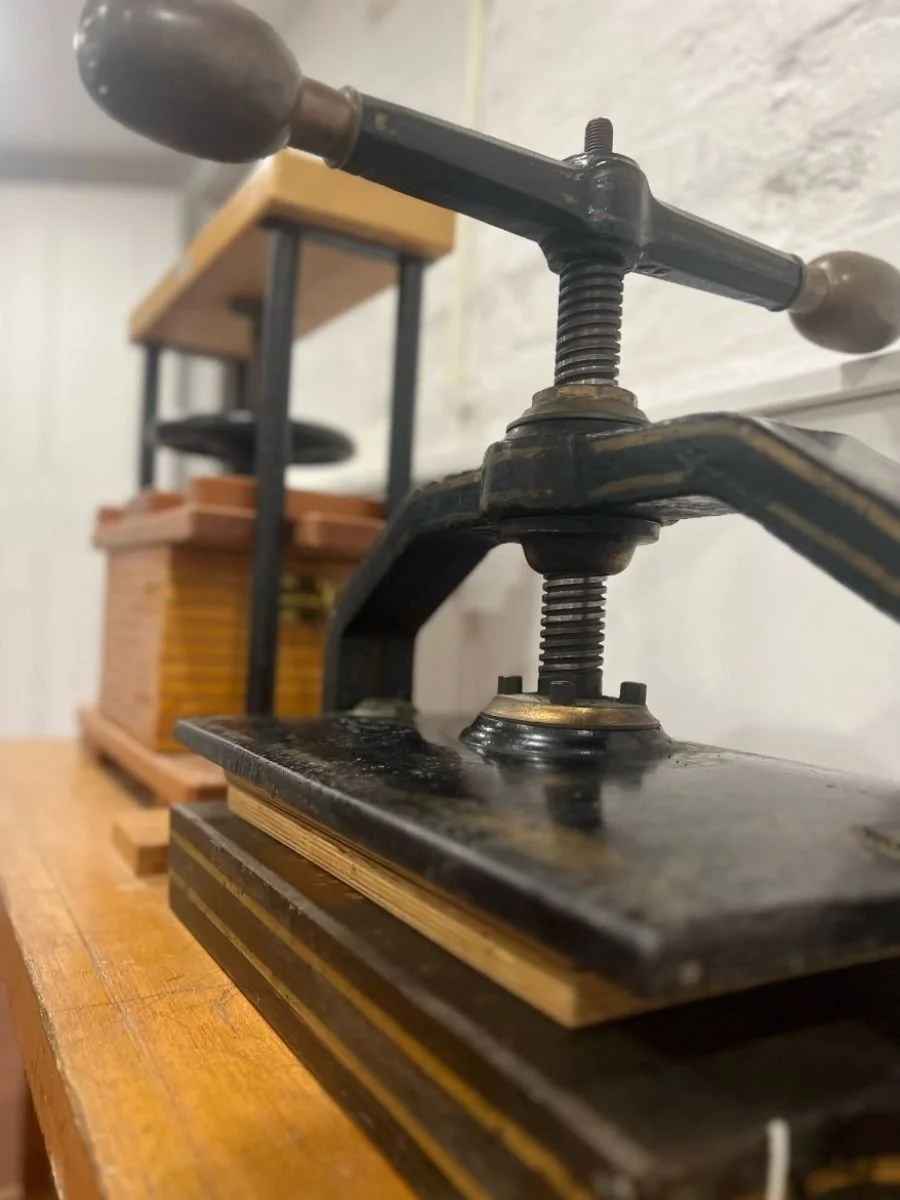
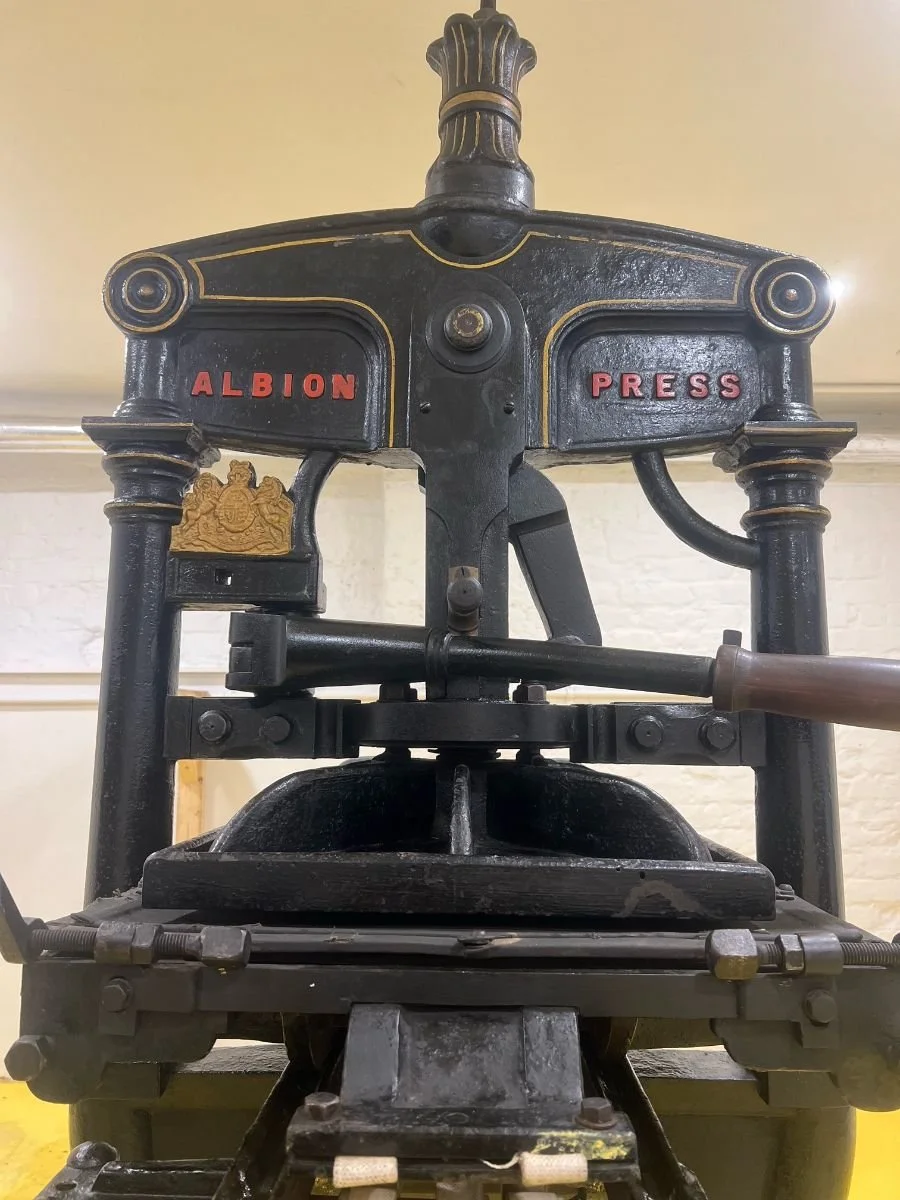
Bell House is thrilled to announce an exciting new addition that is sure to captivate enthusiasts of traditional craftsmanship and vintage printing techniques. Two of the rooms in the basement are being transformed into what is being named the ‘Bell House Print Room & Bindery’. A home to a treasure trove of vintage letterpress equipment and book-binding machinery, including an exquisite 1860s Albion printing press, donated by the Type Archive in Stockwell and a whole suite of book-binding equipment from Dulwich College.

Individually these elements are things of wonder but put together they will lift what we can do.

Simon Trewin and Tania Hurt-Newton are the people behind the Print Room & Bindery initiative. They are experts and enthusiasts of the heritage crafts of letter printing and book-binding. If you’ve not thought much about what’s involved in these ancient crafts, it's worth reflecting on these insights from Tania:

“It’s very physical; there’s no rushing; no instant results; it needs a lot of planning and concentration but it’s so very satisfying. It suits people of all interests because all it requires is some logical thinking and an idea which can be original or borrowed. The process of working things out opens the mind to further possibilities. So there’s something for everyone.”

The Print Room & Bindery will provide more space, allowing visitors to attend a taster session or two, experiencing the history and connection to the past, offered by this new project.

Whilst we are hugely excited about the possibilities offered by the Print Room & Bindery, there is still much work to do to make the space fit for purpose so that we can welcome our visitors to this new world of creativity. It won’t be too long before the Grand Opening is announced – we hope it can be used in some way during our Dyslexia Fair on Saturday 30th September.

Pay a visit to view the work-in-progress and marvel at the wonders of historic technology!


The Albion Press

Bell House and the Garage Press have recently acquired an 1860s Albion printing press which was donated by the Type Archive in Stockwell.

The Albion Press is truly an object of wonder, which may even have a connection to the the local area. It was originally owned, by William Clowes and Co. who secured a contract to print the original catalogues for the Great Exhibition in Hyde Park. The company subsequently produced new catalogues once the exhibition moved to Crystal Palace. 

It may well be that Bell House’s Albion was part of that great endeavour - in which case it is even nicer to welcome it back to South East London!

People have also been asked whether Thomas Wright, the first owner of Bell House and a man who made his fortune from paper and print, would have recognised an Albion Press. The truth is that the Albion was created after Wright’s time a century earlier, but there's little doubt that he would have recognised many design elements and certainly all of the processes. As would the father of modern printing – Mr Gutenberg himself.

The Albion is undoubtedly a beautifully ornate machine that can, with minimal effort, print onto fabric, paper and probably wood. The process is simple and wonderfully satisfying. 

This latest addition to Bell House now needs a name! The Garage Press already has an 1880's Cropper 'Arab' Treadle Press named Gloria - we are welcoming name suggestions for our newly-arrived Albion press!


Pottery at Bell House

This Autumn saw Bell House running for the first time weekly Pottery classes guided by expert potters Ekta Chakraborty and Annie Antoine.

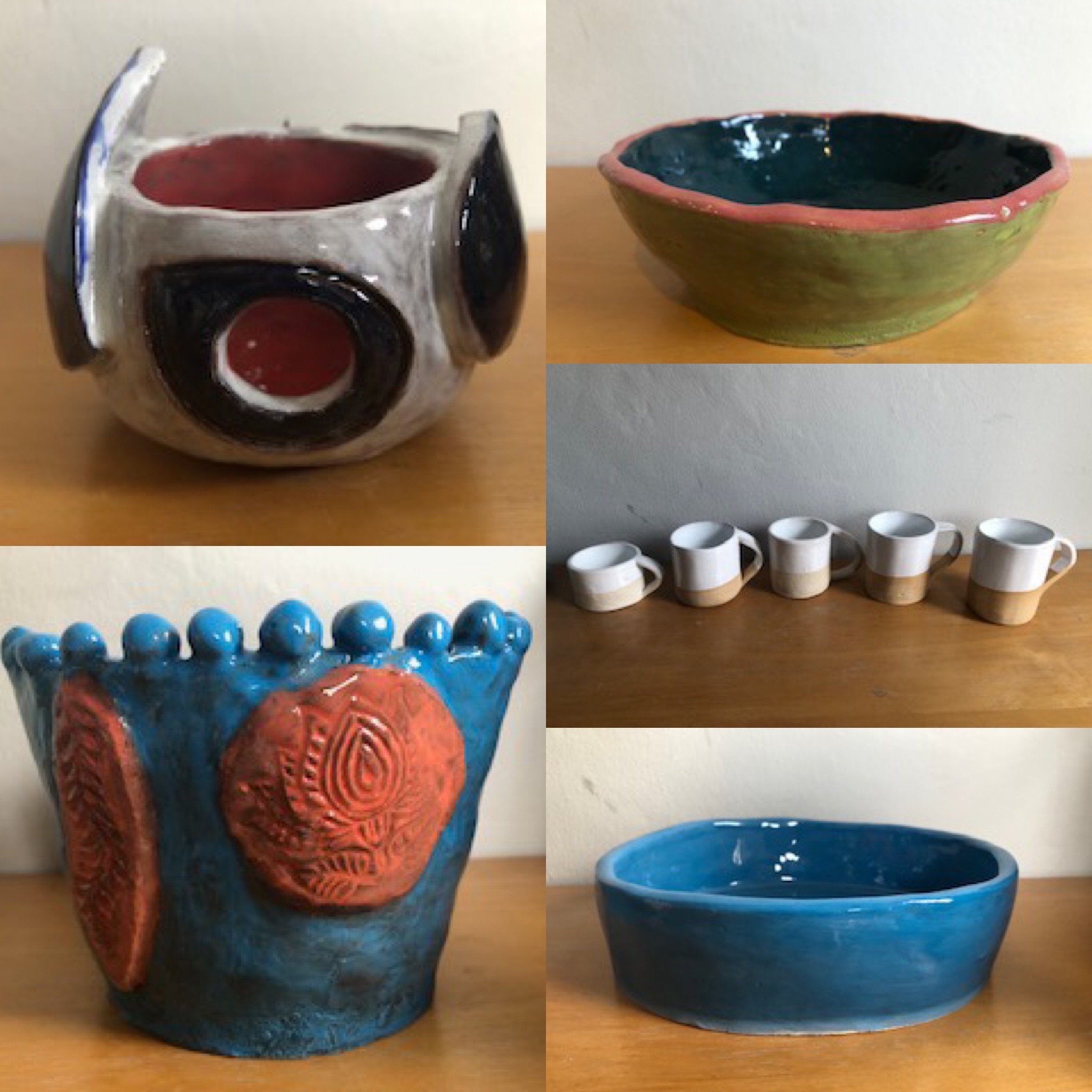
The classes have been buzzing - a hive of activity - friends made, conversations flowing, skills learnt and importantly work to show for their time spent. Everyone enjoyed getting their hands dirty working the clay and revelled in decorating their pieces.

All work has now been fired and the results really do speak for themselves.

Big plans are afoot.

These classes were the first toe in the water for pottery at Bell House. 

We are currently building a Community Pottery Studio in the garden which is scheduled to be completed in July 2023. There will be a new and larger kiln, half a dozen wheels as well as every other piece of equipment needed to run a thriving and dynamic pottery space. Our tutors Ekta and Annie have been supporting and advising with the build  as well as several local professional potters including Julian Stair and Birgit Pohl

There are no community pottery studios nearby. Bell House wants their studio to be not only for building pottery but also for building friendships.

The studio will be used in the daytime, evenings and weekends so that all our local community can enjoy potting!

In the meantime, Ekta and Annie say: “We want to be able to grow our workshops over the next year to a number of days during the week and turn the pottery into a friendly, creative hub with regular, repeat, diverse participants.”

The new classes for 2023 are now available to book - go to our events page to learn more.

We also look forward to interviewing Ekta and Annie in the new year to find our more about their love of pottery and to hear about the building progress of Pottery studio.

But in case you need some more persuading to sign up for a pottery class - this is what Annie and Ekta say about working with clay.

“Clay is a great medium as it’s so tactile and very forgiving with mistakes. Nothing ever goes to waste, everything is recycled. It’s grounding and a mindful practice and also known to be beneficial for people on the spectrum or with ADHD.

Not only do you gain a new skill and hopefully learn something about the science of clay but you also devote time to yourself and your friends. It’s a slow process to be able to create an object with clay and results are generally never exactly the same and so this encourages the potter to enjoy the process, slow themselves down and focus!”