
All short films
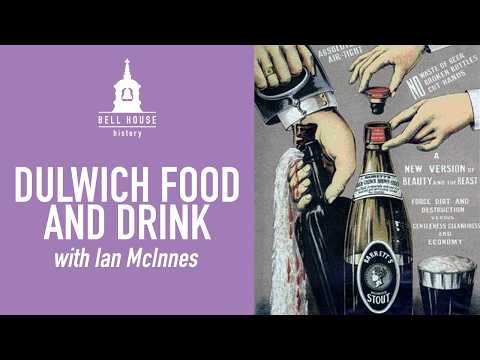
Dulwich Food and Drink
Over the last two hundred years many Dulwich residents have been in the forefront of the food and drink industries. Bovril and the Vestey's meat business may be the best known but there are countless others ranging from brewers to lemonade and mineral water producers, and fish paste to mustard manufacturers. There were major names in sugar, ships biscuits, and tea, and there were also our restauranteurs, two of whom funded the English cricket team's first to tour Australia in 1861/62.
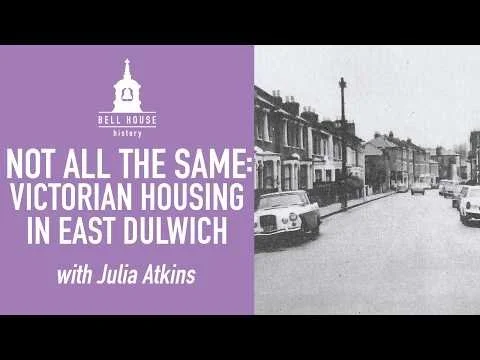
Not All the Same: Victorian Housing in East Dulwich
In 2017 Brian Green wrote: ‘In East Dulwich, when people walk down the street, there is a tendency to think all the houses look alike. But look closer and you’ll see they are not. There will be a row of houses with a group of four, a group of twelve or a group of twenty, and that is a clue that they were all built by different builders, and they’ll all have their own little architectural details.’
Based on research by local historian Julia Atkins in a small study area of East Dulwich, this talk 'looks closer'. It reveals a typology of the houses in the area, how they have been lived in, why and how they have survived and what is happening to them in the 2020s.
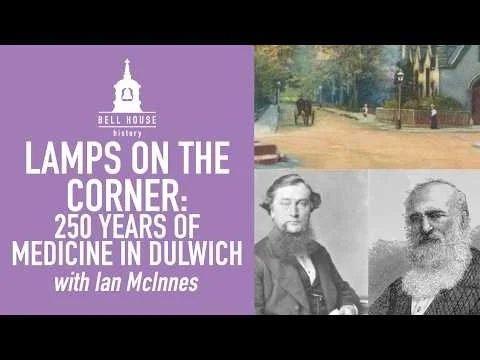
Lamps on the Corner: 250 Years of Medicine in Dulwich
For generations, a red lamp on a Dulwich street corner was a sign of medical help nearby because doctors made themselves known by hanging them outside their houses, 90% of which were on street corners. This online talk by Dulwich Society Local History Chair Ian McInnes explores why medical practices clustered on corners, how patients found help after dark, and tells us the everyday history of medicine in Dulwich.
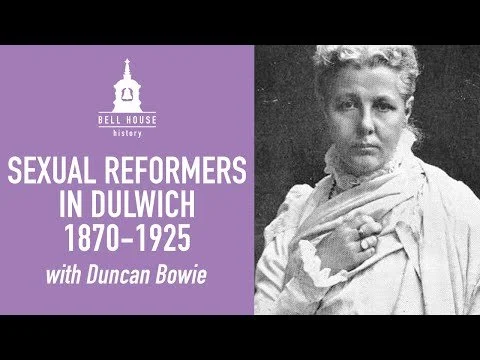
Sexual Reformers in Dulwich 1870-1925
Discover the unexpected radicals of Dulwich at this online illustrated talk. Figures like Annie Besant, Havelock Ellis, Alison Neilans and Charles and Alice Vickery Drysdale lived here, challenging Victorian boundaries and reshaping ideas about sexuality and personal freedom. Join historian Duncan Bowie for a revealing, lively talk that uncovers just how surprising Dulwich’s past really is.
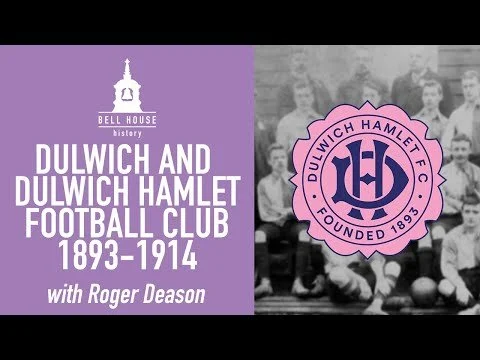
Dulwich and Dulwich Hamlet Football Club 1893-1914
Discover a fascinating slice of Dulwich’s past with historian Roger Deason who will explore how late-Victorian and Edwardian Dulwich shaped the community and people behind what would become Dulwich Hamlet FC. This illustrated online talk uncovers stories of local residents, landmarks, and social life in the years around the forming of the club, offering a unique window into Dulwich at the turn of the 20th century.
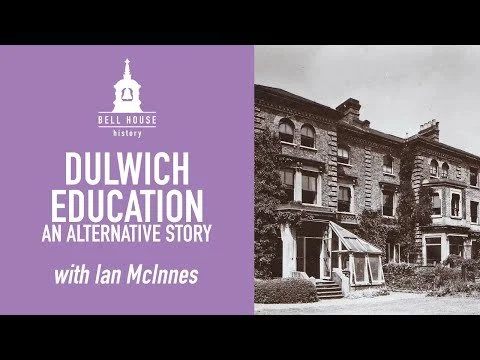
Dulwich Education: An Alternative Story
Education has been Dulwich's main business since the mid 19th century, but the Foundation Schools are just one part of the story. Join Ian McInnes in this illustrated online talk to learn more about Dulwich's other privately-owned prep schools, dame schools, and crammers - two of whom, the former Dulwich College Prep and Oakfield, have recently celebrated their 140th anniversaries.
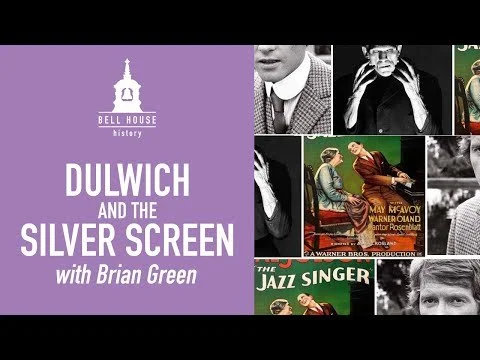
Dulwich and the Silver Screen
Discover Dulwich's connection with cinema's first 'Talkie' - The Jazz Singer; the early days of film making at the Gaumont outdoor film studio on Dog Kennel Hill and the wealth of film stars ranging from Boris Karloff, Peter Cushing, Rosamund John to Michael Crawford and a host of actors who have lived here. Join local historian Brian Green who combines a lifetime’s collection of images of past Dulwich together with first-hand memories and unparalleled research knowledge. This online illustrated local history talk will open your eyes to Dulwich’s remarkable, and often forgotten, place in the history of cinema, from pioneering film studios to the celebrated actors who once called it home.
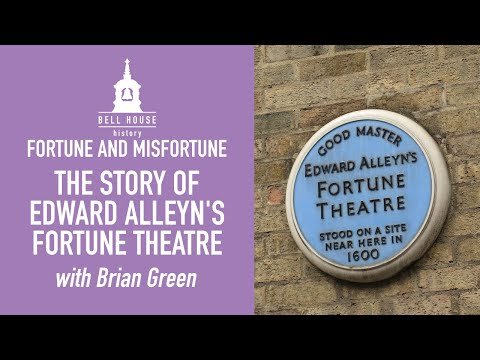
Fortune and Misfortune: The story of Edward Alleyn's Fortune Theatre
Despite accumulating wealth and fame as an actor and later establishing his College of God's Gift in Dulwich, which brought him social status, Edward Alleyn could not let go of his first love for the stage and the company of fellow actors. Local historian Brian Green will give an illustrated account of the highs and lows of Alleyn’s Fortune Theatre situated just beyond the City wall at Cripplegate. Using original detailed theatrical plans, biographies of its actors and the historical accounts of plague, political interference and ultimately the London Blitz which destroyed it, the talk explores Dulwich's 350 year long connection.
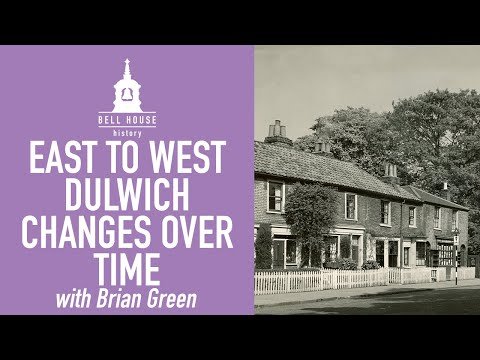
Through the Valley: East Dulwich to West Dulwich Changes Over Time
Dulwich is an interesting and attractive area of London with ample evidence of its past through the medium of documents, map illustrations and photographs. Yet the area is constantly changing, evolving over time because of wars, social, economic and technical change which have been its drivers. Local historian Brian Green attempts to explain some of these catalysts in this illustrated talk.
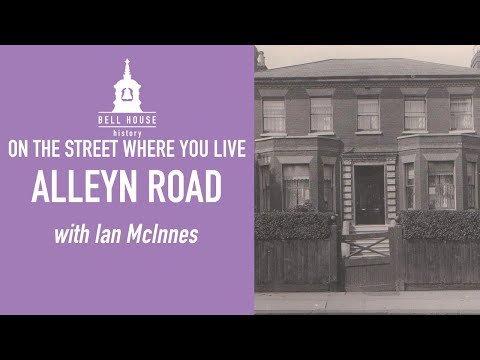
On the Street Where You Live: Alleyn Road
Alleyn Road has a pleasant wide aspect with large houses on both sides, it was not like that originally. Although building started in the 1860s, the final houses on the west side were not completed until the early 1890s. Prior to 1900, the east side consisted of the fences of the back gardens of the larger houses in Alleyn Park and it took almost a further 100 years for this side of the road to be fully developed, the last houses being completed in the 1990s. Ian McInnes' talk will cover not only the houses and their builders, but also a range of their occupiers, many of them notable, and interesting, characters.
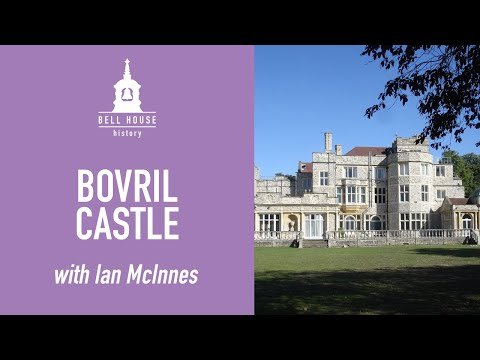
Bovril Castle: The Story of Kingswood House with Ian McInnes
Historic Kingswood House in South Dulwich, is now under the management of Kingswood Arts, and has become a not-for-profit cultural and community centre. The building we see today dates from the 1890s but there has been a house there since 1814. Ian McInnes will take the story up to WW2 covering the more notable and influential owners and its years as a Canadian Army hospital in WW1.
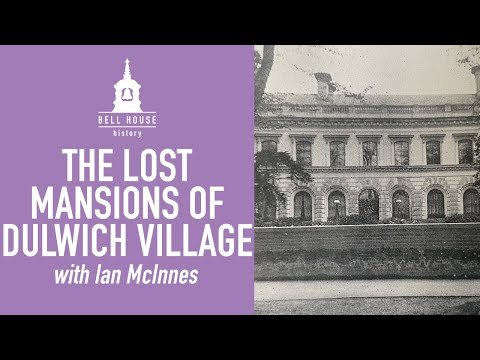
The Lost Mansions of Dulwich Village
Just over 100 years ago, the last of the huge old mansions on the northern side of Dulwich Village were demolished. This illustrated talk by Ian McInnes will cover all five, The Hall, Menival/Fairfield, Lake House/Chinese Cottage, the White House/St Austins and Beech House/Warigul along with their wealthy occupants, many of them influential Victorian entrepreneurs.