Bell House Spring 2026 Newsletter


The four seasons of 2025 have flashed by! We are excited to bring you the first of this year's quarterly newsletter with four new articles which we really hope you enjoy reading.


Diary Alert: Inaugural “Wayzgoose Celebration” planned for Bell House this year

by Simon Trewin, Print Room & Bindery
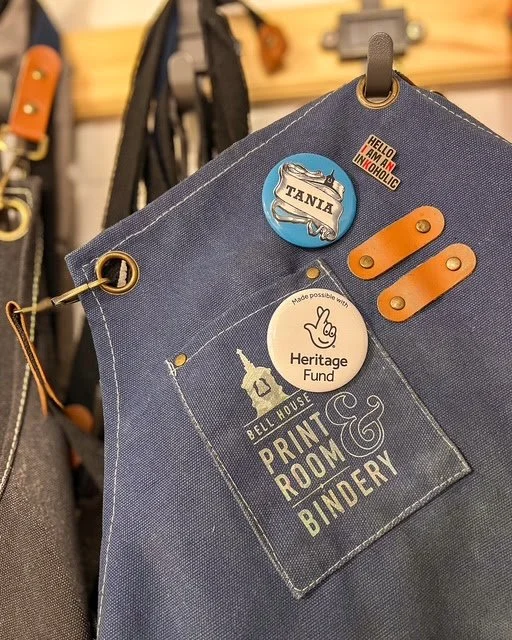
Photo credit: Tania Hurt-Newton

Walk down the old steps into the basement of Bell House and you’re met not by silence but by rhythm: the clatter of type, the sticky crackle of ink, the soft thump of paper meeting platen. It’s a sound that once echoed through towns across Britain, when printing presses were as common as corner shops. Today, though, that sound has almost vanished.

That’s why the news that the Bell House Print Room & Bindery, co-founded by Tania Hurt-Newton and I, has received a major grant from The National Lottery Heritage Fund feels so significant. The funding will allow us to expand the Bell House Print Room & Bindery and create a new home for endangered crafts such as letterpress, etching and bookbinding, collectively known as the Bell House Heritage Crafts Studio. It will also, crucially, allow us to expand our community reach.

The new funding means we can do far more than keep the lights on. We’ll be able to restore and preserve our presses, train volunteers, create new teaching spaces and host a celebratory Wayzgoose — the traditional printers’ fair. Most importantly, it means we can welcome people who might never otherwise discover this world of type and ink: children, older adults, and anyone facing barriers to creative opportunities.

I’ve seen it time and again. Someone comes in convinced they don’t have a creative bone in their body. Within minutes they’re setting their name in metal type, eyes narrowed in concentration. Then comes that first pull of the press, and suddenly their face lights up - a mixture of disbelief and delight.

'Unlocking creativity' is an overused phrase, but here it’s literal. We’ve seen retired teachers, teenagers and refugees all sitting around the same table, sharing rollers, jokes and cups of tea, producing something together that none of them could have done alone.

That’s what The National Lottery Heritage Fund is really supporting — not just machines and materials, but possibility. Thanks to players everywhere, we can preserve these skills and open them up to anyone who wants to learn.

One of my favourite recent visitors was a man in his seventies who arrived “just to watch.” Half an hour later he was at the press, grinning like a schoolboy. When he pulled his first print he said quietly, “I didn’t know I could still do something new.” That, to me, says everything.

We see this new phase not as preservation but continuation. The presses downstairs aren’t museum pieces; they’re instruments waiting to be played. Thanks to this grant, their song — and the creativity they inspire — will carry on for years to come.

We would love you to come and experience it for yourself when next at Bell House.

Please follow our instagram feed @intheprintroom and message [email protected] if you would like to organise a visit.
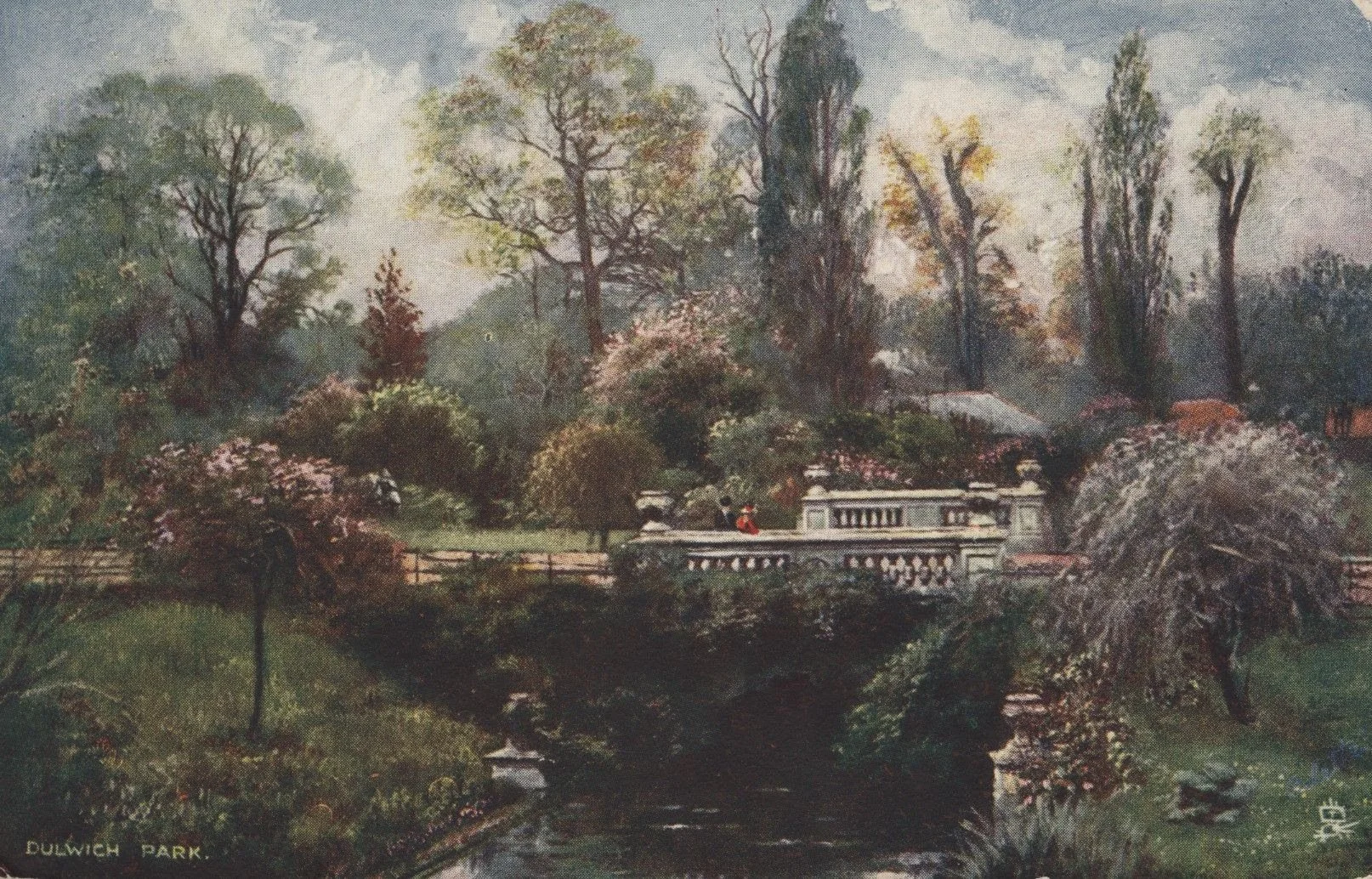

Photo credit: Dulwich Society

Did you know? 13 acres of the Bell House Garden were donated to help create Dulwich Park

by Sharon O’Connor, House Historian

Dulwich Park was created in the late 19th century as part of a wider movement to provide green public spaces for London’s rapidly growing population. Sir Francis Peek, a local businessman, philanthropist, and governor of the Dulwich Estate, strongly supported the creation of parks and had been working towards establishing one in Dulwich since 1872.

That year, he offered the Estate a large donation to help create a public park, but his proposal was rejected. Undeterred, Peek continued to negotiate with both the Estate, which owned the land, and the local authority. In 1885 the Estate agreed to sell around 70 acres, taken from local farms and the gardens of large houses along College Road and Dulwich Common, including Bell House.

Thirteen acres were taken from the Bell House garden to help form the park. The garden had been extensive, stretching to where the rivulet and boating lake now lie. However, the Gowan family, who lived at Bell House, still retained three and a half acres for their garden.

Some Dulwich residents opposed the creation of the park, fearing it would 'lessen exclusiveness' and become a 'playground of the poorest classes.' Sir James Douglass, who lived at Stella House, 11 College Road, and was also an Estate Governor, initially supported the scheme but later tried to prevent it from going ahead.

Charles Gowan of Bell House also had concerns. When his lease was amended due to the loss of land to the park, he requested annual contracts in case the park’s presence prompted him to move. The Dulwich Estate was sympathetic and renegotiated his lease on a year-by-year basis for several years.

He must have been reassured however, as the Gowan family remained at Bell House for another decade. Their smaller, though still substantial, garden remained a source of pride. In 1890 and 1891, their gardener, William Farley, won prizes for his begonias, gloxinias, and sweet peas at the Surrey Floricultural Show.

Bell House Garden continues as a source of pride - particularly for the volunteer gardeners who spend time there each week, and for the local residents who can enjoy the Open Garden each month, due to take place on Saturday, 7th March.

We’d like to end with a quote from George, a Bell House garden volunteer:
“We garden because we care about the future - it’s a vote of confidence in the future.”


Yasmin “tapping into her cheffing expertise to throw beautiful, bespoke plates”

by Jim Belben, Pottery Planning Group
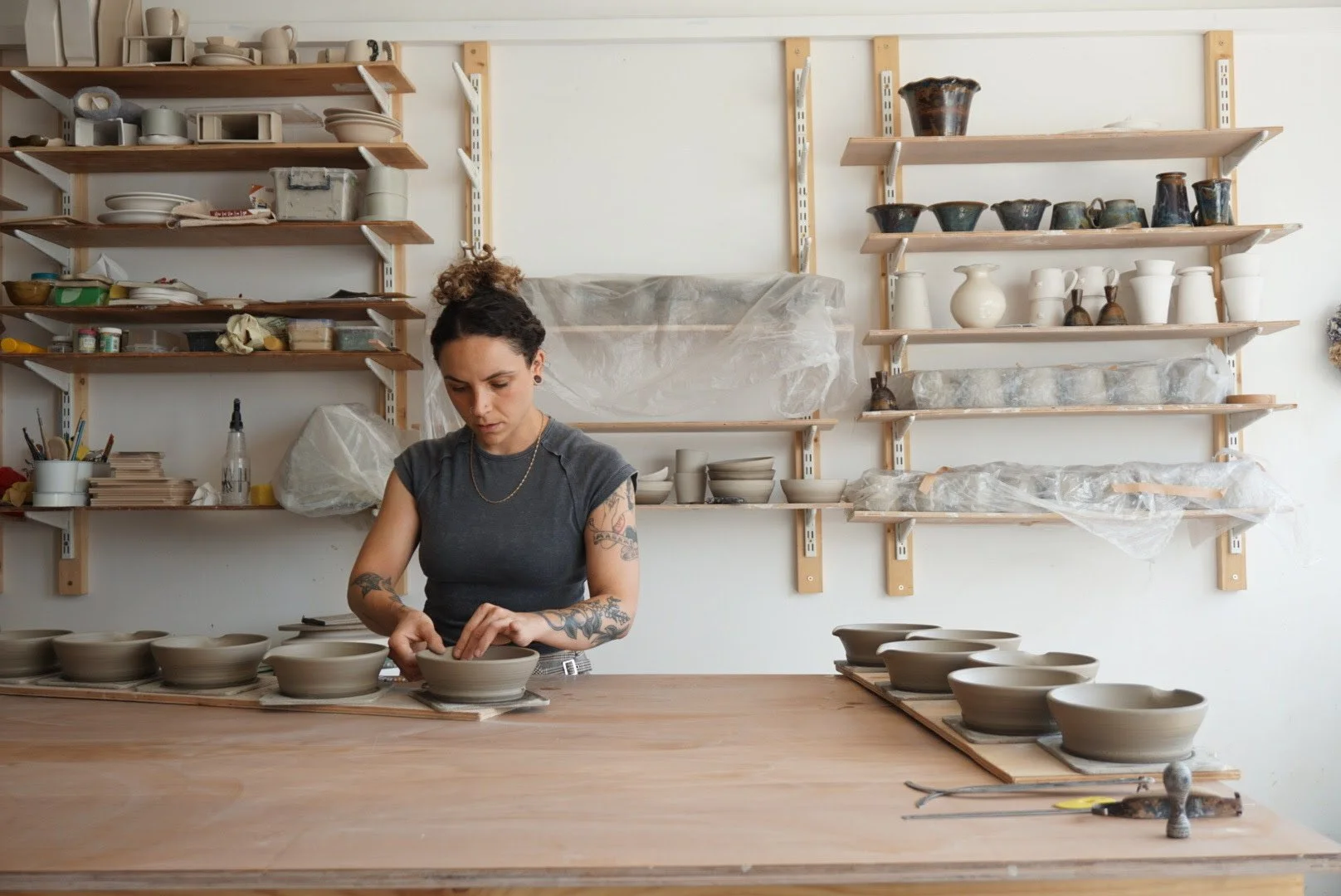
Photo credit: Yasmin Hamouda

We are thrilled to welcome a new member to the Bell House Pottery teaching team, Yasmin Hamouda.

Eureka moment

Yasmin has a distinctive story. She started out as a chef in Northern Ireland. She worked in hospitality for many years. She loved her work and was much in demand. She also ran her own supper clubs, offering creative tasting menus. 

Then she had what she describes as her Eureka moment. In 2018, she started a pottery evening class and soon realised that 

“I loved cooking, but I did not only want to make the food that went on the plate, I wanted to make the plate as well. So food and plate work together to enhance both. A conversation. That started me on the journey I am still travelling.”

Bespoke dinnerware

Yasmin took a pottery diploma in Bangor, NI, then came to London for a full-time ceramics degree at Central St Martins while still working full-time as a chef! 

Since graduating she has developed her own unique approach to making. She works with restaurants, learning about their ingredients and their environment and their culture, then designs and makes bespoke dinnerware to enhance their whole restaurant experience. 

Calm and peaceful

Yasmin came to Bell House thanks to our contacts at the nearby Kiln Rooms in Peckham – where several of our team have practiced. She teaches at the Kiln Rooms but has also taken on teaching an all-levels Wednesday afternoon throwing course, as well as regular taster sessions for beginners. 

“I love the Bell House Pottery. Such a nice area of course, and the studio is so calm and peaceful. Super clean, well managed, it’s easy to teach here. The views into the garden are wonderful, I am so looking forward to the summer when we can enjoy the garden into the late evenings.”

Yasmin finally left cheffing at the end of last year but intends to continue to offer her supper clubs – food and plate in harmony – in the future.

Upcoming courses

You can see more of Yasmin’s work on instagram @yasminhamoudastudio, and you can catch her on her next Throwing on the Wheel taster session on Friday, 6th March 6.30pm or 6-week course from Wednesday, 15th April 3pm


“Tell me and I forget, teach me and I remember, involve me and I learn.”

Benjamin Franklin

by Madeleine Hay, Dyslexia Committee
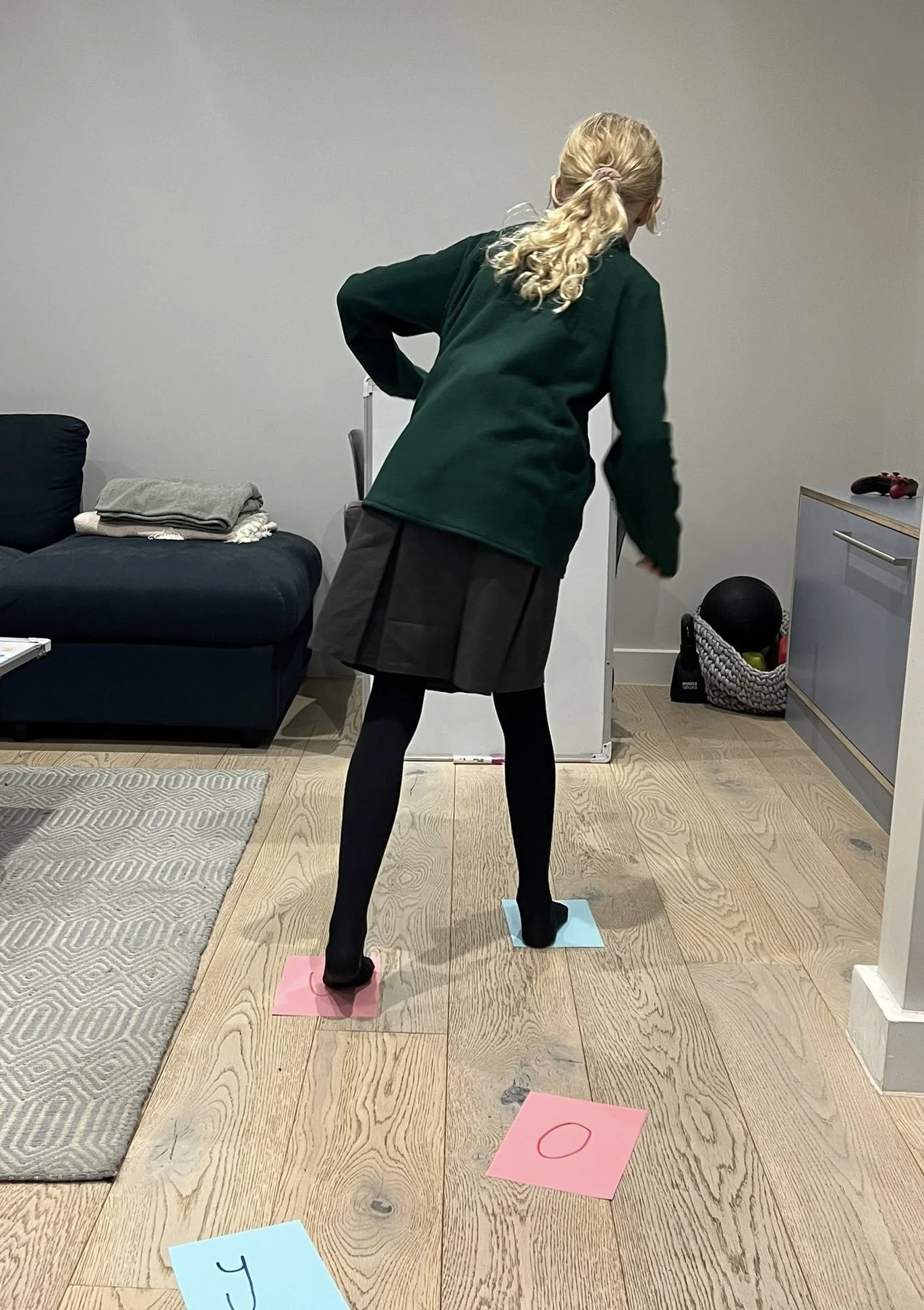
Jump. Hop. Punch the air. Lunge. Ballet steps. These probably aren’t the words that first come to mind when you think of dyslexia.  Yet, for our Bell House dyslexia specialists, movement and whole-body engagement are central to how we teach. Why? Well, before we even look at the research, we know something simple: people learn best when they are relaxed, engaged and feel a sense of ownership over their learning.

Sitting at a desk using a traditional pen and paper approach may not tick these boxes, particularly in neurodivergent learners. But give the same child a Harry Potter wand to write letters in the sky, invite them to write giant letters on paper and jump on them to spell words, take turns in punching out letters in the air, and you see true learning in action: engagement, an eagerness to participate and, most notably, a child who remembers what they have learnt. 

So, what does the research say about why adding movement has such a positive impact on learning? The most common signs of dyslexia include: difficulties with phonological processing (detecting and manipulating sounds in words), working memory, recognising spelling patterns and processing speed. One of the key challenges this creates is linking information — connecting sounds to letters, and letters to the spelling of whole words. 

However, when we move the body and engage a range of senses, we simultaneously stimulate several different areas of the brain, encouraging new connections to be made and long-lasting memories to be formed. Consequently, when learning involves seeing, hearing, saying and physically doing, multiple pathways are created to link the same piece of information. The more pathways the brain builds, the easier that learning is to retrieve later. This is neuroplasticity at work — the growth and reorganisation of brain connections that are essential when we learn new skills or absorb new information. Importantly, purposeful movement can also support regulation and attention; a calm, alert brain is far more receptive to new learning than one that feels stressed or fatigued. 

If you’re a parent, carer or education professional supporting a learner with reading and spelling, keep an eye on the Bell House updates and social media for the learning through movement sessions we are running in 2026.  Every dyslexic individual is exactly that – individual, so there is not a one-size-fits-all solution for how we build movement into learning.  The key is to work with a learner to find out how and when they want to move so that they feel in control of their learning.  Dopamine, the body’s powerful, ‘feel good’ chemical is then released in the body, meaning we’re setting a child up to succeed in their learning.  Get moving with your learner and build a great learning environment!

Join us for our next talk in the Dyslexia Series: Movement Therapy for Retained Primitive Reflexes by Learning DNA.
 

Bell House Winter 2024 Newsletter


In the 2024 Winter edition, you’ll find a selection of recent news and updates from Bell House, which we hope you will enjoy!


“Never throw anything out without asking …” Restoring a treasured house and finding treasure.

by Angus Hanton, Building Volunteer 

For the last few years Bell House Dulwich has spent any surplus funds on the restoration and development of its buildings and grounds. On day one, in September 2016, we found a sword of a type made by George Widdowson a metal craftsman who owned the house in the mid-19th century. Since then we have had many finds, both inside and out, guided by the words of Sharon O’Connor, the Bell House historian, who told us, “never throw out old stuff, even scraps of paper, without showing me first.”

While building the pottery studio and the room for the ground source heat pump we came across a perfectly intact skeleton of a pigeon which must have been over 50 years old, and digging in the garden revealed coins, bottles and a Victorian jar for hair gel. These finds inspired us to set up a small museum cupboard as well as the “Cabinet of Curiosities” in the rack that had been for the boys’ shoes and boots, when the building was a junior school boarding house.

Bell House is Grade II* listed so general maintenance and minor repairs do not need permission. Even so, we often ask for advice from Southwark and the Historic Houses Association when deciding which materials and fixings to use. For the brickwork we employ a lime mortar specialist, Matthew Wilson, who recently rebuilt the two largest chimneys making then vertical and shorter. He also brought along a few apprentices, who are learning preservation techniques.

Some of our recent restoration works have been functional such as Jarek’s rehabilitation of the basement so that it can be used for courses on the Albion Press, letterpress printing, and bookbinding. All works prompt detective work to find out how the rooms were used previously - in the cellar there is some Pink Floyd graffiti from the boys in the 1970s who used the cellar as their games den.

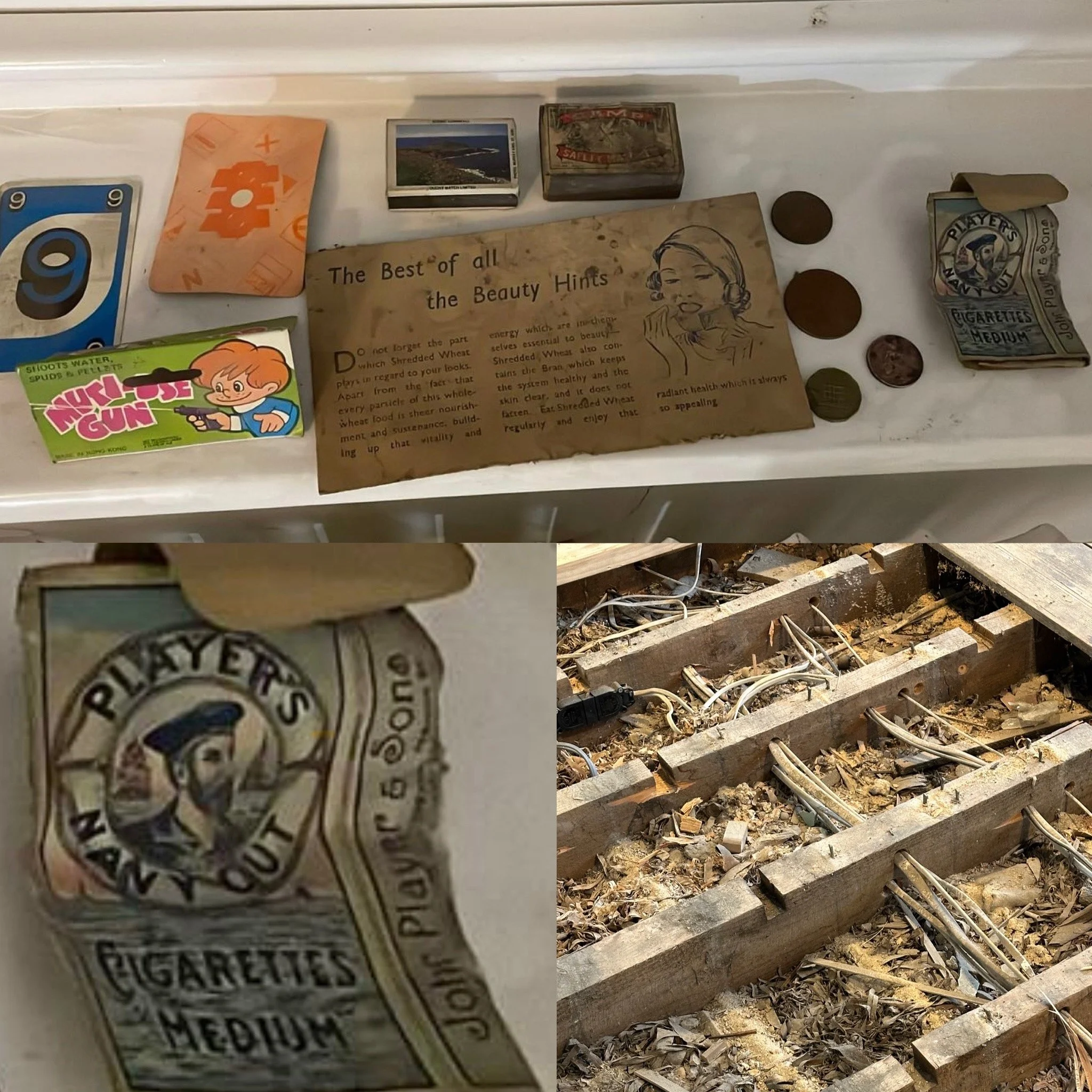
This winter Jarek and Merlin - who have been working on the house since the beginning (2016, not 1767) - took up dozens of floorboards in the Victorian extension on the North side so that we could clear the spaces between the joists and insulate for sound and heat. There was literally a skip-full of rubble and wood shavings to clear but amongst it we found lots of historical artefacts from the time when these rooms were used as dormitories: UNO cards, handwritten notes, and a set-square. There is an advert for shredded wheat entitled, “Best of all the beauty hints’, and packaging from a ‘Multi-Use gun” for firing bits of potatoes. A dozen or so old cigarette packets and old matchboxes had also been discarded, probably by the builders who put in the heating in 1946/7 or those who did the rewiring in the 1970s.  Show-me-first Sharon supplied some of these photos.


The Bell House Dyslexia Team announce their exciting ‘big’ plans for 2025

by Lydia Baldwin and the Dyslexia team

The Dyslexia Fair at the end of September was buzzing with the usual energy and positivity, as we welcomed nearly 400 visitors in glorious sunshine. This year’s programme explicitly reflected the rapidly growing recognition that Dyslexia often sits alongside other Specific Learning Difficulties such as ADHD, Dyspraxia, Dyscalculia and ASD. Being aware of this likely ‘cooccurrence’ is one of the challenges – and opportunities - for parents and carers, specialists, educators and students.

After the fair, the Dyslexia team, which has expanded in the past year, held a strategy session to reflect on the fair and consider how our increased capacity may be put to best use in the coming year. We have agreed that our priority in 2025 is to expand Bell House’s reach within the local community, finding practical ways to bring local families and students to Bell House for advice, support and connection.

In the immediate term, the dyslexia team is offering coffee mornings at local schools where a specialist will talk to parents about dyslexia and how they can support their children. One recent coffee morning was very well attended, and we have two more in the works.

We are continually looking for ways to bring local children, students and families to Bell House, building on the parenting workshops and touch-typing courses that will continue in 2025. The Fair’s Advice Clinics were as popular as ever, with the available slots booked out very quickly. So thanks to the expansion of the team, we will offer these on a monthly basis from January, with slots bookable in advance via the website. We will also be applying for funding to establish a bursary-based after school offer for children with dyslexia and literacy difficulties.

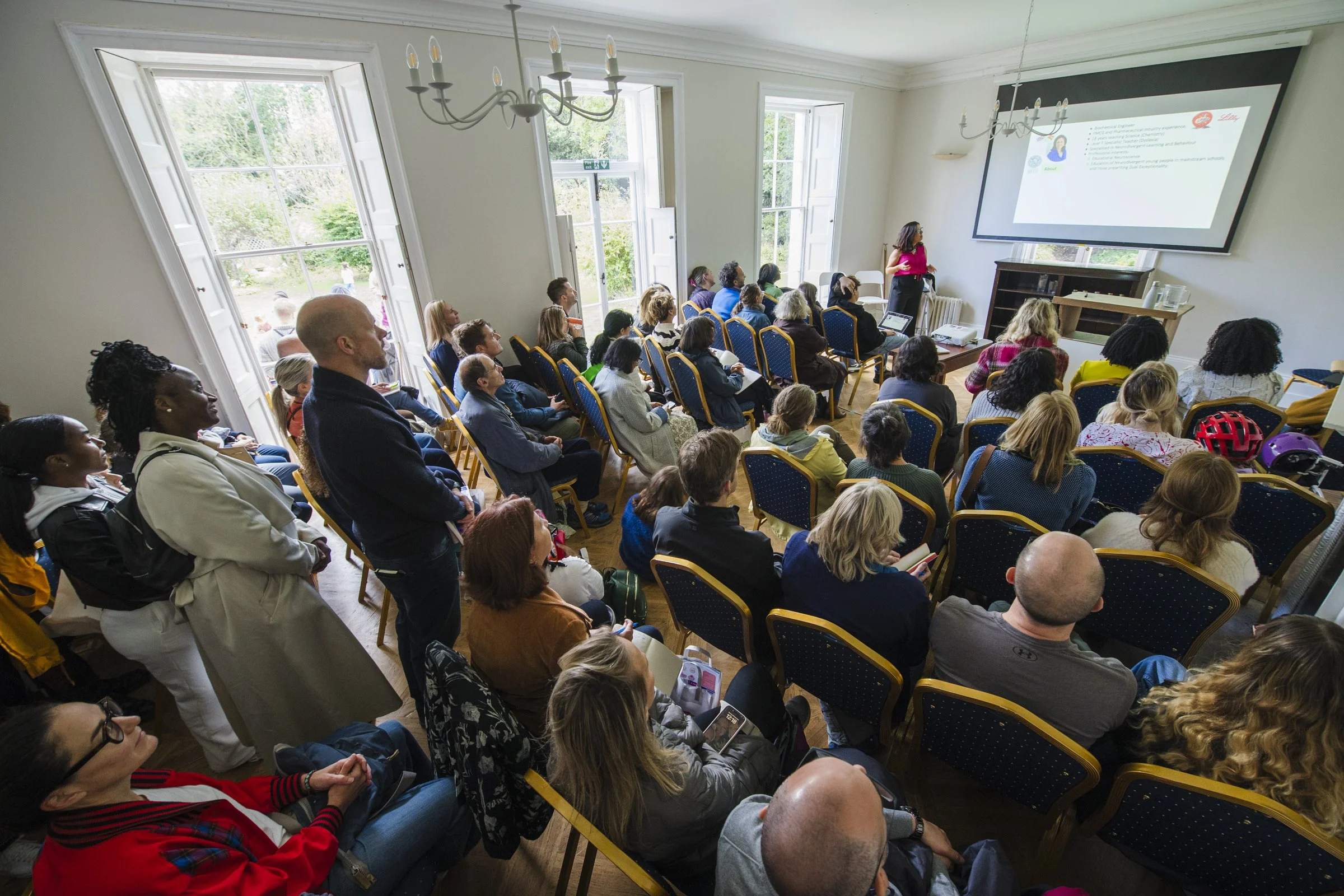
We had fantastic feedback about many of the speakers, some of whose talks were so popular that there was standing room only! (See photo above) We will be kicking off the 2025 Talks programme by inviting our 2024 Fair speakers to host an online talk, offering an opportunity for others who were not able to attend on the day. The ongoing programme will continue to look at the frequent ‘cooccurrence’ of dyslexia alongside other Specific Learning Difficulties and prioritise practical, cost-effective tips and strategies which parents and individuals can put into place. Finally, we will be increasing the number of screenings and assessments that Bell House can offer, thanks to the expansion of the team.

We would again like to thank everyone who attended the Fair and who provided such valuable feedback. We are excited about the year ahead and about welcoming even more people into the Bell House community to get support, advice and connection around dyslexia and other neurodivergent needs.


Great Excitement for the very first Bell House Writing Festival April 2025

by Raul Peschiera, Bell House Writing Team

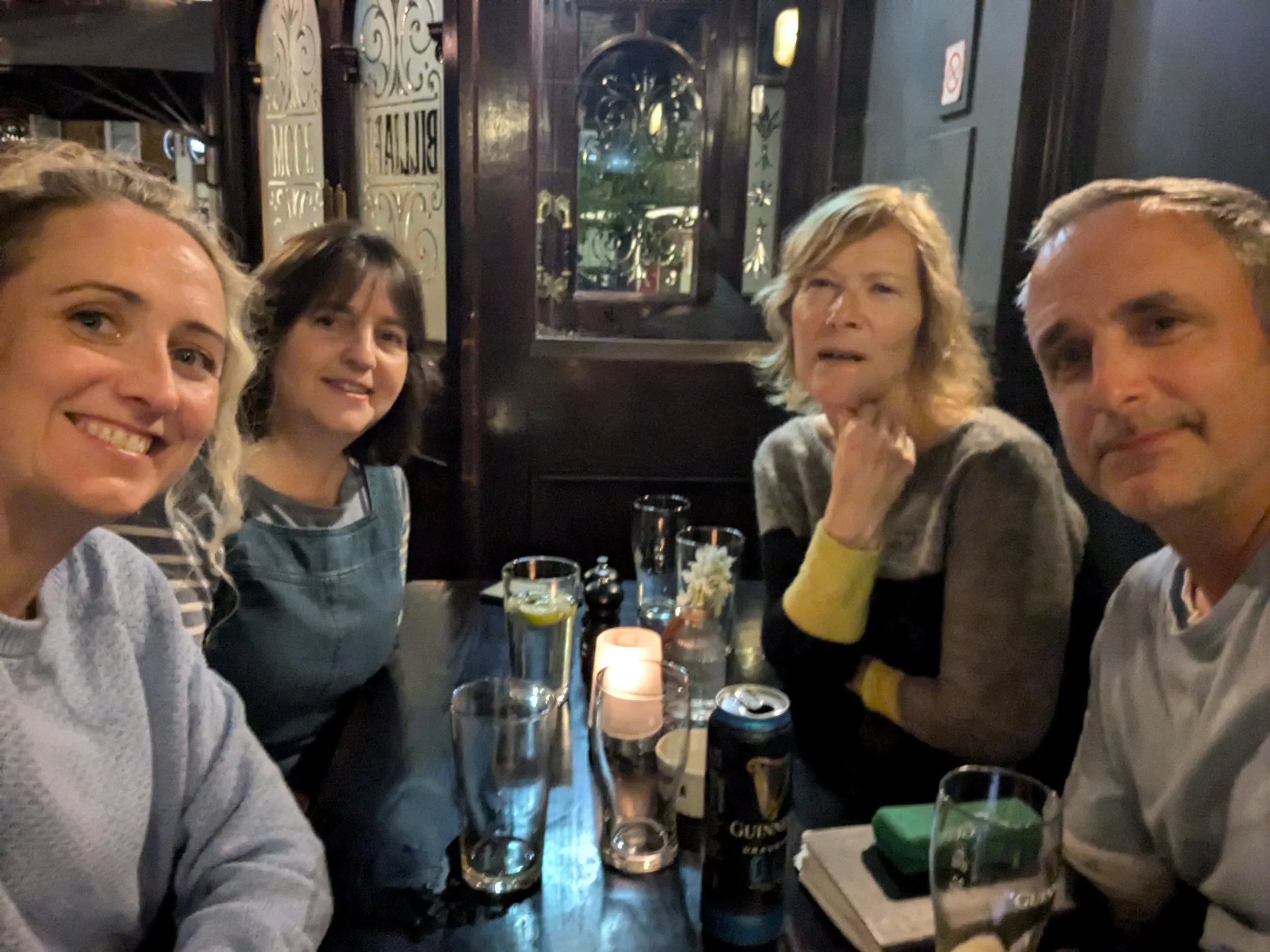
A highlight of the Bell House creative writing programme is its commitment to building a vibrant community. (See photo above.) Writers of all levels are invited to share their work, discuss challenges, and connect with others who are equally passionate about storytelling. On 26 April 2025, Bell House will host its first one-day Creative Writing Festival, celebrating fiction, poetry, and prose, with panel discussions, open mic sessions, workshops, and more.

Bell House’s creative writing programme is not only a place to develop technical skills but also a nurturing space where creativity flourishes. With courses led by experienced writers and instructors, Bell House is the ideal setting for anyone looking to start their writing journey or advance their existing craft, right in the heart of Dulwich. 

For beginners, Bell House provides foundational courses that introduce essential writing techniques, including character development, plot structuring, suspense, narrative style, and the basics of poetry. These sessions are perfect for those looking to explore creative writing for the first time, rekindle a dormant passion, or complete a cherished work in progress. Classes include writing exercises, group discussions, and gentle feedback, allowing new writers to feel encouraged as they navigate the creative process.

Experienced writers can delve into advanced workshops focusing on areas like dialogue, scene-building, descriptive prose, and manuscript polishing. These courses include specialised sessions on honing voice and style, helping writers refine their craft and deepen their storytelling abilities. Peer review and instructor feedback play a key role in these classes, enabling participants to gain fresh insights and discover new ways to enhance their writing. Participants from the storytelling course have now set up their own autonomous writers’ group, meeting once a month.

Bell House also offers focused poetry writing workshops, catering to both new poets and those looking to expand their poetic skills. These workshops explore elements such as rhythm, imagery, and structure, encouraging writers to experiment with poetic forms and discover their unique approach to poetry. Whether participants wish to craft free-verse or try their hand at more poetic forms, such as sonnets and ballads, each session provides a space for creative exploration and self-expression.

The creative writing programme at Bell House offers workshops designed to inspire, challenge, and support writers at all stages of their journey. Set in the welcoming, historic Bell House, our courses foster creativity in a supportive and collaborative environment. Each session is crafted to help participants expand their skills, build confidence, and unlock their unique voice.

Join us to find your voice, explore new genres, and connect with a welcoming community of writers.


“Have you read the one about the “Parable of the Vinegar?”

by Sharon O’Connor, Bell House Historian

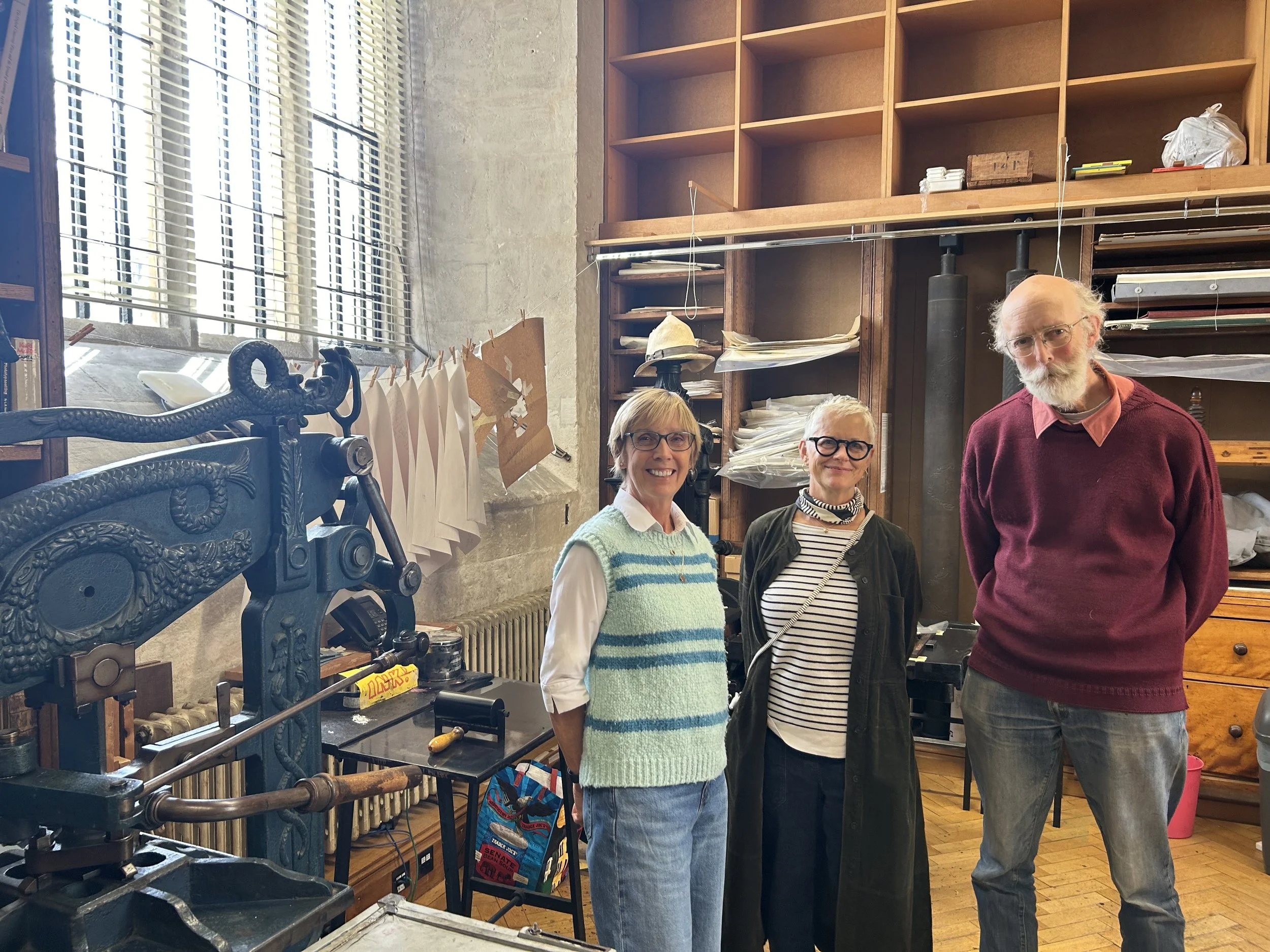
Bell House volunteers Tania and Sharon recently visited Oxford to follow in Thomas Wright’s footsteps, to see where he made the fortune that built Bell House and meet with university staff. Above is a photo of them with Richard Lawrence, Superintendent of The Bibliographical Press at the Bodleian Library, Oxford University - (as Sharon says: “They do like fancy titles!”)

Thomas Wright made his fortune from paper and books. That makes it all the more fitting that we now have a letterpress studio and a book bindery at Bell House. And what is extraordinary is that during their visit, Tania and Sharon were able to give the Oxford University Press staff new details about Thomas Wright’s printing techniques!

In 1765 his firm, Wright & Gill, won the contract to print religious books for Oxford University, when Oxford dismissed the previous contractors for printing books riddled with errors. One book was mocked as the ‘vinegar bible’, because the parable of the vineyard was printed as the parable of the vinegar. 

Thomas Wright’s books were popular and within two years of winning the contract he had earnt enough to build Bell House.

Wright & Gill printed in the Clarendon Building which still stands opposite the Bodleian Library and there were ‘large and elegant’ apartments for entertaining university VIPs. Their bible became the standard Oxford text. It has a modern style with simplified spelling, fewer capital letters. The more important books within the bible begin on the right-hand page, resulting in extra white space - unusual for the time - given paper was expensive but making for a more visually pleasing and easier to navigate book. 

During their visit to Oxford, Tania and Sharon spent time in the historic print workshop, now housed in the Schola Musicae, tucked away in the Bodleian Old Library quadrangle. The room has the original 17th century stands that Thomas Wright’s workers used, with their upper case for storing capital letters and their lower case for small letters and punctuation. Like Simon and Tania in our print room, the Oxford printers use innovative materials to print, even toy bricks! Tania talked about print activities for schoolchildren and swapped useful tips.

Tania and Sharon also visited the Oxford University Press and handled the extremely rare 17th century “Fell types” and usually kept securely locked away! (“Fell Types” is a collection of typographic materials assembled for The Oxford University Press by Dr John Fell,  Bishop of Oxford, educator, author, editor and typographer.)

Our volunteers saw Oxford’s almanacs, like the ones Thomas Wright made in London. (Oxford University Press had a monopoly on publishing the annual almanacs for Oxford University from 1674 through to 2019.) 

Our printers are now planning even more workshops and events for Bell House so look out for those as they get booked up very quickly.


Bell House Autumn 2023 Newsletter


Welcome to the third of our seasonal newsletters. In this Autumn edition, you’ll find a selection of recent news and updates from Bell House, which we hope you will enjoy!


Spread the Word. Dyslexia is a Learning Difference.

Darwin told us: “It’s not the strongest nor the most intelligent species that will survive but those who can adapt to change”. This quote is regularly used to challenge businesses with the sign off - “can you adapt to change?”

Things have certainly changed and thankfully moved on from the early days of dyslexia diagnosis, when dyslexia was generally viewed through a negative lens. Instead of being perceived as a learning disorder, it is now more frequently accepted as a learning difference.

The strengths of the dyslexic brain may have evolved, as humans adapted to a changing environment. Darwin recognised that we need to learn new skills and acquire new habits in order to survive, and to be creative, finding novel solutions through exploration. People with dyslexia are traditionally no more or less intelligent than the general population - they just think differently. This different approach enables them to find new ways of seeing things and approaching problems.*

Despite a more positive understanding of dyslexia, we cannot underestimate the difficulties that people with dyslexia continue to face, particularly within a classroom environment, where there is often a strong emphasis on reading and writing, together with rote learning. Education is thankfully adapting, with the introduction of explorative learning through discovery, invention, creativity, new technology and the provision of specialist support - all of which contribute to more positive educational outcomes.

Whilst teaching and learning methodologies have undoubtedly evolved, dyslexia continues to often be misunderstood. A recent survey found that three-quarters of employees hide their dyslexia at work and some parents can still find it hard to accept that their children have dyslexia.

The 'label of Dyslexia' has definitely benefited from famous people speaking out over the years - just Google dyslexia and learning difficulties to see how many experiences are now being shared.

Such stories are heart-warming, inspirational and enlightening. As more adults and parents recognise how common dyslexia is – affecting approximately 10% of the UK population - the easier it becomes to understand the importance of supporting students and employees with dyslexia, and realising how this support will benefit our society.

And so we need to work hard to promote a better understanding of dyslexia as a learning difference and not as a learning disability, to help ensure that an identification of dyslexia will not cause embarrassment. Through open classroom discussion, today’s children already have a better understanding of dyslexia. We need to spread this understanding to help dyslexia lose its historical negative associations. Beyond any diagnosis or label, it is vital that schools and workplaces also respond to needs, and offer support in order to create environments where everyone can excel. 

Bell House has worked hard on doing just this, with this approach at the forefront of Bell House’s work over the many years in which it has supported Dyslexic parents and their children. On September 30th, from 10am to 4pm, Bell House will host its 5th annual Dyslexia Fair, with the theme of ‘Celebrating Strength and Supporting Challenges’.

*University of Cambridge - Dr Helen Taylor and Dr Martin Vestergaar


Pottery and the Art of Patience

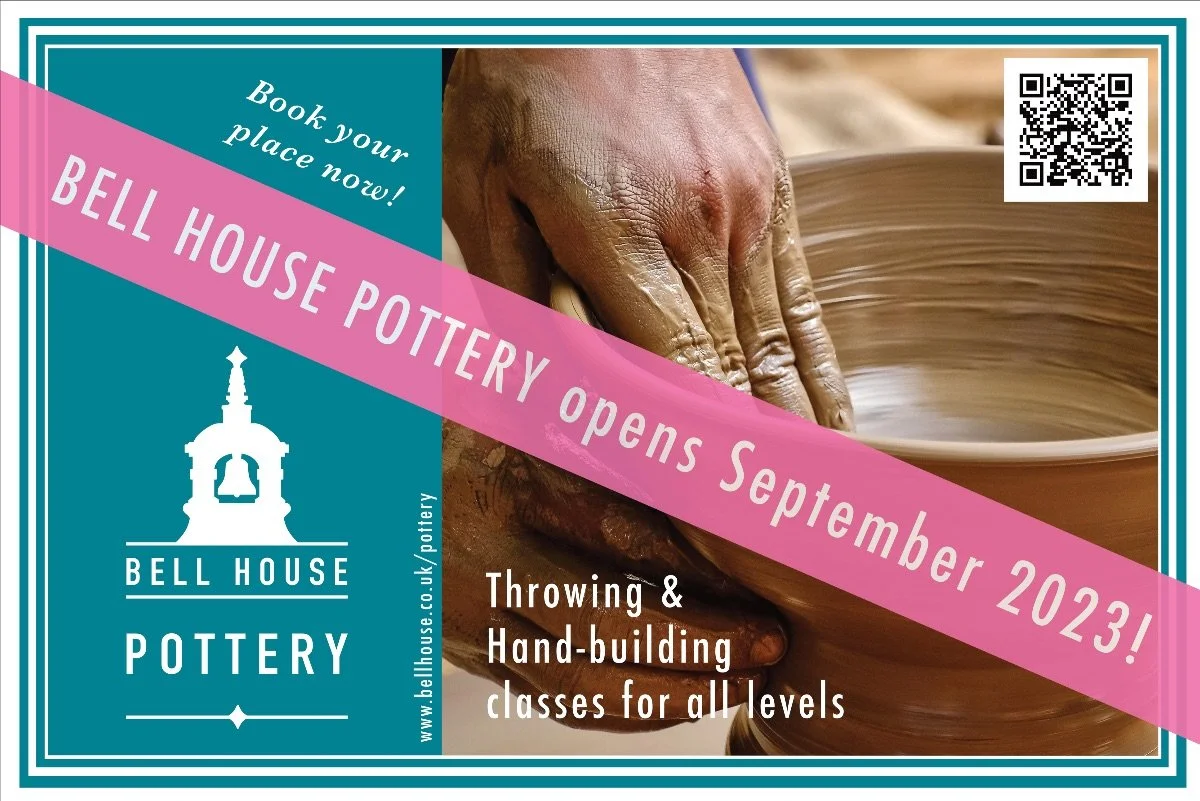
Bell House Pottery is opening its doors in September 2023. This Community Pottery Studio will offer classes for all levels with a focus on enabling learning – which may require some student patience! The following quote from the Pottery team describes the studio’s ethos.

"It may surprise our students, but we want their takeaway from a class in the pottery studio to come from the process of learning the skills of working with clay. It’s not what they can ‘make to take away’ but rather what each student can ‘take away, emotionally and in self-learning’.”

Their hope is that students will develop an acceptance of “this is what I’m learning” and that “with help I’ll get there - in my own time.”

This collaborative and supportive environment will become a safe place for students to express some inner thoughts and ideas which we hope will lead to some very surprising conversations encouraged by this openness.

Ceramicists talk about their ‘core’ - this is not just about their inner beliefs and centre of creativity and ideas - but literally about their body core. You need strength to throw on a wheel and work the clay - often maintaining the same position for hours. Back, arm and shoulder aches are common ailments. A strong core and arm muscles are key to developing the correct potter’s posture! Experienced ceramicists say there is sanity in the repetition of their work - their muscle memory takes over and enables total absorption in the process. Conceptual thinking comes into play, only after the physical process.

Working with clay takes patience - to learn the skills and tools of pottery, to build up the muscles and muscle memory, to learn that the work will come from your central core, - your centre - from your physical strength and emotionally from within. And patience for the practical processes of building, throwing, firing and glazing.

The teachers at the Community Pottery state that their primary goal is to teach the practice and process of ceramics. And when these skills have become embedded, each student will begin to express themselves. And importantly learn that not everything they produce is worth saving. The very process of accepting this ‘waste’ and then recycling the clay, is most liberating!

And how is clay recycled? With a Pug Mill - which happens to be most expensive purchase of the Community Pottery Studio but will be worth every penny!

Teachers running classes this Autumn include:

  • Birgit Pohl - birgitpohlceramice.com

  • Joanna Szwej-Hawkin - asiaceramics.co.uk

  • Kyra Stratoudaki - @kyrastratoudaki_ceramics 

  • Schneider - schneiderschneider.com 


Bell House New Print Room & Bindery

Whilst we’ve been applying the final touches to the new-build Pottery Studio in the Lodge, we’ve also been busy down in the basement of Bell House. This latest project has involved lorries delivering strange heavy lumps of metal to be lowered down the concrete stairs by teams of skilled men using chains and ropes.

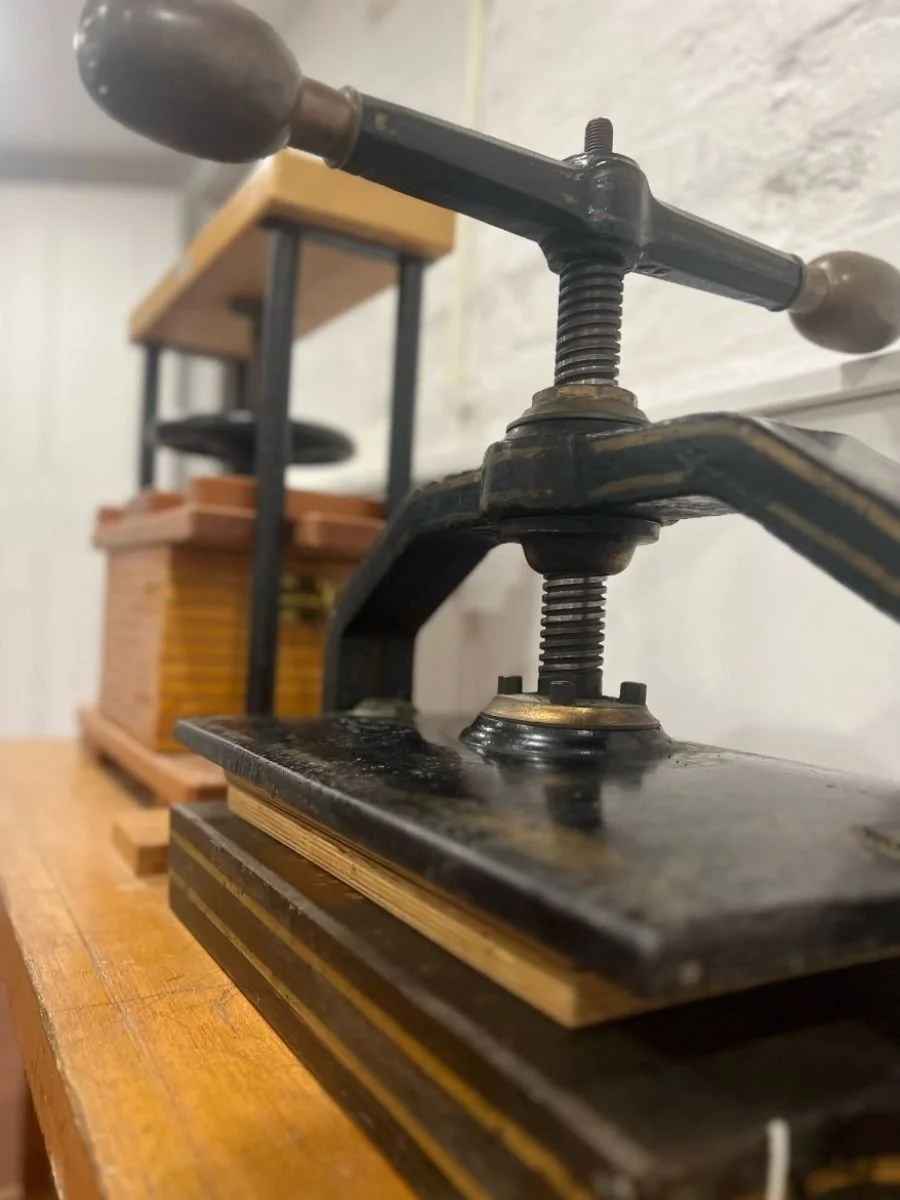
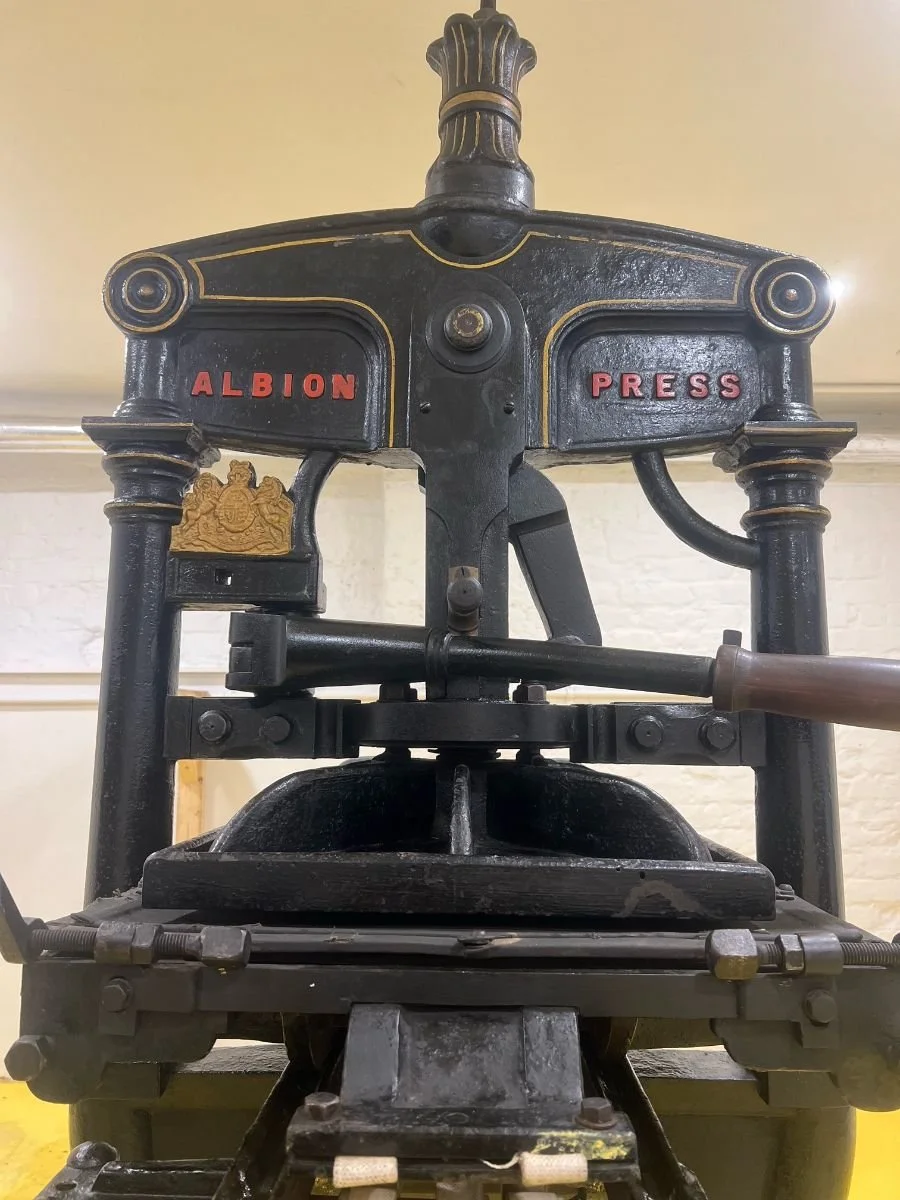
Bell House is thrilled to announce an exciting new addition that is sure to captivate enthusiasts of traditional craftsmanship and vintage printing techniques. Two of the rooms in the basement are being transformed into what is being named the ‘Bell House Print Room & Bindery’. A home to a treasure trove of vintage letterpress equipment and book-binding machinery, including an exquisite 1860s Albion printing press, donated by the Type Archive in Stockwell and a whole suite of book-binding equipment from Dulwich College.

Individually these elements are things of wonder but put together they will lift what we can do.

Simon Trewin and Tania Hurt-Newton are the people behind the Print Room & Bindery initiative. They are experts and enthusiasts of the heritage crafts of letter printing and book-binding. If you’ve not thought much about what’s involved in these ancient crafts, it's worth reflecting on these insights from Tania:

“It’s very physical; there’s no rushing; no instant results; it needs a lot of planning and concentration but it’s so very satisfying. It suits people of all interests because all it requires is some logical thinking and an idea which can be original or borrowed. The process of working things out opens the mind to further possibilities. So there’s something for everyone.”

The Print Room & Bindery will provide more space, allowing visitors to attend a taster session or two, experiencing the history and connection to the past, offered by this new project.

Whilst we are hugely excited about the possibilities offered by the Print Room & Bindery, there is still much work to do to make the space fit for purpose so that we can welcome our visitors to this new world of creativity. It won’t be too long before the Grand Opening is announced – we hope it can be used in some way during our Dyslexia Fair on Saturday 30th September.

Pay a visit to view the work-in-progress and marvel at the wonders of historic technology!


The Albion Press

Bell House and the Garage Press have recently acquired an 1860s Albion printing press which was donated by the Type Archive in Stockwell.

The Albion Press is truly an object of wonder, which may even have a connection to the the local area. It was originally owned, by William Clowes and Co. who secured a contract to print the original catalogues for the Great Exhibition in Hyde Park. The company subsequently produced new catalogues once the exhibition moved to Crystal Palace. 

It may well be that Bell House’s Albion was part of that great endeavour - in which case it is even nicer to welcome it back to South East London!

People have also been asked whether Thomas Wright, the first owner of Bell House and a man who made his fortune from paper and print, would have recognised an Albion Press. The truth is that the Albion was created after Wright’s time a century earlier, but there's little doubt that he would have recognised many design elements and certainly all of the processes. As would the father of modern printing – Mr Gutenberg himself.

The Albion is undoubtedly a beautifully ornate machine that can, with minimal effort, print onto fabric, paper and probably wood. The process is simple and wonderfully satisfying. 

This latest addition to Bell House now needs a name! The Garage Press already has an 1880's Cropper 'Arab' Treadle Press named Gloria - we are welcoming name suggestions for our newly-arrived Albion press!