Bell House Summer 2026 Newsletter


Welcome! In this Summer newsletter we celebrate 10 years since Bell House opened its doors as a charity. Here’s just a few glimpses of what we have achieved so far. 


Bell House Dulwich at 10: Education and Community

by Sharon O’Connor
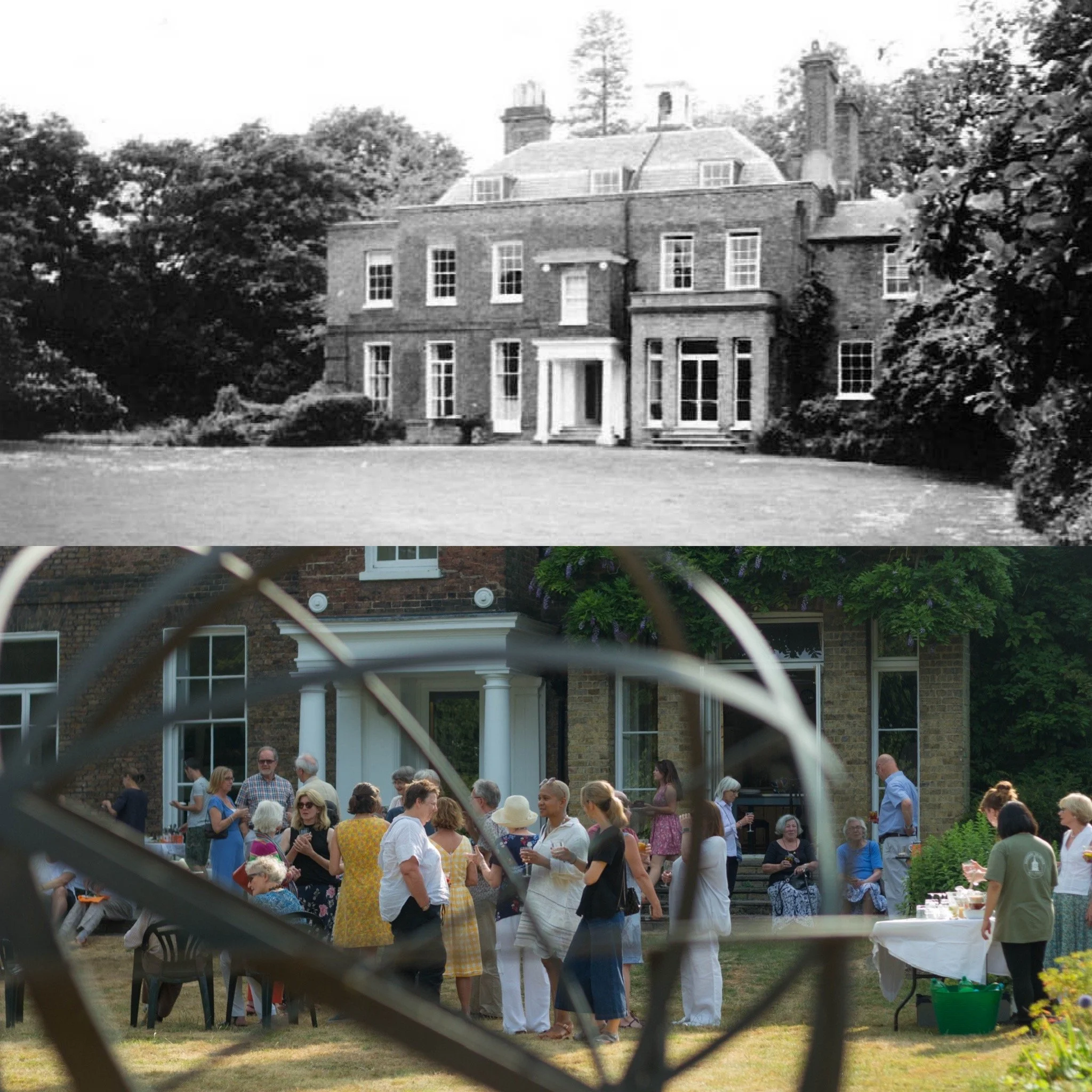
Since 2016, Bell House has steadily expanded its programme and now offers creative workshops, courses, talks, performances and community events. Visitors might join an art class, attend a concert, learn lifesaving skills, adopt touch-typing or discover the world of honeybees. At times the entire house is transformed into an art gallery. People hone their sewing skills making quilts for premature babies. Filmmaking is both taught and used as a way to get events to a wider audience: 15,000 people have seen the local history talks via YouTube. Health-based projects began with dementia support and now cover anything from social prescribing to women’s health. The breadth of activities reflects a belief that learning should not be confined to any one area or stage of life.

Over time, the site itself has become an integral part of the charity with the rooms and gardens an active, inspiring resource. The cellars now house a letterpress and bookbindery studio offering a wide range of courses, while a purpose-built pottery studio welcomes newcomers and experienced potters alike. Regular open days invite visitors to enjoy the gardens and explore the house’s rich history.

Significant work has also been undertaken to preserve and improve the house. Restoration projects have included renovating 50+ windows and uncovering the historic ha-ha. At the same time, Bell House has invested in sustainability such as installing a ground source heat pump, solar panels and insulation, ensuring the building can serve the community while reducing its environmental impact. Similar skills are passed on to the community through the popular Repair Hub where people can bring objects and learn how to fix them.

As Bell House celebrates its first ten years, it does so with a clear sense that learning should be accessible, enjoyable and lifelong. Its success reflects the same spirit that shaped the house when Thomas Wright built it: a belief in community and shared benefit.


10 Years of Gardening at Bell House

by the Garden Volunteers
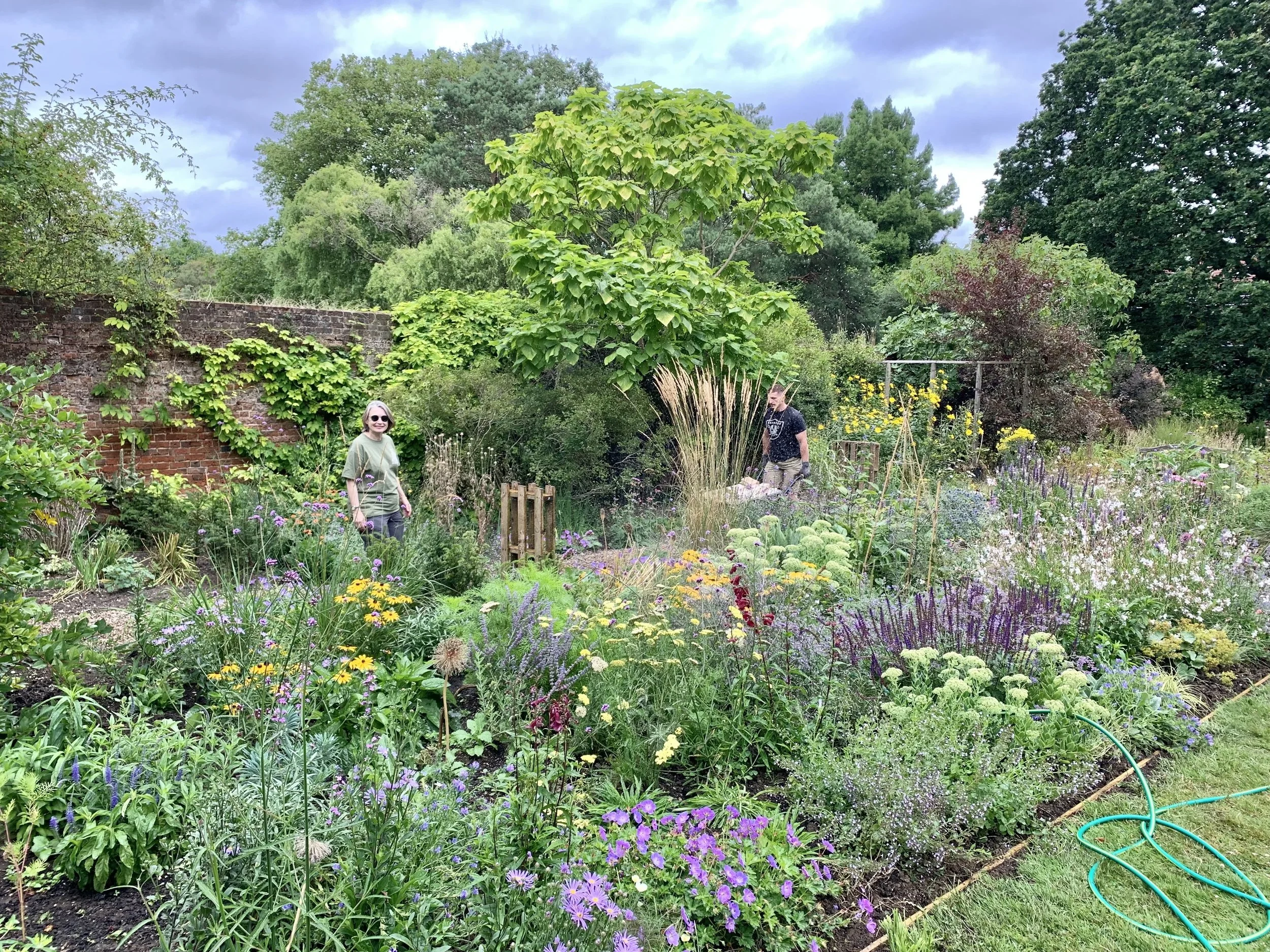
Image © Sara Lloyd

Volunteer gardening began in September 2017, a suggestion over coffee, between friends. "How about a gardening group?" There were nine the first Saturday, none of us professional gardeners but everyone keen and willing. We wanted to look after the garden, grow a community. We put up a welcome board and gave the growing group of volunteers coffee and croissants after ninety minutes of gardening.

One year in, we decided to start growing vegetables. A greenhouse followed, roses in the front, clearing of the front lawn and ha-ha, new compost bins. Duke of Edinburgh volunteers came forward with their parents, some of whom we persuaded to stay.

Our aim was gardening for community and wellbeing, but each new volunteer and new skill brought the chance to do more. In 2019, we opened for the Open Garden weekend, sessions became two hours, the grass became longer and we focused increasingly on how to support wildlife.

During COVID the garden became a lifeline. We stayed open, working within and adapting to changing requirements, with a list of suggested jobs on a board. We dug a bog garden in the hollow beneath the bridge and installed the winding dead hedge.

Eventually there were more volunteers, more expertise, more experience. We grew to three sessions a week, added ponds, shared produce, and were introduced to a fruit tree expert who advised on orchard trees to plant. After some consideration we began hosting the monthly Open Garden on the first Saturday of each month.

The year 2023 was when we started to grow organically. With the gift of the Pickwick garden, things really started apace. We opened up the fence line, recycled materials as habitat posts and shelters, built a circular log wall to enclose the bees in their new apiary. The next winter was spent organising and building sheds. Successful grant applications allowed the planting of native hedges and new beds with plants for pollinators. The polytunnel meant growing more from seed and propagation, and gave us somewhere to work on wet days. The Pavilion gave us an HQ to organise, run sessions and a warm space for coffee.

There’s more planned. The dry garden is starting to take shape and new beds, structures and planting schemes will emerge in the future. We’re recording wildlife, planning bio-blitzes, gardening as organically and as thoughtfully as we can.

We garden for wildlife, for visitors and for our volunteers. We’ve made friends, grown in our knowledge and gone on to do bigger things. None of this venture would be possible without the community we have created between us, the many many hours of dedicated volunteering, and the visitors to our open days who through their encouragement and generosity allow us to do more.


The Evolving Arts Events at Bell House - Behind the Exhibitions 

an interview with Lucy Macdonald
How did you get involved?
I first started at Bell House as a beekeeper with Annie McGeoch as my mentor. Then, this time last year, having taken early retirement, it allowed me to pitch an idea to the Arts Events volunteers to put on an exhibition focussed on crafts grounded on traditional skills yet are contemporary. The display was entitled Threshold, running over three days in December with six exhibitors: a rug maker, basketmaker, embroiderer, painter and two printmakers.

A quarter of the exhibition sales went towards supporting the Bell House Creative Health project which partners with local health charities to demonstrate how art can enhance wellbeing and bring people together.

Do you plan exhibitions?
Yes, among six of us in the Arts Events group including Rosie Bayliss, artist-in-residence, and Anna-Maria Amato, group co-ordinator, where we rotate on who organises the exhibitions.

We had Saturday Characters in April, a life drawing exhibition co-curated by Rosie and Chris Allen, a member of the group and an apprentice in the Print Room.

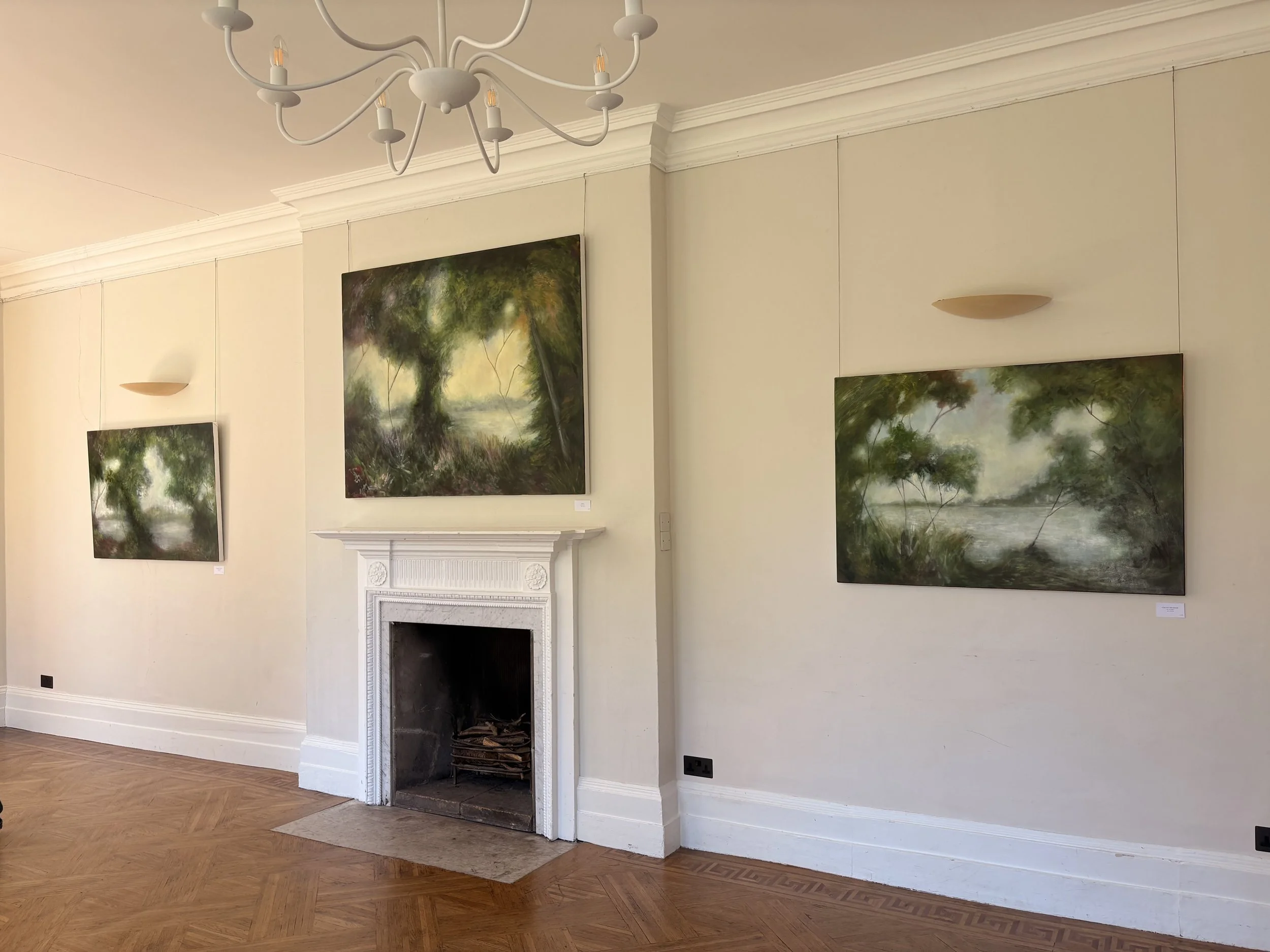
I have just curated Viridis, a solo exhibition of Alexandra Oliver's landscape paintings, of which 25% of sales fundraised for the Bell House Adult Literacy group.

Beth Worth has an open call inviting artists to submit works for The Flower Show, taking place on June 12-14th.

We also branch out and invite others to curate. In October, Kirsten Hecktermann is putting on an exhibition of embroidered panels and smaller works by Kenyan artist, Dhahabu Ngambau Dadu, and will feature a stitching/free-hand embroidery workshop.

Collaboration?
All volunteers in the Arts Events group support one another from helping hang displays, to invigilating and running the Private View. The exhibitions wouldn’t be successful without the help of other volunteers, including those who lend their expertise. Sven Arnstein and Liam Sherriff recently recorded footage at the Viridis exhibition to create a short film. The Print Room members Simon, Tania and Chris have all helped with hand printing invitations and promotional materials.

Benefits?
The objectives of the group are to enjoy working with artists to support them on their career journey, foster collaboration, and raise funds to support the Charity's ongoing projects.

If this appeals to you and you’d like to join us, please contact [email protected].


Annie’s Nurture Group: Reflections 

by Annie McGeoch
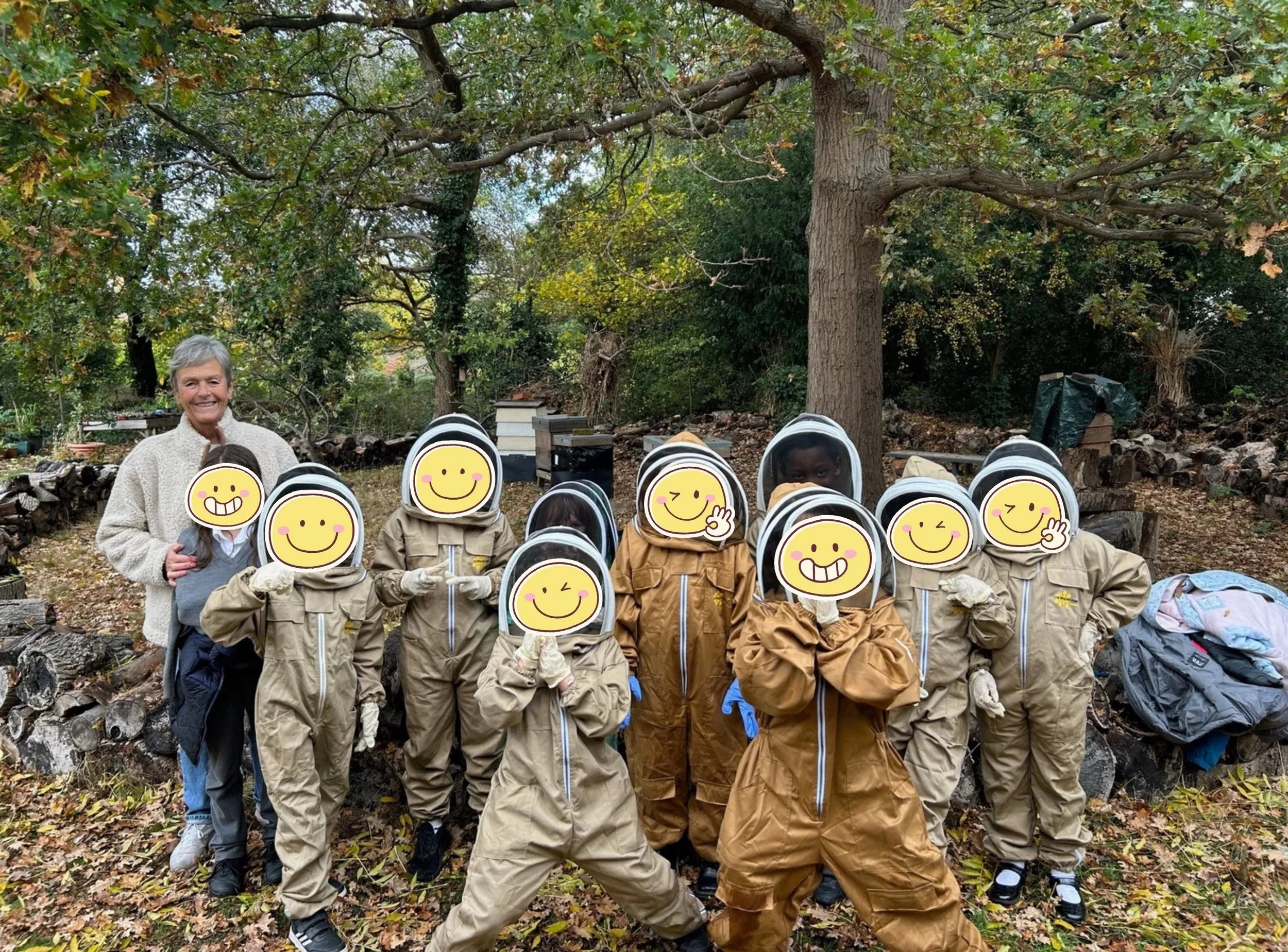
The Nurture Group evolved from the School Enrichment Programme, a single day out for up to sixty children organised in partnership with a local school just before the end of term.

At these meetings I noticed that there were some children who could manage those large groups and hectic days but some seemed at sea. I had a meeting with the headmistress of Crawford Primary school in Camberwell and we discussed what I and Bell House could do to improve the lives of some of the children. She suggested a Nurture Group where we would take a small group of children out for the afternoon. For three years we met on Wednesday afternoons at Bell House for an activity or an outing. It became clear that half a day was not always productive as we were short of time. By the time we had walked from the school to the bus stop, taken the bus to Dulwich Library and walked across the park to Bell House, we only had an hour before we had to travel back, often arriving late.

This year, we start making our way in the morning and return in the afternoon on Tuesdays, allowing an appropriate amount of time for travel and activities. The idea is that it's experiential learning - no aims and objectives, no measured outcomes. Just ten 7 to 10 year olds having a day out outside of school. The school selects the group members, described to me by the headmistress as the children who are perfectly behaved, though not necessarily in a positive way: they are the quiet ones alone in the playground, not engaging with the noise and all the activity around. Most were not born in London but speak adequate English while also speaking another language at home. They are from Afghanistan, Syria, Iran, Kosovo, with parents often working zero-hour contracts where one goes out to work when the other comes in to sleep, not allowing time or resources for outings. What the group is offering is a chance to make friends, to have something to talk about in school, and “stick out” a bit. It turns out they are envied by other children for their outings and the chance to go to Bell House.

The idea is to help them feel like individuals. We use their names a lot, talk about birthdays, family members, siblings, simply showing interest in them like we would with our friends. It’s about establishing relationships so they could support one another in school when surrounded by larger groups.

We have had outings at the Battersea Park Children's Zoo, Jurassic World, Horniman Museum and the Dulwich Picture Gallery. Had hot chocolate at a café, practicing not to make a huge mess. A trip to the Vauxhall City Farm, and one afternoon spent in the park, talking to dogs and their owners. At Bell House we did clay sessions, a drama workshop, printing courses, and heard stories of the history of the house. Before the end of summer, we will head to Westminster Abbey, the House of Parliament, and finally, a picnic in Ruskin Park.

If anyone has ideas for activities or would like to help with the outings, message [email protected]. We will have a new group of children next year so it would be great to have a new team member or two - it's always good for the children to meet new people.


Bell House Pottery is delighted to welcome its second Potter-in-Residence in August 

by Birgit Pohl
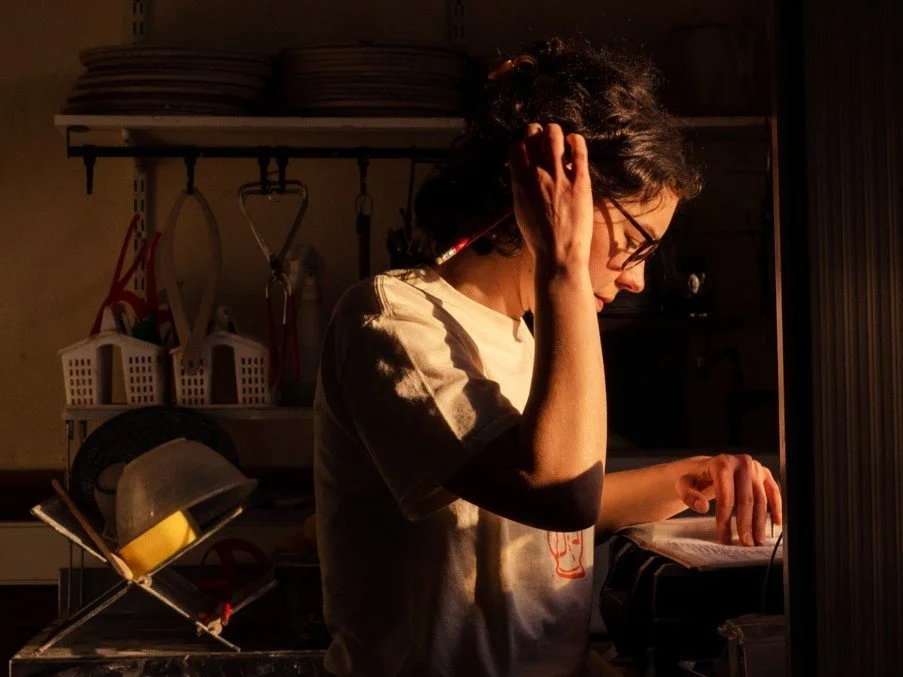
On 11 September 2023, a modern pottery studio was opened in the grounds of Bell House.

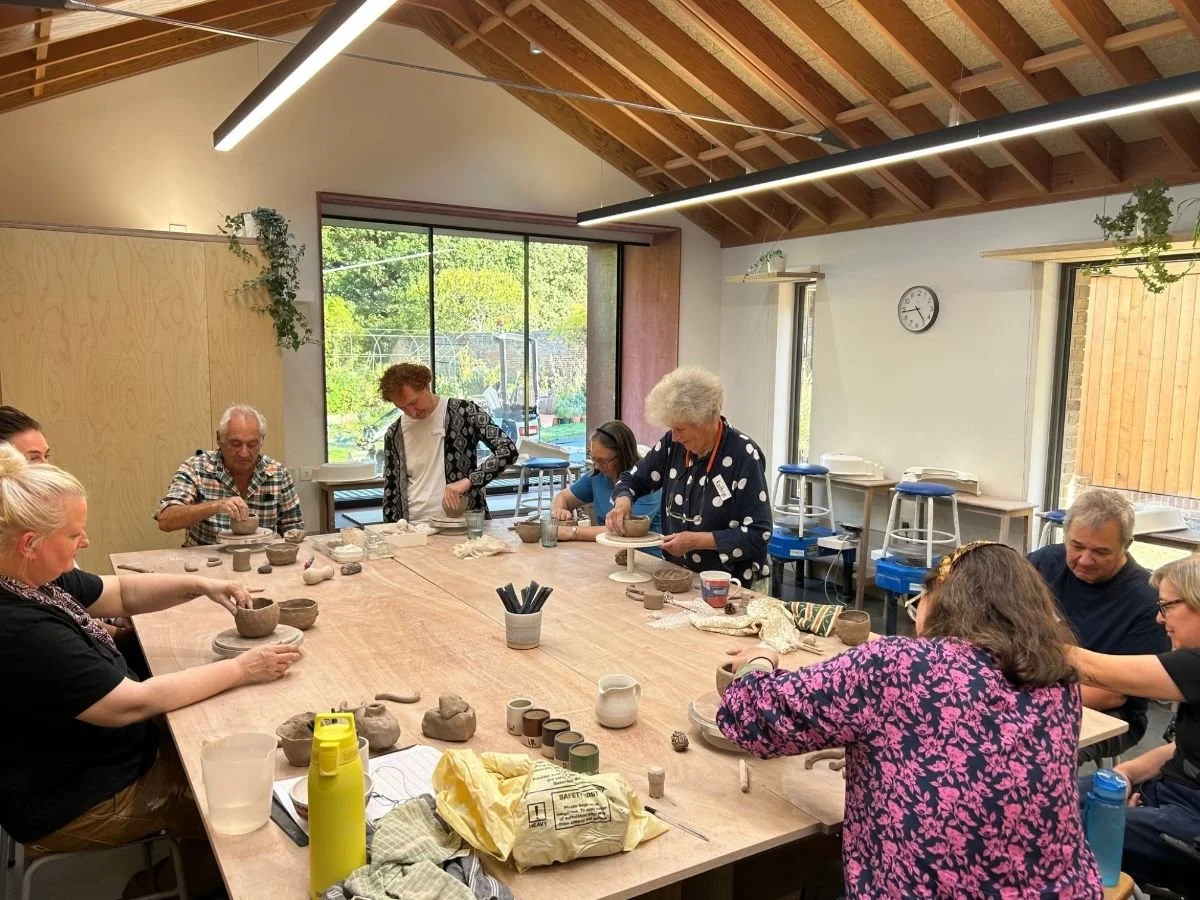
The pottery studio has been a core part of the Bell House mission to provide creative learning to the widest community. Working with clay can be a satisfying creative pursuit with tangible results. In a kind and supportive environment, pottery classes can also support people struggling with mental health.

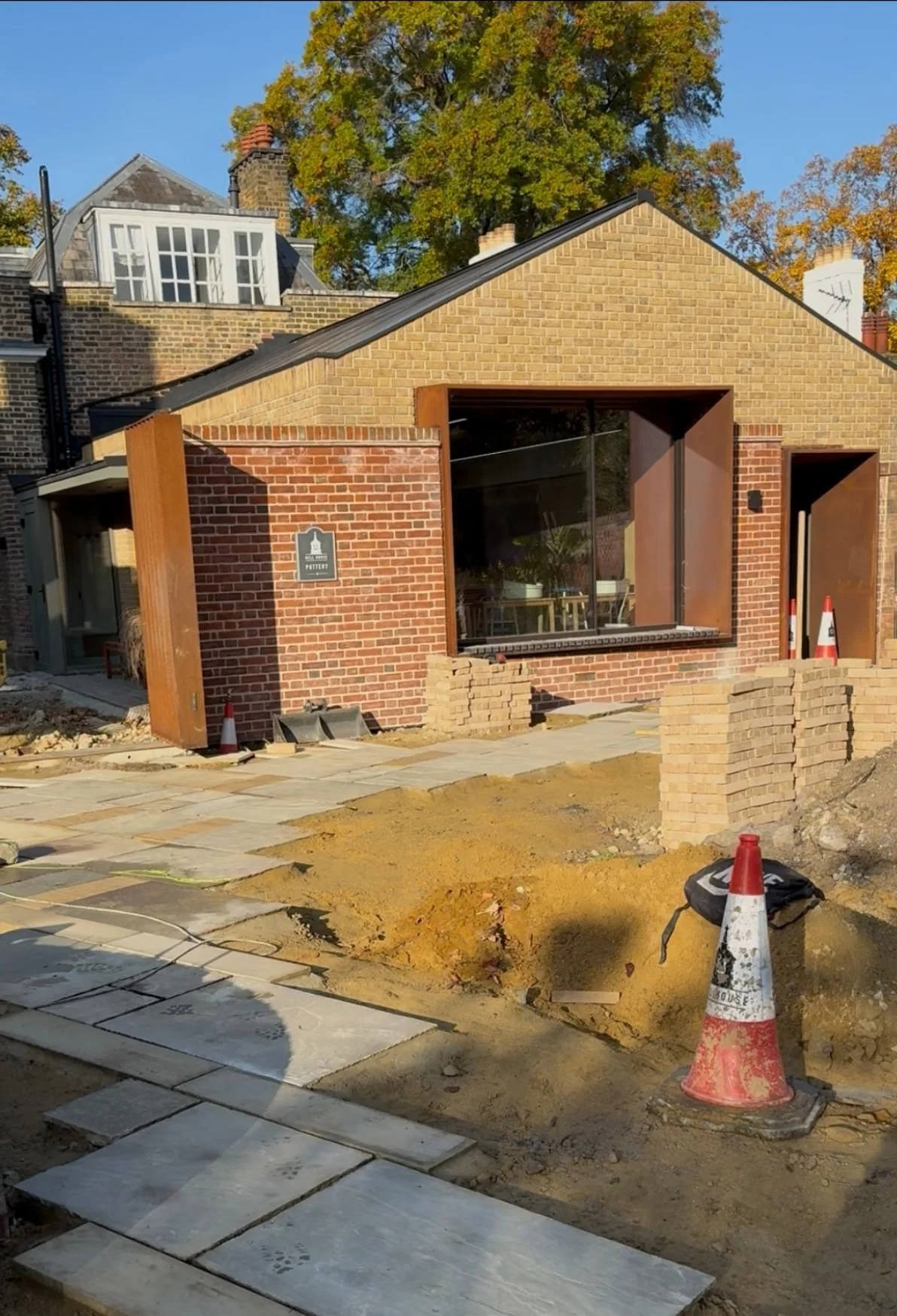
Burgess Architects, who specialise in sensitive restoration of historic buildings, were commissioned to design the pottery studio with sustainability and energy efficiency in mind. Key features include solar panels, a ground source heat pump, and the use of natural materials such as Douglas fir, with its low carbon footprint. The big picture window at the back of the studio looks out onto the beautiful Bell House garden.

A variety of courses and workshops are being offered to potters of all levels.

This summer, we are pleased to announce our second Potter-in-Residence.

Megan Cox is a potter living and working in Liverpool. Her work is grounded in a philosophy of slow living - valuing thoughtful design, mindful making, and the quiet beauty of everyday life. Megan’s work is inspired by the traditions of British studio pottery and a deep fascination with medieval and Anglo-Saxon pottery. Drawn to the simplicity, raw beauty, and enduring forms found in these historical pieces, as well as the use of local, natural materials. During her residency, she will utilise access to the vast collections of pots found in London museum collections. Through an open, iterative process of making and testing, she is hoping to create a body of work that establishes a visual language connecting the past and present, resulting in a resolved series of functional vessels that integrate form and surface within contemporary use.

Megan is planning on running a workshop centred on stamp-making and surface decoration towards the end of her residency. Keep an eye on the website for updates.
 

Bell House Spring 2026 Newsletter


The four seasons of 2025 have flashed by! We are excited to bring you the first of this year's quarterly newsletter with four new articles which we really hope you enjoy reading.


Diary Alert: Inaugural “Wayzgoose Celebration” planned for Bell House this year

by Simon Trewin, Print Room & Bindery

Photo credit: Tania Hurt-Newton

Walk down the old steps into the basement of Bell House and you’re met not by silence but by rhythm: the clatter of type, the sticky crackle of ink, the soft thump of paper meeting platen. It’s a sound that once echoed through towns across Britain, when printing presses were as common as corner shops. Today, though, that sound has almost vanished.

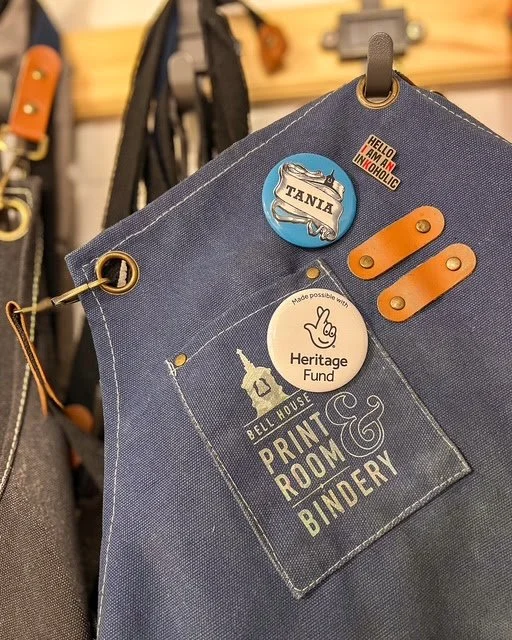
That’s why the news that the Bell House Print Room & Bindery, co-founded by Tania Hurt-Newton and I, has received a major grant from The National Lottery Heritage Fund feels so significant. The funding will allow us to expand the Bell House Print Room & Bindery and create a new home for endangered crafts such as letterpress, etching and bookbinding, collectively known as the Bell House Heritage Crafts Studio. It will also, crucially, allow us to expand our community reach.

The new funding means we can do far more than keep the lights on. We’ll be able to restore and preserve our presses, train volunteers, create new teaching spaces and host a celebratory Wayzgoose — the traditional printers’ fair. Most importantly, it means we can welcome people who might never otherwise discover this world of type and ink: children, older adults, and anyone facing barriers to creative opportunities.

I’ve seen it time and again. Someone comes in convinced they don’t have a creative bone in their body. Within minutes they’re setting their name in metal type, eyes narrowed in concentration. Then comes that first pull of the press, and suddenly their face lights up - a mixture of disbelief and delight.

'Unlocking creativity' is an overused phrase, but here it’s literal. We’ve seen retired teachers, teenagers and refugees all sitting around the same table, sharing rollers, jokes and cups of tea, producing something together that none of them could have done alone.

That’s what The National Lottery Heritage Fund is really supporting — not just machines and materials, but possibility. Thanks to players everywhere, we can preserve these skills and open them up to anyone who wants to learn.

One of my favourite recent visitors was a man in his seventies who arrived “just to watch.” Half an hour later he was at the press, grinning like a schoolboy. When he pulled his first print he said quietly, “I didn’t know I could still do something new.” That, to me, says everything.

We see this new phase not as preservation but continuation. The presses downstairs aren’t museum pieces; they’re instruments waiting to be played. Thanks to this grant, their song — and the creativity they inspire — will carry on for years to come.

We would love you to come and experience it for yourself when next at Bell House.

Please follow our instagram feed @intheprintroom and message [email protected] if you would like to organise a visit.


Photo credit: Dulwich Society

Did you know? 13 acres of the Bell House Garden were donated to help create Dulwich Park

by Sharon O’Connor, House Historian

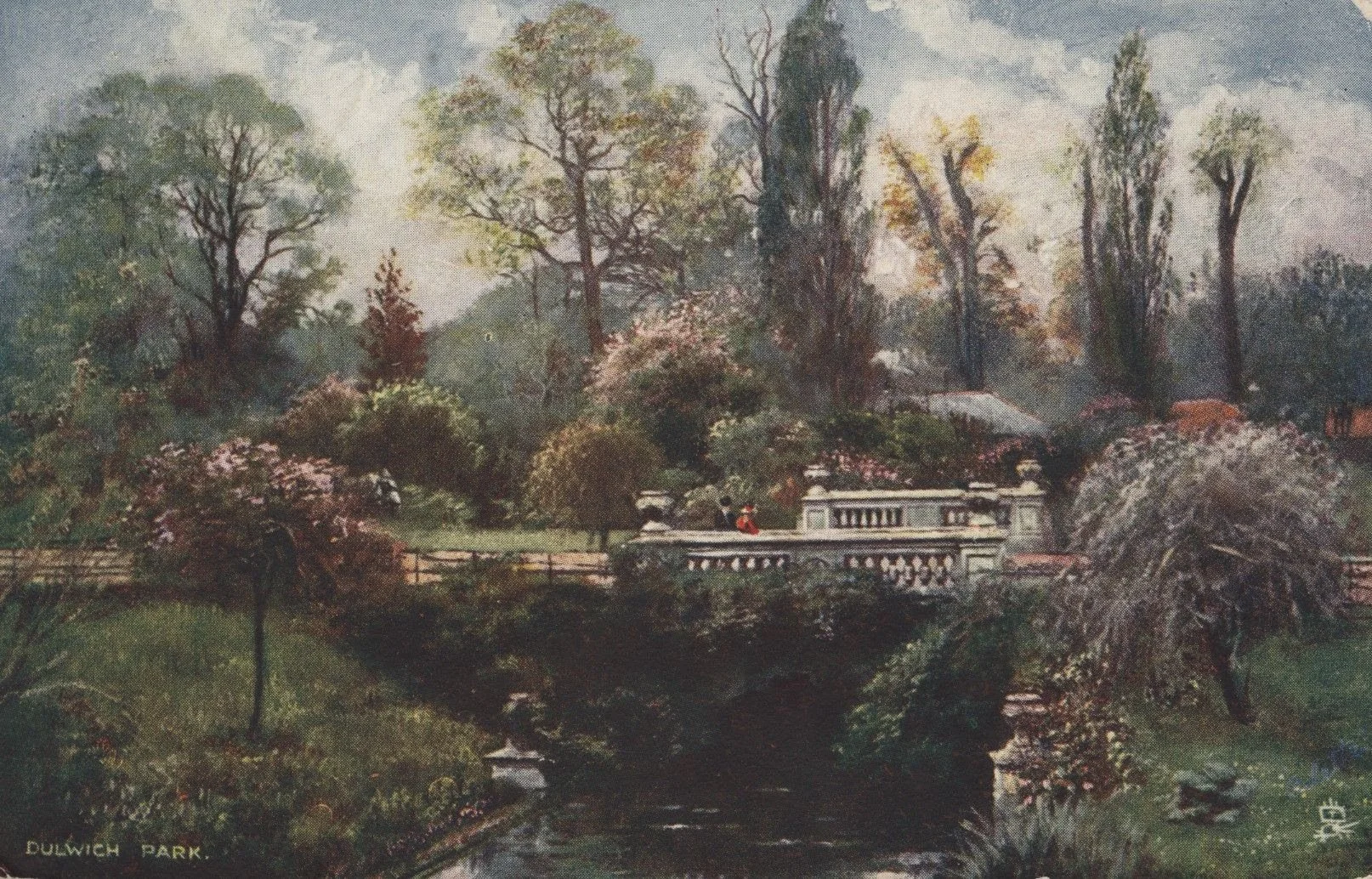
Dulwich Park was created in the late 19th century as part of a wider movement to provide green public spaces for London’s rapidly growing population. Sir Francis Peek, a local businessman, philanthropist, and governor of the Dulwich Estate, strongly supported the creation of parks and had been working towards establishing one in Dulwich since 1872.

That year, he offered the Estate a large donation to help create a public park, but his proposal was rejected. Undeterred, Peek continued to negotiate with both the Estate, which owned the land, and the local authority. In 1885 the Estate agreed to sell around 70 acres, taken from local farms and the gardens of large houses along College Road and Dulwich Common, including Bell House.

Thirteen acres were taken from the Bell House garden to help form the park. The garden had been extensive, stretching to where the rivulet and boating lake now lie. However, the Gowan family, who lived at Bell House, still retained three and a half acres for their garden.

Some Dulwich residents opposed the creation of the park, fearing it would 'lessen exclusiveness' and become a 'playground of the poorest classes.' Sir James Douglass, who lived at Stella House, 11 College Road, and was also an Estate Governor, initially supported the scheme but later tried to prevent it from going ahead.

Charles Gowan of Bell House also had concerns. When his lease was amended due to the loss of land to the park, he requested annual contracts in case the park’s presence prompted him to move. The Dulwich Estate was sympathetic and renegotiated his lease on a year-by-year basis for several years.

He must have been reassured however, as the Gowan family remained at Bell House for another decade. Their smaller, though still substantial, garden remained a source of pride. In 1890 and 1891, their gardener, William Farley, won prizes for his begonias, gloxinias, and sweet peas at the Surrey Floricultural Show.

Bell House Garden continues as a source of pride - particularly for the volunteer gardeners who spend time there each week, and for the local residents who can enjoy the Open Garden each month, due to take place on Saturday, 7th March.

We’d like to end with a quote from George, a Bell House garden volunteer:
“We garden because we care about the future - it’s a vote of confidence in the future.”


Yasmin “tapping into her cheffing expertise to throw beautiful, bespoke plates”

by Jim Belben, Pottery Planning Group

Photo credit: Yasmin Hamouda

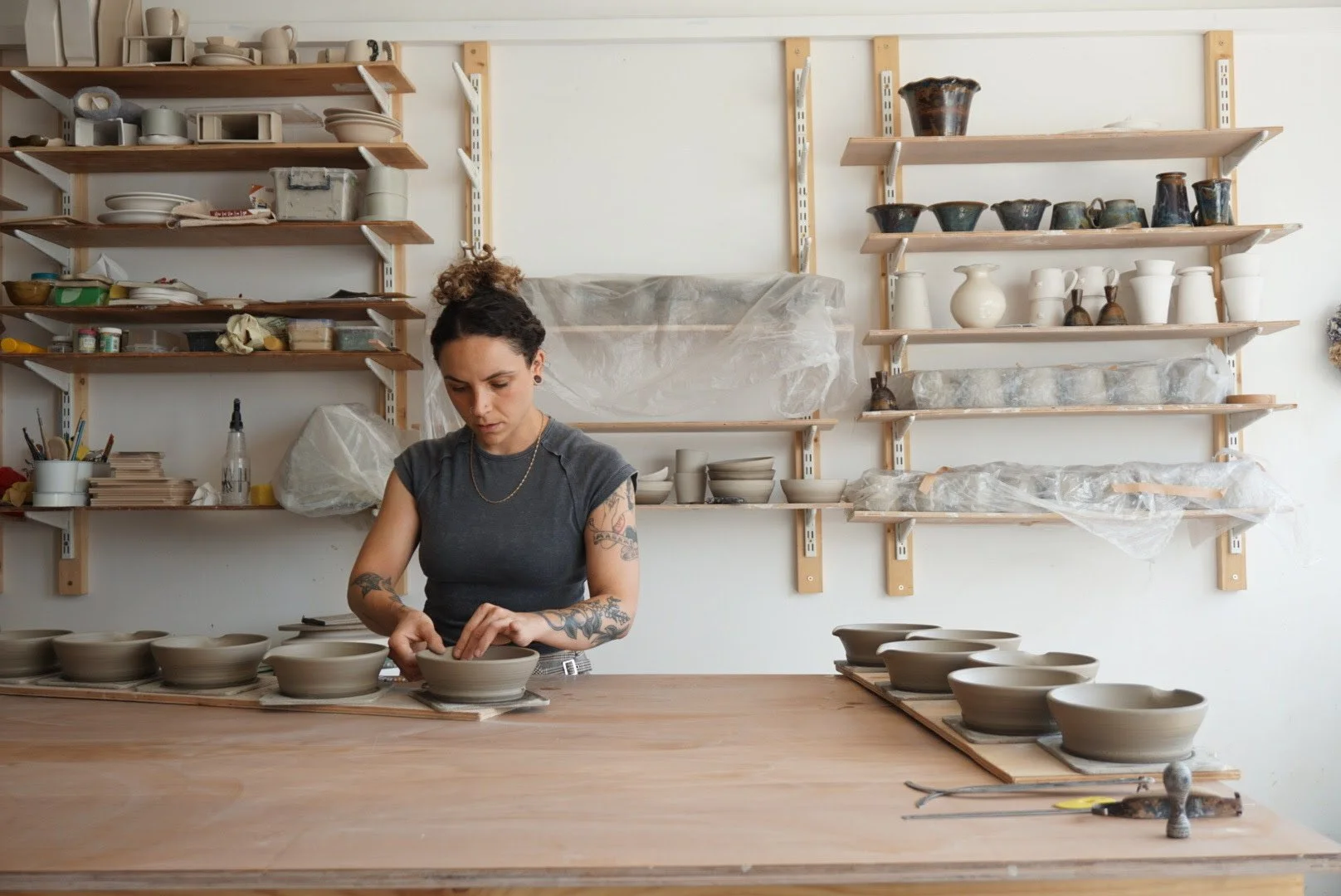
We are thrilled to welcome a new member to the Bell House Pottery teaching team, Yasmin Hamouda.

Eureka moment

Yasmin has a distinctive story. She started out as a chef in Northern Ireland. She worked in hospitality for many years. She loved her work and was much in demand. She also ran her own supper clubs, offering creative tasting menus. 

Then she had what she describes as her Eureka moment. In 2018, she started a pottery evening class and soon realised that 

“I loved cooking, but I did not only want to make the food that went on the plate, I wanted to make the plate as well. So food and plate work together to enhance both. A conversation. That started me on the journey I am still travelling.”

Bespoke dinnerware

Yasmin took a pottery diploma in Bangor, NI, then came to London for a full-time ceramics degree at Central St Martins while still working full-time as a chef! 

Since graduating she has developed her own unique approach to making. She works with restaurants, learning about their ingredients and their environment and their culture, then designs and makes bespoke dinnerware to enhance their whole restaurant experience. 

Calm and peaceful

Yasmin came to Bell House thanks to our contacts at the nearby Kiln Rooms in Peckham – where several of our team have practiced. She teaches at the Kiln Rooms but has also taken on teaching an all-levels Wednesday afternoon throwing course, as well as regular taster sessions for beginners. 

“I love the Bell House Pottery. Such a nice area of course, and the studio is so calm and peaceful. Super clean, well managed, it’s easy to teach here. The views into the garden are wonderful, I am so looking forward to the summer when we can enjoy the garden into the late evenings.”

Yasmin finally left cheffing at the end of last year but intends to continue to offer her supper clubs – food and plate in harmony – in the future.

Upcoming courses

You can see more of Yasmin’s work on instagram @yasminhamoudastudio, and you can catch her on her next Throwing on the Wheel taster session on Friday, 6th March 6.30pm or 6-week course from Wednesday, 15th April 3pm


“Tell me and I forget, teach me and I remember, involve me and I learn.”

Benjamin Franklin

by Madeleine Hay, Dyslexia Committee

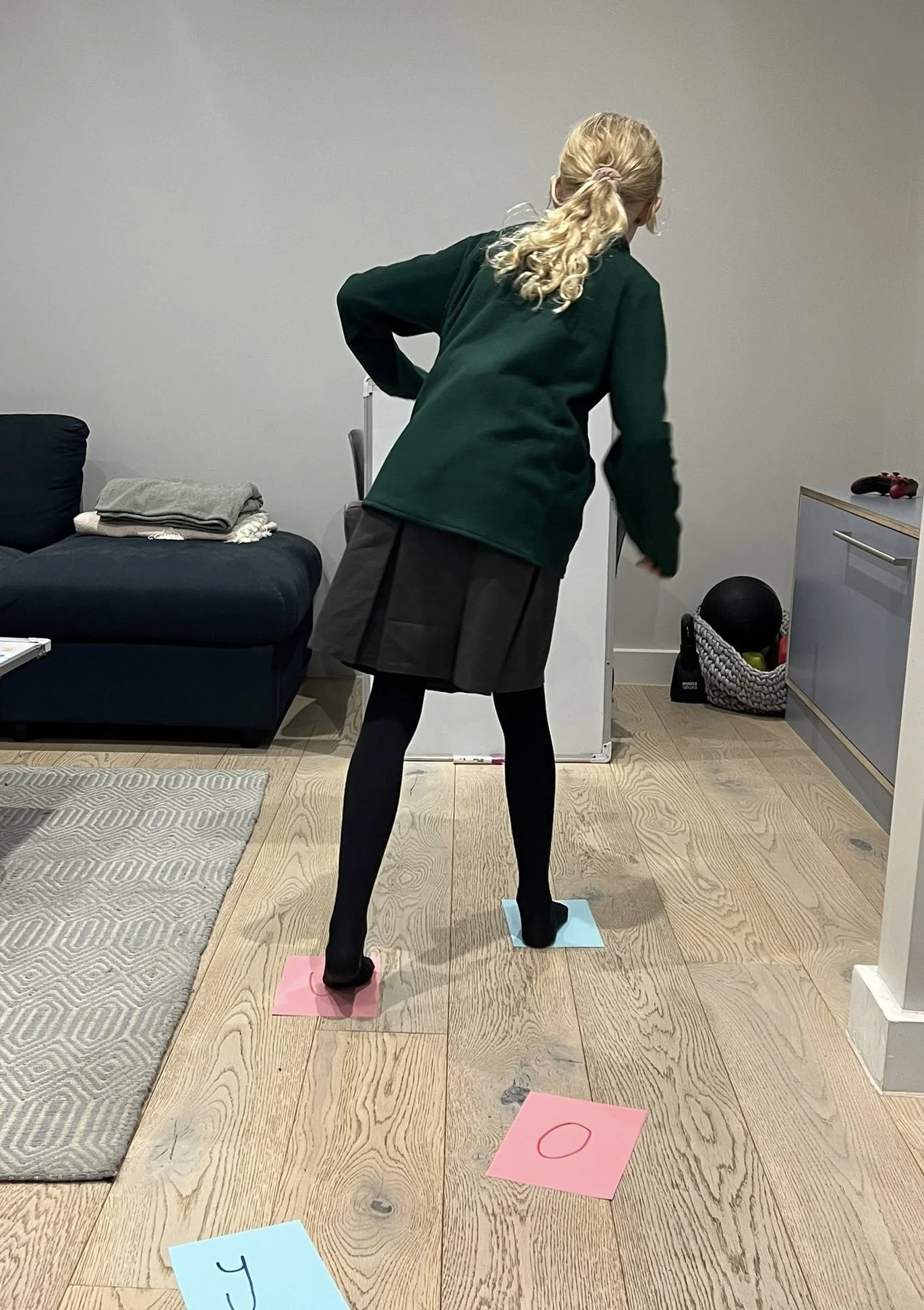
Jump. Hop. Punch the air. Lunge. Ballet steps. These probably aren’t the words that first come to mind when you think of dyslexia.  Yet, for our Bell House dyslexia specialists, movement and whole-body engagement are central to how we teach. Why? Well, before we even look at the research, we know something simple: people learn best when they are relaxed, engaged and feel a sense of ownership over their learning.

Sitting at a desk using a traditional pen and paper approach may not tick these boxes, particularly in neurodivergent learners. But give the same child a Harry Potter wand to write letters in the sky, invite them to write giant letters on paper and jump on them to spell words, take turns in punching out letters in the air, and you see true learning in action: engagement, an eagerness to participate and, most notably, a child who remembers what they have learnt. 

So, what does the research say about why adding movement has such a positive impact on learning? The most common signs of dyslexia include: difficulties with phonological processing (detecting and manipulating sounds in words), working memory, recognising spelling patterns and processing speed. One of the key challenges this creates is linking information — connecting sounds to letters, and letters to the spelling of whole words. 

However, when we move the body and engage a range of senses, we simultaneously stimulate several different areas of the brain, encouraging new connections to be made and long-lasting memories to be formed. Consequently, when learning involves seeing, hearing, saying and physically doing, multiple pathways are created to link the same piece of information. The more pathways the brain builds, the easier that learning is to retrieve later. This is neuroplasticity at work — the growth and reorganisation of brain connections that are essential when we learn new skills or absorb new information. Importantly, purposeful movement can also support regulation and attention; a calm, alert brain is far more receptive to new learning than one that feels stressed or fatigued. 

If you’re a parent, carer or education professional supporting a learner with reading and spelling, keep an eye on the Bell House updates and social media for the learning through movement sessions we are running in 2026.  Every dyslexic individual is exactly that – individual, so there is not a one-size-fits-all solution for how we build movement into learning.  The key is to work with a learner to find out how and when they want to move so that they feel in control of their learning.  Dopamine, the body’s powerful, ‘feel good’ chemical is then released in the body, meaning we’re setting a child up to succeed in their learning.  Get moving with your learner and build a great learning environment!

Join us for our next talk in the Dyslexia Series: Movement Therapy for Retained Primitive Reflexes by Learning DNA.


Bell House Winter 2025 Newsletter


In the 2025 Winter edition, you’ll find a selection of recent news and updates from Bell House, which we hope you will enjoy!


“No age barriers here.” 

by Joan Trodden

Bell House is not just a place where adults or children learn in isolation.  There are many opportunities for families to learn together.

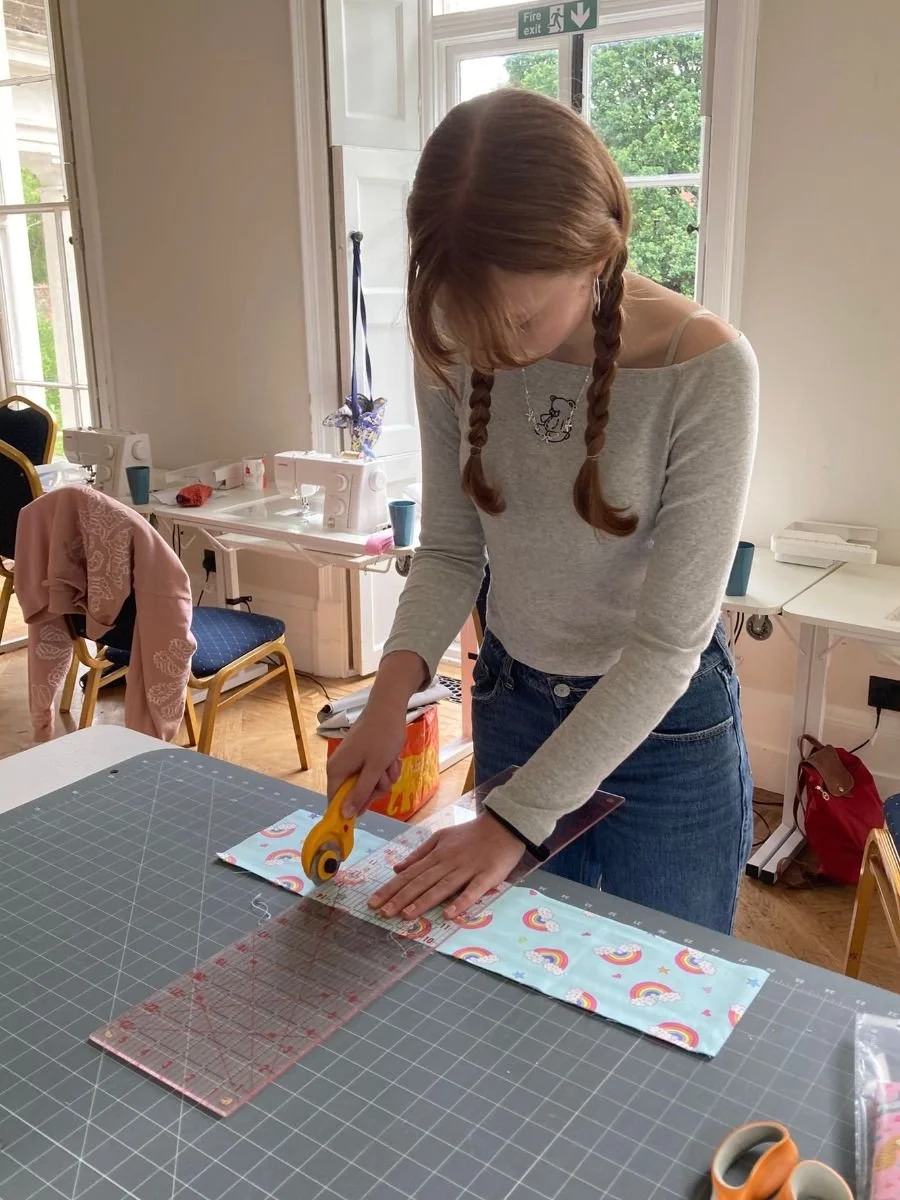
In my case my granddaughter, Agnes came with me to Quilting Academy and made a Linus quilt for King’s College Hospital.  She was doing this to complete the skills component of the Duke of Edinburgh Award. Other opportunities exist to complete the volunteering component in both quilting and gardening.  Teenagers relax more quickly if they are accompanied by a parent /guardian or grandparent and able to focus on the job in hand.

Besides my grand daughter’s confidence and skills developing, there were other spin-offs.  A small cue is all that is needed to share memories and enjoy a trip down memory lane together.  In my case 1953 was on the jacket reviews of her set book from her school which was in her bag.  I told her all about the Coronation of Queen Elizabeth II and how many people bought televisions especially for the occasion and invited all their neighbours in to watch it.  Another quilter came into the conversation and mentioned that was also the year that Sir Edmund Hillary conquered Everest. 

Agnes couldn’t believe that our memory was so vivid, as she worked it out that I was only six! Little did she realise how few distractions we had in those days!

So Bell House can create a space not just for inter-generational learning and confidence building but a platform for those precious moments when children discover life can be quite different.

Just in case you missed the recent BBC DIY SOS programme where the wonderful quilt produced by Bell House Quilters was featured, do check out this link


“Bell House Gardeners - illustrating  why Accessibility and Climate Resistance must work hand-in-hand.”

by Gaynor Hayburn and Sarah Hammond. Image Sara Lloyd

The Bell House gardeners are improving the entrance to the Pottery and Bell House gardens, creating accessible paths into and through the Walled Garden and onto the terrace behind the house. This new space has been designed for sustainability and inclusivity, offering visitors a welcoming and educational experience.  The garden will allow us to plant drought-tolerant species and create habitats we don’t have elsewhere in the garden.  

We worked with Ben West and his team at Landscaping Solutions and used as many recycled materials, or those salvaged from other projects, as we could.  The landscaping is now complete, waiting for planting in early spring and a finishing gravel mulch layer.

To make the paths step free, we needed to raise the ground level across the garden.  By using a free-draining substrate layered with sand and gravel on top we were able to create what will be a dry gravel garden.  This means we can experiment with more Mediterranean style planting, plants which are drought-tolerant in the summer but struggle with our cold, wet, clay soil in winter.  The sand and rubble will require plants which tolerate alkaline conditions, so will introduce more variety into the garden.  In the garden as a whole we aim to have a good mix of native plants for specialist pollinators, feeders and their habitats and non-natives to extend the flowering season, providing forage for insects lulled out of hibernation by warmer seasons.  

Planting into low-fertility sand and gravel will mean slower growing plants which are sturdier and last longer.  Our planting design draws inspiration from the Horniman Museum Gardens, Sissinghurst Delos garden, Beth Chatto’s gravel garden and John Little’s garden in Essex and the Knepp Castle Walled Garden, all of which showcase climate-resilient planting, sand, gravel and reclaimed materials such as crushed concrete and rock. 

Different surface materials will enrich the ecological value of the garden with mounds of sand for ground-nesting bees and solitary wasps, areas of open gravel for ground-hunting spiders and rocks and stones for butterflies to bask on.  Logs and planting around the raised pond will create habitats for over-wintering frogs and egg-laying opportunities for damselflies and hawker dragonflies.

The new garden will welcome human visitors too with level paths, a new terrace outside the pottery, benches and the opportunity to learn about and explore with us the value of a range of growing conditions and habitats for our flora and local fauna.  The garden is open to visitors on the first Saturday of the month, please see the Bell House website for details.


A Celebration of Creativity’s Power to Heal, Connect and Transform Lives

by Sarah Wetherall and Fabienne Hanton

The Bell House Creative Health Project is bringing creativity and care together in a new and inspiring way. 

It was launched earlier this year and explores how art can enhance wellbeing and bring people together. By partnering with local health charities, artists, and community organisations, the project is using creativity as a powerful tool to support both physical and mental health. 

The first charity to partner with the project this year was Aphasia Re-connect. Over 350,000 people in the UK are affected by Aphasia which is a communication disability and occurs when the communications centres of the brain are damaged from for example, a stroke, brain injury, tumour or hemorrhage and can impact on your ability to read, write or speak.

So far, members of this group have been welcomed to Bell House to take part in a marbling class and a pottery class. 

At the marbling class Sarah showed participants how to work ink onto the surface of water, to make patterns for transfer onto plain paper.   Each pattern is unique and every participant made 8 beautiful marbled papers to take home.

At the pottery Gaby showed members of the group how to make a simple cup, a bowl and a jug and everyone was given the choice of making two of the three pieces.  The finished items were left on site to be fired before being returned to the participants.

In both classes the artist practitioners and participants had wonderful support from two speech and language therapists, Rachel Ba and Katherine Preece as well as in-house volunteers Jane, Jenny, Paula and Jim.  

And for the participants an added bonus was the beautiful Bell House and garden setting for these workshops. The time to break for refreshments, enjoy the surroundings and talk together is an essential part of the experience at Bell House and everyone was able to sit outside and enjoy the sun, which obligingly shone for both workshops.  We had great and constructive feedback from participants for both the activities.

Through hands-on workshops in painting, pottery, music, and stitching, participants are discovering how creative expression can boost confidence, reduce stress, and build connections. Each session is designed to be inclusive and accessible, encouraging everyone to take part, explore their creativity, and leave with a sense of achievement and belonging. Health charity partners help shape the programme, ensuring that activities draw on therapeutic practices and align with evidence-based approaches to wellbeing. This collaboration strengthens the impact of each workshop.

As the project grows, so does our belief that active engagement with the arts and creativity can be beneficial for our health and wellbeing.

The Bell House Creative Health Project is a celebration of creativity’s power to heal, connect, and transform lives. We have great plans for 2026.


Introducing Liam Sherriff - Bell House’s Inaugural Filmmaker-in Residence

by Liam Sherriff

I am very excited to be the inaugural filmmaker-in-residence for Bell House. As with many other things in life, I arrived here via a circuitous route and with the help of many friends. 

In the summer of 2025 I had just finished work back in Canada on my third feature documentary in a row and was looking to shake things up a little and expand my horizons. Through the great network of filmmakers I'm lucky to be a part of, I met Morgan - also an English/Canada based filmmaker - who was looking for someone to take on this role. Given both my professional and academic background, and my need for a project on arriving in London, it was a great fit.

I am primarily a feature documentary editor, both picture and story. I also have an academic background in literature and film, and professional experience working for non-profits and charities back in Canada, where I live on the west coast. I’ve enjoyed working on all genres of film and television from animation to webseries, but long-form nonfiction is where I do my best work. The last three documentaries I was a picture and/or story editor on include the biography of famous physician and writer Gabor Mate, the story of Canada’s largest act of civil disobedience, and the ongoing saga of the war on (and for) drugs in Vancouver, British Columbia.

My overall aim during my time here is to set up future filmmakers for success at Bell House. Current projects I'm working on include obtaining a professional camera and microphone for the house. This could be used for capturing the events and activities of the house - including recording talks and lectures - as well as more creative pursuits for future artists-in-residence, or classes and workshops. To that final point I am currently developing a short documentary class for local youth; look for that in the early spring! Finally I am also instituting a film club, starting with a screening of Physician Heal Thyself: the life and work of Gabor Mate. The film offers a searingly intimate portrait of the celebrated expert on addiction, stress and trauma. It’s showing on Wednesday 10th December at 7.00pm at Bell House. https://www.tickettailor.com/events/bellhouse/1964554

Whilst all that is ongoing I am also keeping my ear to the ground and my eyes open for interesting new stories to tell about the people in the community. 

Do you or a family member have a unique passion or goal? 

Is there something different about how you live your life? 

As long as it’s authentic, the universal can always be found in the specific, and the smaller stories are always truly more interesting. A good story can often be found in someone who pursues an interest or desire that’s just a little outside the mean. 

Please reach out to me - I’m always looking for more subjects for micro-documentaries. [email protected]


Bell House Autumn 2025 Newsletter


Welcome to our third Autumn seasonal newsletter. In this edition you’ll be introduced to our first Potter in Residence, our new House Guardians and our new Artist in Residence.


For one month only… Rowena Hamilton in the Pottery Studio

Rowena is the first Potter in Residence at Bell House, spending August working in the studio. The studio was scheduled to be closed as all the teachers were taking their well deserved holidays and so the idea to offer it to a working potter was a winner.

Rowena successfully applied and was also given a bedroom in the house. 

She was late to potting, having spent many years working in museums and galleries. But it was here that she became interested in pots of all shapes and sizes but particularly the older ones. She was fascinated by a theory about basket weave sometimes found on ancient pots. The theory goes that early potters learnt this by accident. Woven baskets were not waterproof, so were lined with clay. When a basket was thrown away in a fire they found in the embers clay pots with a basket weave. Basket weave is a decoration she now uses on some of her work.

Over covid and looking after her mother who had dementia, Rowena started to work with clay with her mother. They both found deep satisfaction working with the clay - moulding with their hands. And this was the start of her move to become a potter.

She graduated in 2024 from Clay College in Stoke. This college specialises in preserving the dying elements of traditional potting - both practical and technical skills teaching the traditional ways of working with clay not available at most other teaching institutions. As Rowena says - Clay College delivers “self-sufficient potters”. She now continues the tradition of functional pottery through her work making tableware.

Rowena has a ‘tiny’ studio with an electric kiln at her home and also works in another small studio where there is a collectively run wood kiln. So the Bell House studio - its size and functionality - has been a very special opportunity for her. She came with plans to “work on form, hand building and textures - to perfect shapes and techniques - not to be distracted by glazes - the pure process of potting is that you have to spend time on the form and then leave time for drying and firings”. 

So what are her reflections on her time in Bell House?

In her first week she felt the big studio unblocked her - the physical space gave her head space. She has been surprised by how ‘wildly’ creative she felt - some of her ideas haven’t worked but they’re stored for future reference she says. She feels this wouldn’t have happened in her home studio. She felt very comfortable out of her comfort zone and it‘s given her the confidence to know she can work almost anywhere.

The studio has a huge window looking out into the Bell House gardens and Rowena has enjoyed chatting with the volunteer gardeners over a cuppa. She’s learnt from them and in particular about baskets (and has been told about a collection at Kew Gardens which she hopes to visit at some point). She’s also met Emma, one of the new Guardians who gave her the idea to make some small plant pots for seedlings. She has made some and what is even more helpful is that Rowena can use the pots to fill the spaces between larger pots in the kiln. Another win-win.

One of the less positive learning experiences was the impact of such a sunny spot for a studio. It has been very hot and she found hand building very difficult. To be successful you need to keep the clay moist and in such hot drying conditions this was very hard - but a learning experience nonetheless.

Rowena believes it is a privilege to eat and drink from handmade pottery and this is how she approaches her processes - so she is very mindful of her role in this.

Just to return to her covid experience with her mother. Her mother was a dentist and had worked in schools. She had a wonderful collection of teeth that she would show to the pupils - one in particular was a sperm whale’s tooth. These teeth have been fascinating to people over time - their size and shape  - and Rowena decided to make a replica of one but to make it even more interesting to make it into a rattle. These rattles have now become a part of her collection - she makes egg shapes as well - she calls them ‘Fidget Toys’ - an object for handling and thinking - she doesn’t like to use the word ‘de-stresser’! 


Photo above of Rowena in the Bell House garden with one of her sperm whale tooth fidget toys and some of her plates on a table drying in the sun and ready for their first firing.

To find out more about Rowena and to see her work and online shop visit:

rowenahamilton.works
Instagram: @row_hamilton
Facebook: Rowena Hamilton Pottery

Author and Photo: Sally Graham


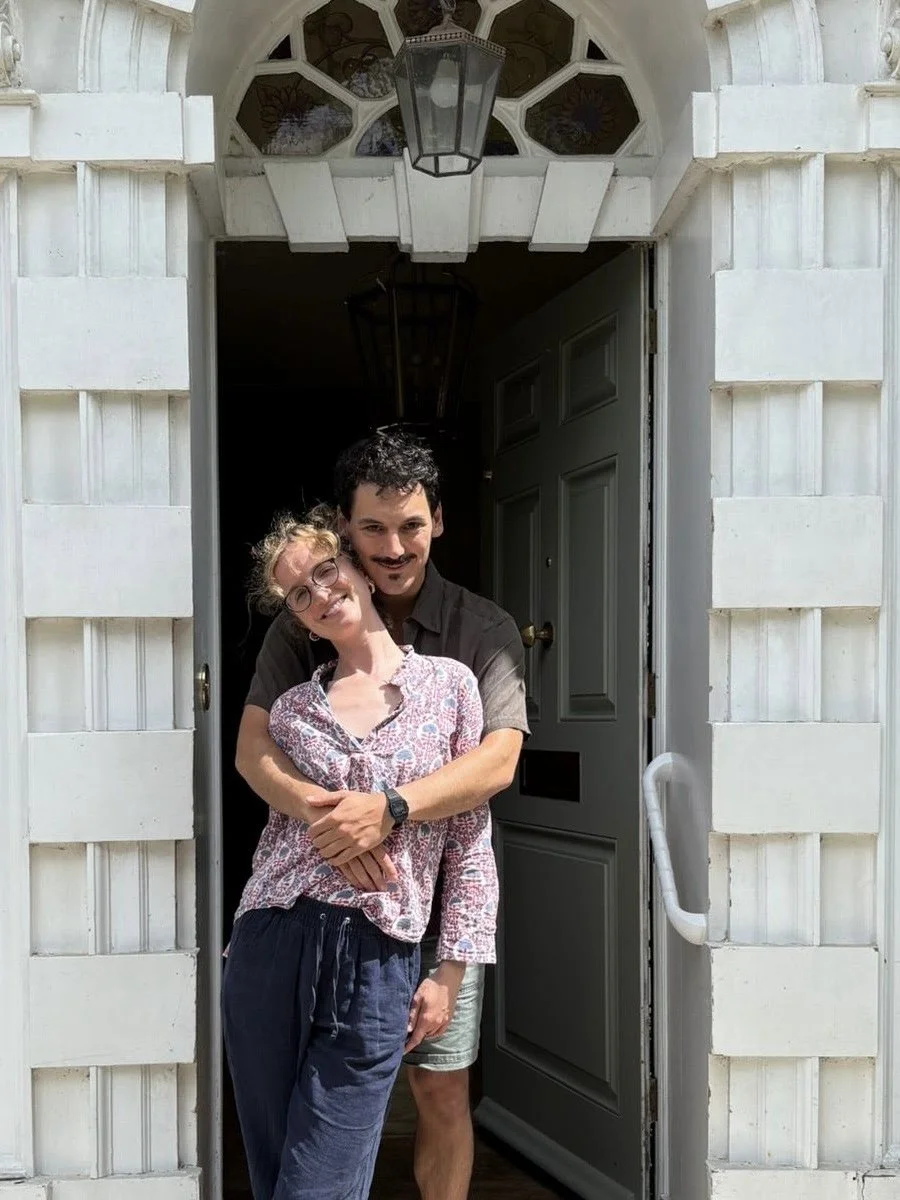
Meet Emma and Ted - our new House Guardians

1. How did you become the Guardians for Bell House, and what does the role involve

Emma first got involved with Bell House as a garden volunteer, spending a year learning from the brilliant horticulturalists and garden designers Sarah H., Shelagh, 'Cookie' and others. It was one of the wonderful gardening volunteers, Sara, who informed Emma about the opportunity.

We’d also come across the former guardians at Kingswood Arts, where we’re involved on the Community Advisory Board, and we have mutual friends in common. After Jack and Laura moved to Manchester, we knew we had big shoes to fill: they were such pioneers of community life in this part of London!

The role itself is varied. It’s a mix of contributing to keeping the house safe and secure, pitching in with cleaning, supporting events and charitable activities, and generally being a friendly point of contact. No two weeks are ever quite the same, which keeps it exciting. 

2. What drew you to becoming Guardians, and what do you hope to gain from your time here?

Two of the charity's pillars, mental health and neurodiversity, are really close to our hearts. 

Emma’s late mother worked as a highly specialist speech and language therapist for the NHS, Ted works as a psychiatrist, and Emma now tutors with a particular focus on supporting students with SEN. It feels really meaningful to bring those threads into the work we do here.

We also feel strongly about supporting educators. Devastatingly, a friend ended their own life, shortly before Emma’s mother passed away, brought to the fore how incredibly important it is to support those on the frontline of education. Being here gives us a chance to contribute to wellbeing work that can make a difference for teachers and learners alike.

But we'd say the most immediate draw was community. We’ve always loved communal living — we previously shared a home with ten adults, and Emma spent nearly a decade abroad living in shared houses and co-operatives. It's equally an honour to share this role with Anna and Jarek, who have many years' experience of communal living. 

3. What would you like your impact at Bell House to be?

Although it’s still early days, we’re eager to support and help develop the wellbeing activities at Bell House.

With the support of Cher and the events team, Emma’s starting a mindfulness series from mid-September with a much-loved local yoga teacher. 

Recently she also ran a “Reset & Renew” workshop in the garden, blending mindfulness, yoga and sound healing; it was a joy to host alongside a local sound healer she’s long admired. 

One dream is to fundraise for sound healing equipment, so we can offer free sound bath meditations at Bell House to mothers living with chronic illness in Southwark — something very close to Emma’s heart, in memory of her own mother. 

On the education side, Ted is hoping to use his experience of working with young people with ADHD to set up an ADHD Advice Clinic to support local young people and families.

We also love welcoming the artists-in-residence, as well as the recent potters like Rowena and Andy. We're keen to support future residencies. It feels like such a privilege to share a home with them; they bring so much creativity, conversation, and inspiration, both to the wider community and to our own dinner table chats!

4. Could you tell us something unexpected about yourselves?

Between us, we speak eight languages and have lived in 14 countries. But maybe more surprising is that we’ve both spent over a decade practising martial arts! It’s had a significant influence on us: from how we approach breathwork to mental discipline, and even our shared interest in Eastern philosophies. Those lessons continue to shape the way we live, and the work we do today.

Author and Photo: Emma and Ted


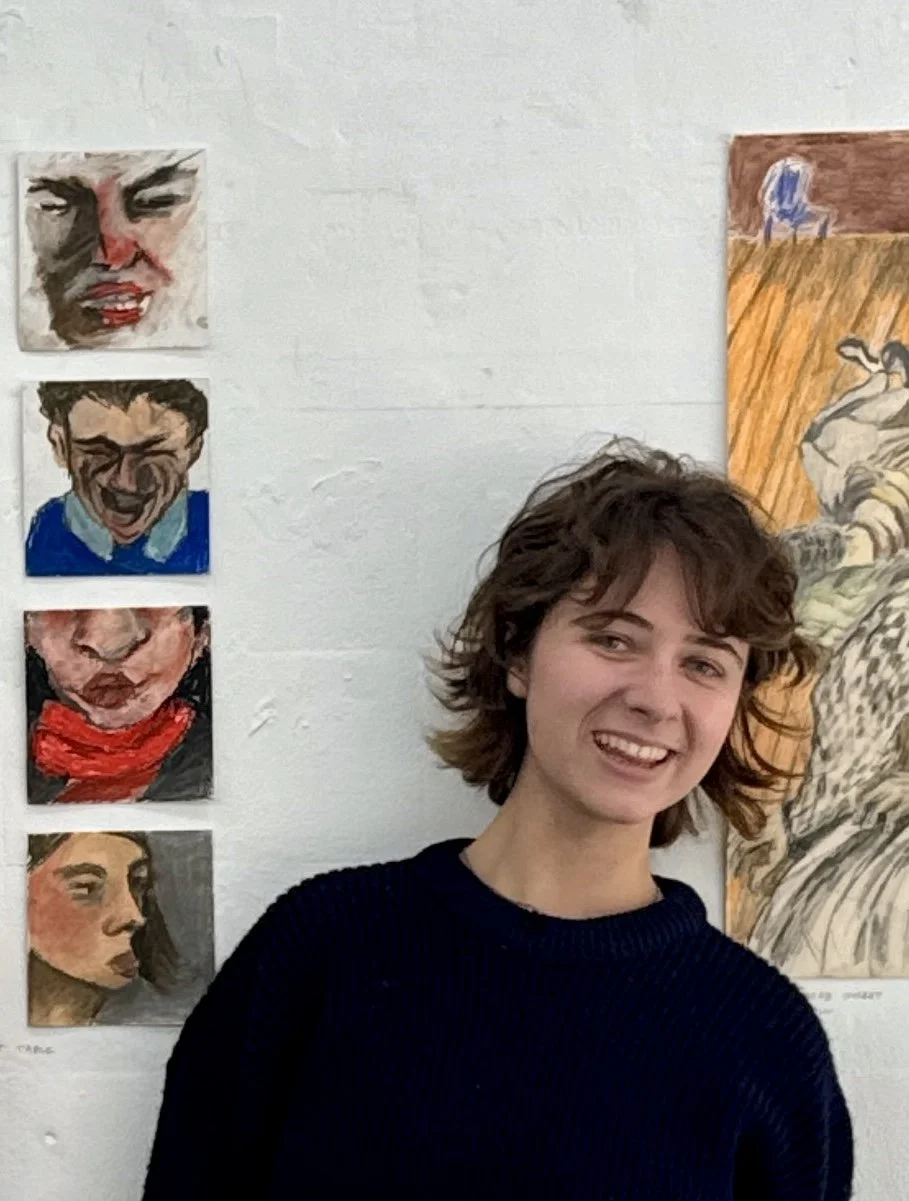
Rosie Bayliss - our new Artist in Residence

1. How did you become the ‘Artist in Residence’ for Bell House?

I first heard about Bell House through a friend who runs workshops here. I visited for the open studios and later for the open gardens, and was struck by the generosity of the community and the outreach programming. After spending time in the space and meeting volunteers, I raised the idea of a residency with the board and it all came together.

2. Tell us a little about yourself and your ‘art journey’ so far.

I grew up in South London and later Brighton, where I completed my art foundation. I then studied Fine Art and Writing at the University of the West of England, a rare BA course that allowed me to explore both painting and writing. The tutors and technical staff were incredible. After graduating in 2022, I received the Dreamtime Fellowship, which gave me a studio and bursary at Spike Island, Bristol, for a year. My work, both written and visual, explores unlikely connections and unreliable narratives.

3. What do you hope to gain from your time here?

Being the Bell House artist in residence offers me the space and time to focus on my practice. I’m excited to create new work inspired by the house, gardens, and Dulwich Picture Gallery. I’m also excited to run workshops and contribute to making art more accessible, something I’m very passionate about.

4. Have you been asked to get involved with activities at Bell House—for example the Art Studio sessions or outreach projects? What would you like to bring to this side of things?

I’m running a fortnightly Saturday drawing class exploring different approaches to life drawing. It’s inspiring to see how people interpret the same guidance in unique ways, which reinforces the importance of art as self-expression. I’m going to start working with the Bell House Creative Health committee to expand outreach and bring workshops to specific communities.

5. Apart from your art, what else would you think we’d be interested in knowing about you?

I love reading and writing, especially about storytelling and how we create narratives to make sense of our lives. I enjoy conversations about people’s creative practices and am passionate about amplifying underrepresented voices. Outside of art, I also love cycling and a pub quiz!

Author and Photo: Rosie Bayliss


Bell House Summer 2025 Newsletter


Welcome to our Summer newsletter - it’s time to tell you what’s been going on…


What’s New @ the Bell House Pottery?

by Jim Belben

Raku

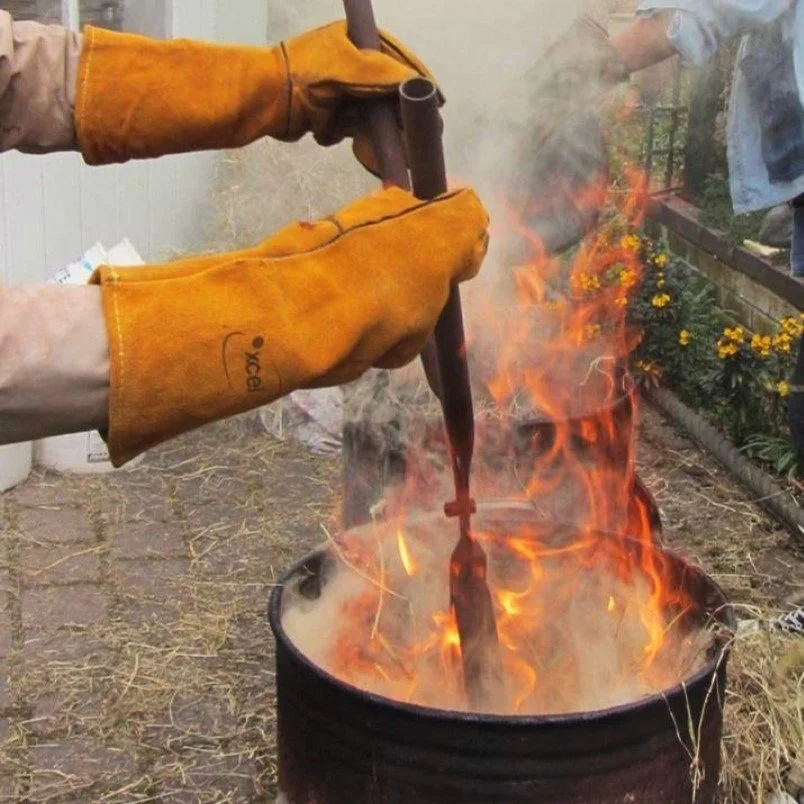
Anyone who has watched the Great Pottery Throwdown will have witnessed the excitement of Raku. This ancient Japanese art is famous for its dramatic 'live' outdoor firings with a strong element of surprise. 

Well, in July, Raku will come to the Bell House Pottery for the very first time!

We have spaces for 32 students across four courses from beginners to intermediate. The making sessions will be led by Gaby Mlynarczyk who is the latest recruit to our teaching team, then the following weekend the glazing and dramatic outdoor firing will be led by visiting Raku expert Andy Mason. To book your place, please click here.


‘Let’s Clay Together’

From the start, one of the aims of the Pottery was to extend our reach to people who we know would enjoy and benefit from a pottery session but who can’t afford it or don’t yet know the benefits. We feel like we have made significant progress over the past year. 

We now offer two half price places for every course which are paid for thanks to the generosity of other students, many of whom give a top-up donation when they place their order. 

We are also gradually building links with community organisations who we invite to the pottery for a free ‘Let’s Clay Together’ session. We try to run at least one per term. We have so far hosted two school groups, a Ukrainian youth group, a GP practice, Kingswood Arts, and most recently the Paxton Green Timebank. Next up is to work with Aphasia Reconnect thanks to the introduction made by the Creative Health group.

If you know of a community group whom you think would benefit from ‘Let’s Clay Together’ please email me, [email protected] 

Potter-in-residence

Following the success of the artist-in-residence scheme, we are proud to announce our first ever potter-in-residence, Rowena Hamilton from Derbyshire. 

Rowena is based in the Peak District in Derbyshire. Since graduating from Clay College in August 2024, she has been making functional and decorative pots on the wheel with some hand-built elements. Her work references archaeology and anthropology.

During her residency she’ll research and develop new shapes, combining forms and textures from basketry and other found materials.

This is particularly exciting because normally our studio would close during August to give the teachers and technicians a break. To see it well used over the summer will be so exciting.

Thanks to everyone in the Bell House community for their incredible support of the Pottery over the past two years. It has been an amazing and rewarding journey to everyone involved and we are very excited about the future.


“Doing our best” in the Bell House Garden “thanks to our volunteers”

by Martin Cook

Image © Sara Lloyd

It's been another successful, fulfilling and encouraging year in the garden at Bell House.

Re-shaping

​The pollinator bed planted late last spring is maturing really well. This was funded by a grant from the London Bee Keepers Association (LBKA). We have added plants and developed the new 'Pebble' bed, so the borders along the South wall are shaping up really well. We have planted new climbing roses around the roped terrace, an area which gets lovely late afternoon sun and have been gradually moving existing turf about to reshape the house lawn. The walled garden goes from strength to strength. Herbs particularly seem to thrive in our raised beds.

Native species

We have seen far more butterflies this year, hopefully because of our planting efforts, but definitely helped by the dry, warm early spring. Toads are in the compost again, plenty of newts in the wildlife pond and some plump tadpoles have survived our introduction into the dipping pond. We watched a Sparrowhawk nest and raise a fledgling in one of our oaks last summer. We are gradually seeing a wider range of native species in the meadow beds and the snakes head fritillaries were magnificent. In the Pickwick grassland we have lady's smock appearing.

Garden HQ and Tool Shed

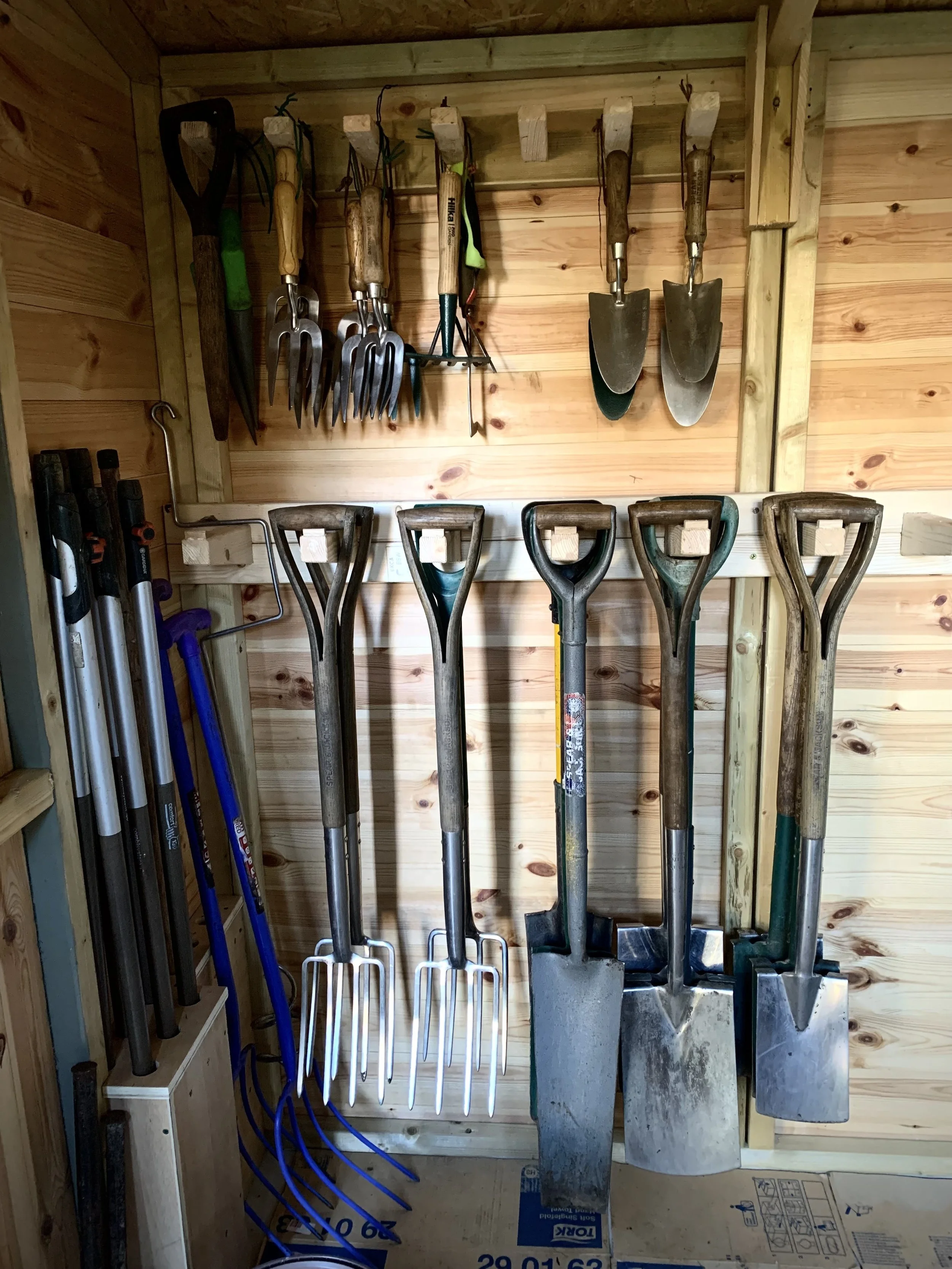
The tool shed is now well stocked and in full use and we are meeting in the beautifully refurbished building, the garden pavilion (which we like to call our HQ! ) but will be used by all projects at Bell House. It’s situated next to the bees.

The polytunnel success

The polytunnel is being well used and we’ve had good early food crops. Bought in plug plants have been successfully grown on and mostly planted out in the garden. On our regular open days, visitor numbers have increased. It's lovely to see people relaxing, sipping coffee and enjoying the garden. Our plant sale offering is gradually improving and brings in welcome income to help with funding and increase the range we can stock.

Volunteers - our not so secret army

We have roughly 60 active volunteers, whose skill set has improved enormously. The social atmosphere is delightful and we can see there is a strong feeling of ownership developing. However, we have realised that as areas are improved, the maintenance effort has to go up enormously! So we would welcome more volunteers please. Landscaping the pottery entrance is the next big project. As well as improving the entrance, it will provide new, dry garden conditions, to broaden our range and habitats. ​

Our ethos remains the same. To do our best for wildlife, in terms of the variety and quality of habitat and food source we supply. We have added new habitat towers using the old pickwick fence posts and in many other areas. It's been a challenging dry spring and we could really do with some decent rain, but we do our best to give things the conditions they need to thrive, watering deeply when needed and mulching heavily.

Happy gardening all.


The Incidentals - an in-depth look at the exhibition

by Kim Thornton

Each year Bell House opens its doors for the Dulwich Festival Artists’ Open House and invites a team of curators to create a thought-provoking exhibition. The show is a survey of contemporary artists practising and exhibiting in London.

This year’s theme was The Incidentals. The curators, Kim Thornton, Lucy Soni, Min Angel, Sarah Sparkes, Jane Millar, Léonie Cronin, Monika Kita and Lucy Bainbridge approached this in a variety of conceptual ways such as whether any painting brush mark could ever be considered incidental or unimportant, through contemplating the incidental nature of materials or by searching for incidental every day subject matter. In total they invited over 70 artists whose works would contribute to the story each curator wanted to tell.

Bell House welcomed in the region of 2,000 visitors during the two May weekends of the exhibition, some local and some who had travelled to see the work of artists they knew or had discovered on social media. The exhibition was overall very well received.

But of course, everyone evaluates and perceives art differently depending on their own experiences, beliefs, feelings and views. As Whoopi Goldberg said, “Art and life are subjective”. However, it can be interesting to learn more about the thinking behind an artwork as a doorway to a different kind of viewing experience.

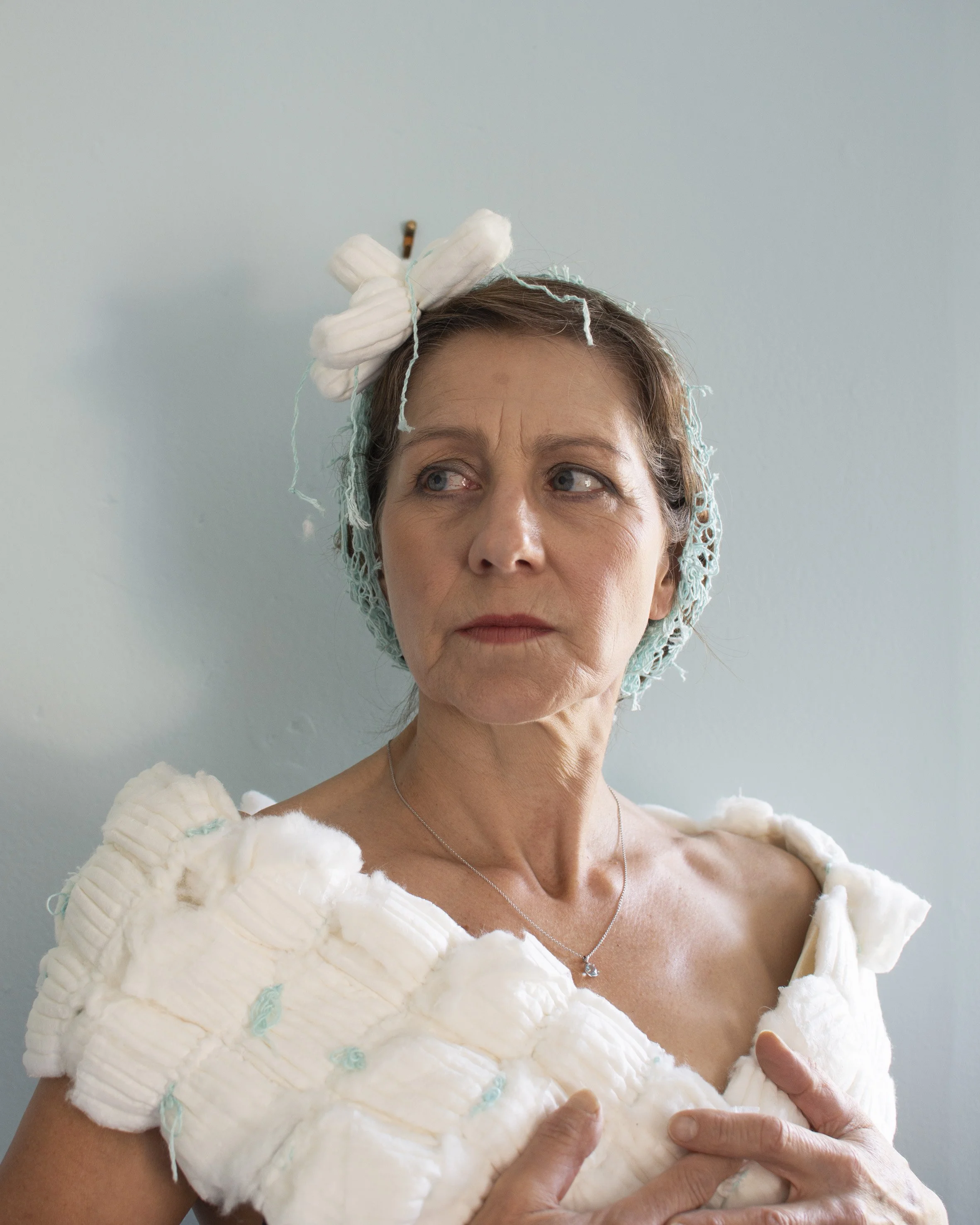
In the Wissman Room you may have come across a small, framed photograph of a woman wearing a stole with some kind of fascinator in her hair. On closer inspection the material that these objects are made of becomes apparent. They have been carefully fashioned from tampons, an everyday item used at some point by almost all women around the world, yet something discrete that is not usually made visible. 

The work was born from a parliamentary debate in 2015 where the notion of female sanitary products falling within the government’s list of luxury items for tax purposes was discussed. The idea was to impose an additional 5% tax on these “non-essential, luxury” items.

The artist Kim Thornton, who uses humour and rebellion to explore contemporary issues and the politics of being female, decided to make a ‘luxury’ tampon stole and fascinator to comment on this ridiculous idea. The tampons are carefully stitched together with their blue strings pulled from them and knitted into the hairnet or used as tassels for the stole. The staging of the photograph was inspired by an image of Queen Elizabeth the Queen Mother and the framing references postage stamps where royal profiles are commonly placed.


Bringing Poetry to Bell House 

by our featured Volunteer: Matthew Otor

A Little Background - Why Poetry?

I grew up always feeling like I had something to say. From as early as I can remember, I'd gather kids in my compound and just talk to them - there was this sense that something inside me was waiting for an outlet. I felt like I had a different opinion or perspective that needed to be shared.

Initially, I thought politics might be my path. I was drawn to how members of parliament could make their words carry such weight and meaning. However, when I stumbled upon spoken word poetry on YouTube, I just knew this was what I'd been searching for. It's been a life-altering journey ever since.

Discovering Bell House

I was new in town and actively looking for poetry communities when I found Wendy and Robert's Fringe event on Eventbrite. I thought it would be perfect for me, though I didn't realize the audience for that event was quite mature - everyone was surprised to see me there!

Despite the initial surprise, I had such an amazing time. Right after the event, I had a chat with Angus where I mentioned that I used to host poetry events back in Lagos. He immediately asked me to explore the idea of hosting one at Bell House. And that's how "Poets at Bell House" was born.

The Vision Behind Poets at Bell House

When we started planning, the thinking was simple but ambitious: create a space where poetry could flourish authentically. We wanted to build something that honored both the art form and the community that surrounds it.

Ambitions

We're hoping Poets at Bell House becomes a household poetry event in London - a place where experienced and emerging poets alike can share the same stage and tell their stories unapologetically. Our vision is to create a safe space where poets can express themselves with complete freedom.

We're also focused on increasing our production value and creating much better content that truly befits the amazing poets we host. The dream is to grow into more frequent editions, building a stronger, more vibrant poetry community.

A Personal Favourite

One of my favourite poems I've written is titled "SCUM" - Society Cannot Understand Me. In it, I tell two vivid stories of people in society we would typically consider as lowlife and useless, but I reveal their backstories - showing how they became the "monsters" we all see today. 

Poetry allows us to look beyond the surface and find the humanity in everyone's story. That's what we're building at Bell House: a space where every story matters, every voice is heard, and every poem has the power to change someone's day.

Poets at Bell House continues to grow as a vital part of London's creative community, offering a platform for authentic expression and meaningful connection through the power of spoken word.