Bell House Summer 2023 Newsletter


Welcome to the second of our seasonal newsletters. In this Summer edition, you’ll find a selection of recent news and updates from Bell House, which we hope you will enjoy!


Looking for a Quick Fix of Wellbeing?
Just one or two hours a week of voluntary work can deliver a bucketful of wellbeing, with the power to enhance both physical and mental health.

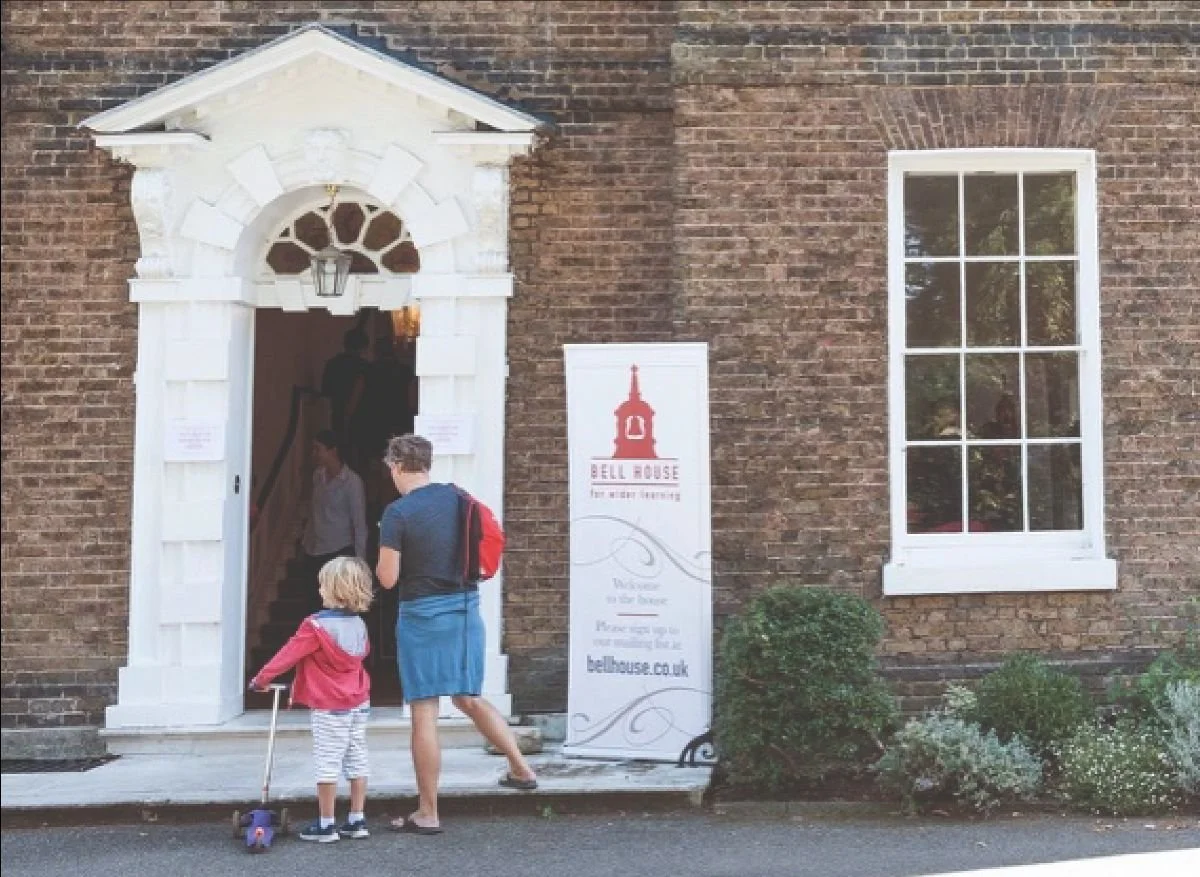
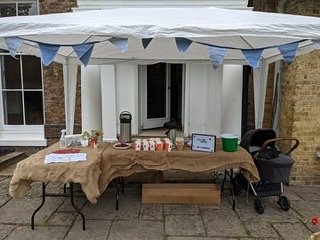
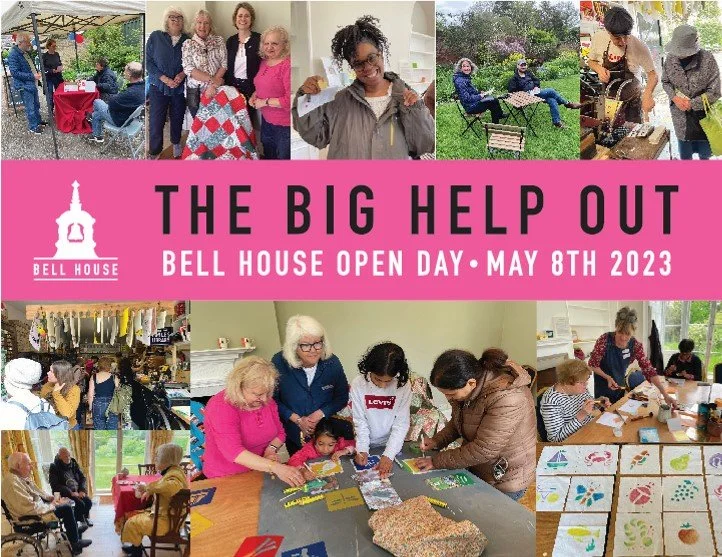
During the COVID outbreak, all face-to-face volunteering at Bell House was sadly curtailed, and some of our regular volunteers have been slow to return. As a non-profit organisation, dependent on our volunteers’ support, we were delighted to participate in the King’s Big Help Out initiative on Monday May 8th to welcome new and old visitors to Bell House, with the aim of encouraging more volunteers.

The Community Help Out Day showcased many of the activities we run at Bell House and promoted the ‘P4 bus route initiative’. Volunteers, led by Ann Revel and with huge support from the Garage Press, the quilters, the gardeners and our art tutor organised a fantastic range of activities for our visiting public to enjoy.

During the four hours, we welcomed a steady flow of 135 visitors including a special visit from local MP Helen Hayes who came along to provide us with her personal and social media support.  

It was wonderful to witness the many positive responses to Bell House and our volunteering opportunities, and a number of initiatives were enthusiastically discussed including: 

• Opportunities to help ‘front of house’ at Bell House events and in so doing get to enjoy it yourself for free. 
• Potential to host regular meetings for older members of the ‘P4 bus community’ - offering an opportunity to chat and make friends. 
• Bell House’s gardening opportunities are always a widely-discussed topic. In order to widen the accessibility of gardening opportunities we explored suggestions to enable children to volunteer at the monthly Open Garden Saturday mornings and to potentially launch Summer evening sessions, more suited to working people.

Without the power of the volunteer, non-profits such as Bell House could not exist. And as it turns out, volunteering helps to enhance our own wellbeing.

So why is Volunteering Good for You?
To list just a few benefits, it can:
• introduce you to new people and friendships.
• provide a sense of purpose and fulfilment.
• boost your self-esteem, making you happier and more fulfilled.
• help reduce stress. benefitting the health of our mind and body. In fact, some studies in older adults have shown even lower mortality rates in volunteers vs non-volunteers.

Nothing gets done by one person alone, which means volunteers have to band together to make a difference for the cause they are supporting.

Surprisingly, this is the first time Bell House has run a volunteering call up day, but it won’t be the last. The Help Out initiative will now become an annual event. We hope to see you next time! 

In the meantime, if you would like to get a ‘Quick Fix of Wellbeing’ at Bell House, please do sign up for volunteering.


Children, Drones and Bumble Bees Helping Pollination

There’s a ‘politics’ in beekeeping. It’s considered a service to gardeners, but did you know that the current trend in bee-keeping is actually detrimental to the ecosystem?

We've all read the reports of ‘bees dying’ and the ‘need to save the bees’, but what is rarely reported is that there are ‘too many honeybees’. Spend a few hours with the Bell House beekeeper Annie McGeoch, and you’ll not only become a fan of honeybees, but you’ll also see the bigger picture.

What you may not already know about bees, and in particular honeybees ….

There are 279 bee varieties in Britain - of which just one is the honeybee.
Scientists and experienced beekeepers believe that the vast number of honeybees, combined with a lack of pollinator-friendly spaces, is putting other pollinators at risk.  

Honeybees make more honey than they need - but why?
We don’t really know! But it’s thought that spare honey is used when forage is unavailable. However, if the hive becomes too full of honey, the queen no longer has enough room to lay eggs and produce her brood - then this is when a swarm is more likely to occur - the queen is leaving the hive with many worker bees, in search of a new home.

Bees can cope with the cold.
In the hive, the worker bees - wings vibrating, huddling together, heads pointed inward - cluster around the queen to keep her and her brood warm. Heater bees can raise their body temperatures higher than others and directly warm pupae as well as hanging out in the empty cells of a brood nest to distribute their body heat around the nest.  

Can bees fly in the rain?  
Yes, they can but it’s dangerous and so they usually don’t. Even mist on a bee’s body can interfere with its flight and a large raindrop can knock it down. The water impedes the bee’s wing beat, which is normally about 12,000 beats per minute. And without the sun, they have difficulty navigating between their food source and their home.

The worldwide overuse of neonicotinoid pesticides and greater urbanisation has killed off honeybees and other pollinators.
In some communities of the World, pollination techniques have become creative! Children climb trees with paintbrushes loaded with pollen,  bumble bees are farmed and pollen is dusted on their legs before they’re released and drones have even been designed to carry out crop pollination! 

If you get stung by a bee - scratch off the poison, don’t squeeze it.
And remember they mean you no harm - you may have just got in the way of one of their bee highways - and after all, when they sting you, they are committing suicide, so don't be too hard on them!

As it transpires, it’s not just the honeybee that makes too much honey for its needs - we humans do too. There are just too many hives being set up in the belief that honeybees will help pollination. But to concentrate on the honeybee as the main crop pollinator is to fail the rest of the insect pollinator community, including flies, wasps, beetles, butterflies and moths.

To guarantee healthy crops of fruit, nuts and veg, to ensure plentiful harvests of non-self pollinating grains and to guarantee a wealth of pollen-making flowers, we need to control the number of honeybees.

And the 278 other varieties of bees deserve our attention and care too. After all, they make a huge contribution to our eco environments in gardens, fields, woodlands and other habitats.

To leave the last thought with the Bell House beekeeper, Annie McGeoch:
“Honeybees are completely different from us - they cooperate with each other in order to survive - it’s a lesson for mankind.”


Windows and Thresholds - a Reflection
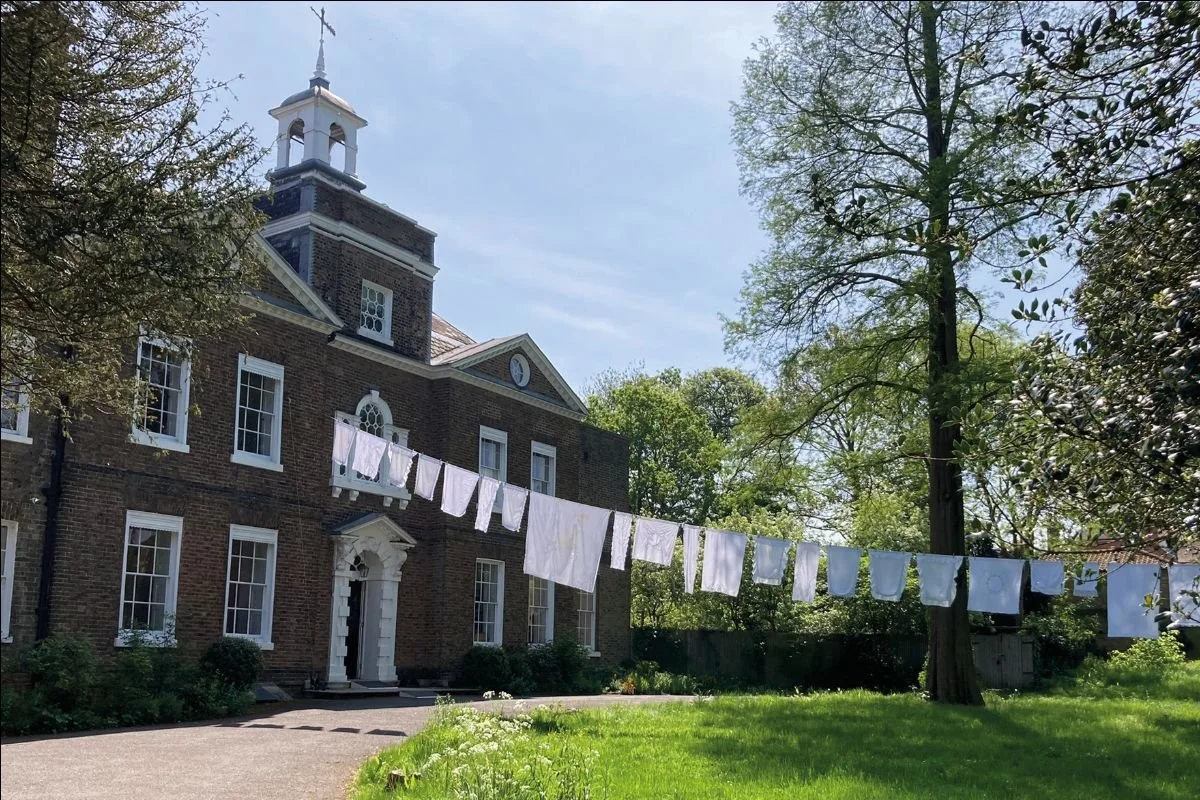
It's rumoured that in years gone by, you’d have been harangued by your neighbours or even fined for hanging out your washing on a Sunday in Dulwich Village. Yet last month for two weekends, Bell House did just that. A line of washing stretched from a tree in the front garden to a top window. It certainly caught everyone's attention but why was it there?

The washing line was making a very public statement to announce the Bell House ‘Windows and Thresholds’ exhibition, featuring over 40 artists as part of Dulwich Festival’s Artists’ Open House. Five female curators each took a room and invited us to look inward and outward. It was a great success, with over 2000 visitors during the weekend.

Lucy Soni, a local multi-disciplinary artist created the washing line piece. The work was named “What’s Left Behind and What We Keep”. Lucy was inspired by the things she found in her mother’s cupboards after her death. These inherited white linens were stained with memories of times past of her mother’s life. 

This attention-seeking work, visible to everyone who passed by, was a reinforcement of how present-day women artists can work, wherever they wish, in the open, outside - something that was frowned upon, and for some prohibited in the past.

The artwork was also a nod to the Dulwich Picture Gallery's current exhibition, which is showing work by the 18th century artist Berthe Morisot. She was one of the most significant Impressionist painters and the only female founder of the Impressionist movement. Morisot lamented that unlike male artists of her time, she was limited to painting early in the morning - preferring to be home by 9am before the ‘masses were out and about’. And so, many of Morisot’s works, depict views through windows and doors.

One work that really got the visitors talking to each other was Monika Kita’s “Who Is it?” As visitors passed by a cupboard in the Gowan room, they heard a knocking sound.  What was it - was someone in trouble - were they trapped - should they open the door and let them out?

And over the first weekend, Laura Moreton-Griffith delivered her performance piece “A Hauntology” around Bell House. Laura played the haunted protagonist wandering, a key in hand, searching for the door it would open.

There were so many wonderful works - paintings, prints, sculptures and installations - sadly too many to mention here. The exhibition works showcased Bell House to perfection - highlighting its history and beauty but also its ambition to be a house which opens its doors and gardens to the local community for all to enjoy.

And in case you're wondering, there were no letters of complaint about the washing line. Kim Thornton, curator-in-charge said: “We wondered if there would be, an artist always wants to disrupt!” There may have been no haranguing this time, but the ‘Windows and Thresholds’ exhibition certainly received a lot of approval from its neighbours!


The Bell at Bell House
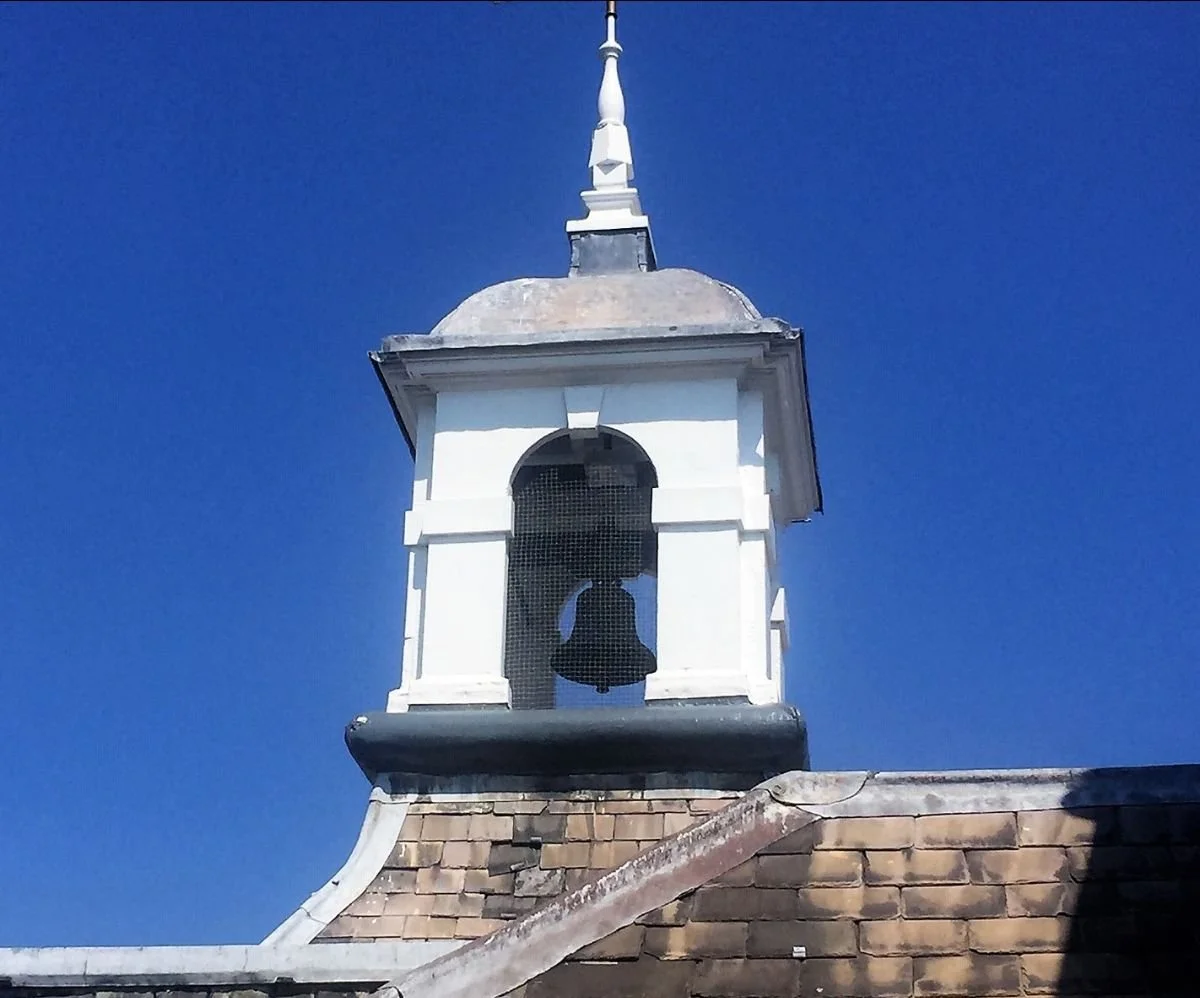
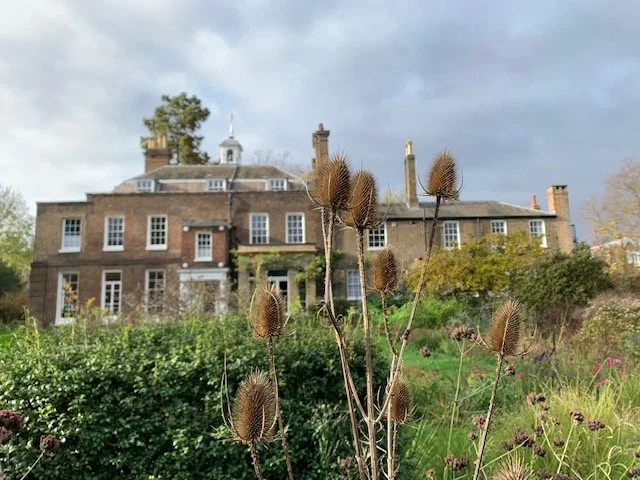
Although a grand house, Bell House wasn’t built for a grand family. It was commissioned by Thomas Wright, a warehouse worker who started his own lucrative business publishing almanacs, bibles and prayer books.

From humble beginnings, Wright later became Sheriff of the City of London in 1779 and Lord Mayor of London in 1785. He built Bell House in 1767 as a rural retreat from City life. At the time, the house included several acres of farmland, later forming part of Dulwich Park. 

Wright was a charitable man, generous with his time, money and business expertise. He supported many local charities and helped fund a fire engine and a shed near the Burial Ground to store it.

For 100 years, the bell of Bell House was rung when a fire broke out in the Village. According to a local resident Thomas Morris, when a fire broke out at the bakery on Bonfire Night around 1847, the ‘Fire Bell’ at Bell House was rung with all its might.

Nowadays it is rung when a person is visiting the house for the very first time. At our recent Bell House Community Open Day on the 8th May, the bell was rung many times to welcome our new visitors.

Come and visit Bell House soon  - if you ask nicely - you may even be able to ring the bell.
 

Bell House Spring 2023 Newsletter


We're excited to launch our new quarterly newsletter. It’s a chance to share a few short stories which we hope you both enjoy and find interesting.


Bell House - A Magical Place

Lovers of Bell House say it's magical. Visitors and volunteers describe it as a truly special place where people gather to learn, create friendships and enjoy themselves.  There are no rules at Bell House we welcome new ideas, however daft, for events and classes. We are always looking for ways to broaden the appeal.

Sadly not enough people get to experience Bell House. The volunteers who help run the place want to create a more open-door policy to address this, and to make sure that everyone feels welcomed to the house.

The house is part of the infrastructure of Dulwich Village - a beautiful building with very special gardens yet few people really know what goes on inside. There’s a notice board by the gates where walkers will often stop to read the signs but they still don't really understand all that the house has to offer to the community. We want to improve awareness by creating a ‘P4 bus route community’ through which Bell House will reach out and advertise Bell House, a magical place for everyone to share.

Bell House is growing – originally founded as as an educational charity with the aim to help children with dyslexia, it has continually diversified and continues to extend its reach. Over recent years, it has grown its learning from neurodiversity to include health and creativity. The volunteer-led charity is building a new ‘P4 community’ to extend beyond Dulwich to its neighbours in South East London and is looking for new ways to share messages and news.

Bell House wants to share its magic and welcomes ideas for creative learning - however daft.


Dulwich - where town planning was masterminded

Love them or hate them, Southwark Council’s road changes have got us all talking and believing we know the solution to the congestion and air pollution issues.

But what you may not know is that the founder of British town planning was a Dulwich man - Ebenezer Howard (1850-1928) who lived at 4 Ildersley Grove, West Dulwich. Howard wasn’t a professional town planner, but a shorthand writer for the House of Commons.

By listening to all the debates, he understood the problems arising from the Industrial Revolution. People migrated in huge numbers from the countryside to work in urban factories, living in overcrowded slum conditions, breathing polluted air.

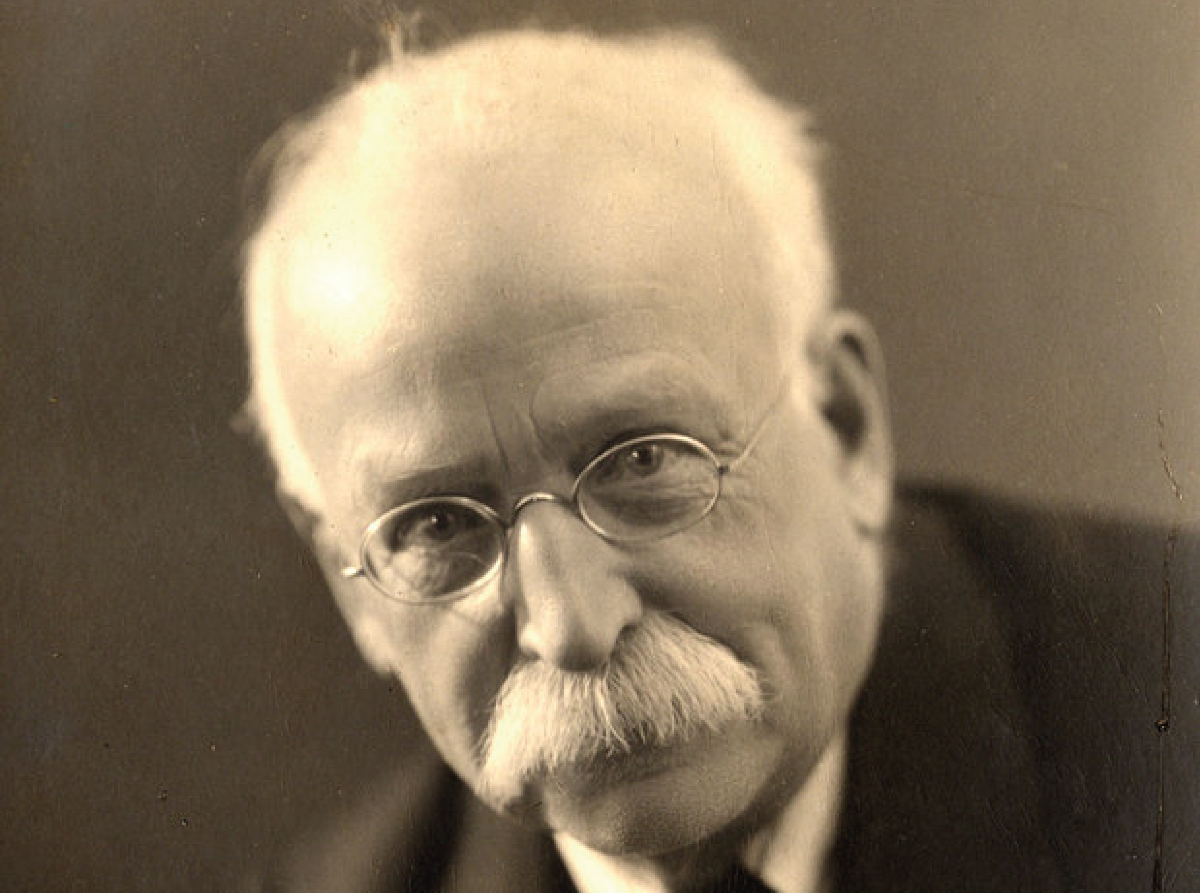
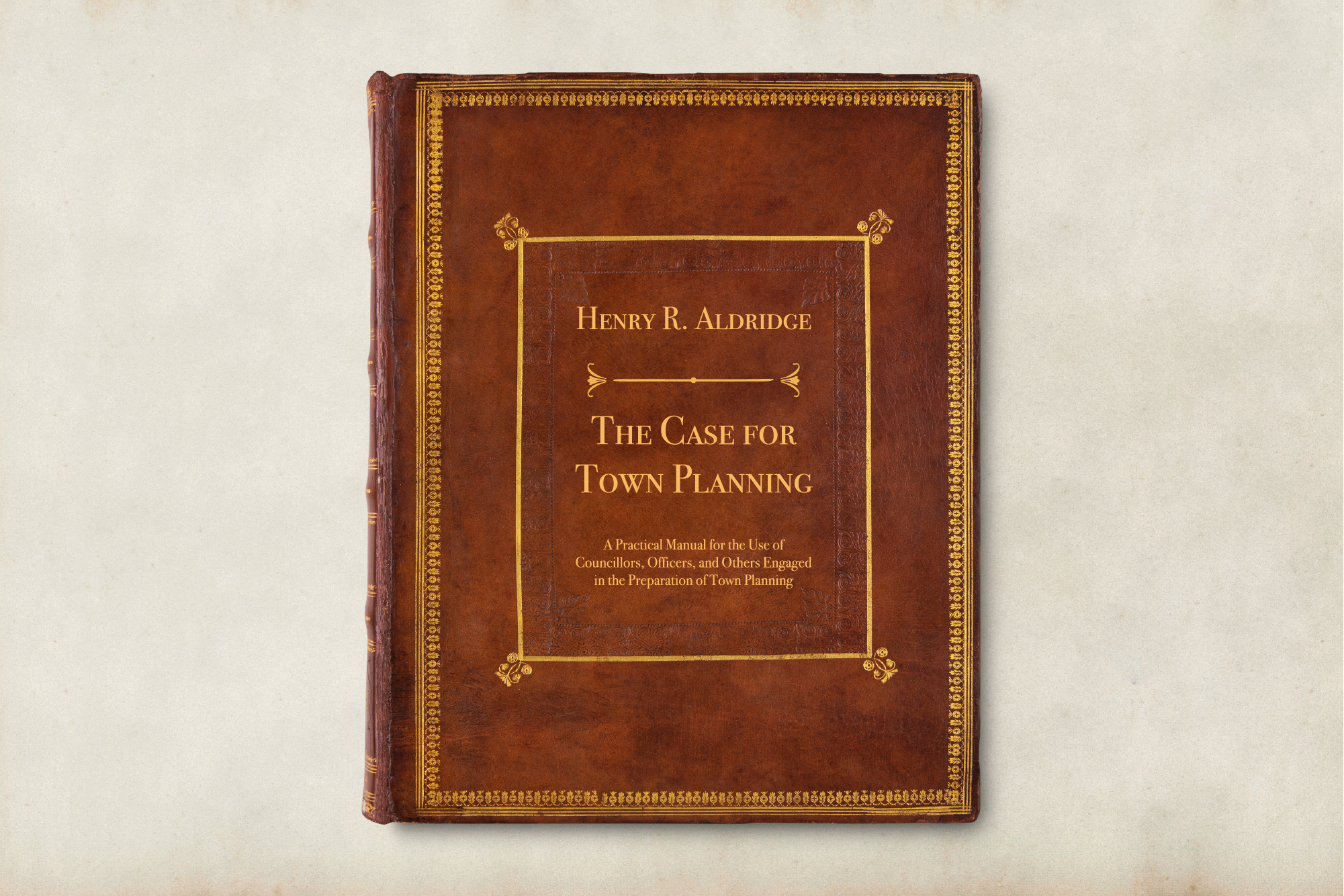
Another Dulwich resident, Henry Aldridge (86 Oglander Road, East Dulwich) campaigned for better living conditions for working people. He was the secretary of the National Housing and Reform Council (NHRC), the organisation established ‘to advocate and work on non-party lines for practical housing reform’.

In October 1894, Aldridge gave a talk to the East Dulwich Radical Club on ‘The Town Problem and the Land’. He spoke of ‘the unhappy environment in which the worker existed - his clothing, shelter and food were the meanest…’

If you'd like to learn more about these and other Dulwich Social Reformers, Duncan Bowie, author of 200 Years of Dulwich Radicalism, is giving a Bell House online talk on Tuesday,  March 7th, 20.00 which you can book using the link below.


Three ways to plan for the gardening year

The long, hot dry summer followed by the recent deep frosts, have been tough for plants in the garden.  Some won’t have survived but in their place we get to try new things.  

Here are three ways we are preparing and planning for the year ahead:

Being less tidy.  It’s challenging but there’s a happy mix where we can enjoy our gardens and support wildlife and biodiversity. We’ve left long grass, long stems and seed heads over the winter to encourage biodiversity. Dave Goulson’s book, The Garden Jungle, is a great reference.

Considering what we plant.  Anything new in the garden should earn its place.  We’ll look for open flowers which allow in pollinators, different flowering seasons, plants which will be happy in their spot and won’t need watering once established. Take a look online at the Dixter garden for inspiration. https://www.greatdixter.co.uk

Planning our mowing.  We will mow our main lawn soon, varying the cutting heights around paths and edges and then leave through May. If left alone, lawns will be rich in daisies and clover for bees and other pollinators.  The key is variety in the cutting heights and no feeding or spraying.  Plantlife.org.uk is a great resource.

If you are interested in helping in the garden and learning together, come and speak to us at our Open Gardens on the first Saturday each month from 11.30am to 1.00pm.

Photo: Sara Lloyd


Domino - you're fired!

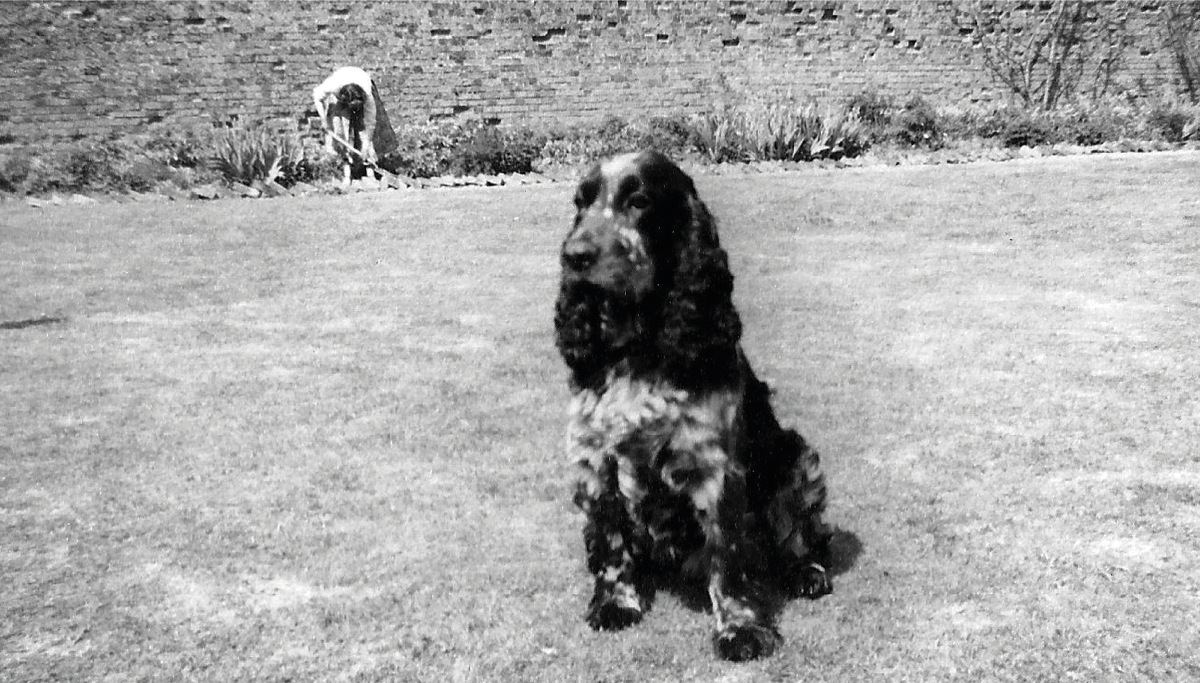
During the 1957 flu epidemic, the Bell House dormitories were turned into a sick bay as Dulwich school’s sanatorium was full. The doctor would solemnly progress through the dorms, followed by Miss Law the Matron and the House Master’s wife, Patricia Knight. 

Following in their wake came Domino, the Knight’s blue-roan spaniel, ‘gathering up as many slippers in his mouth as he could’. Domino was expelled when he tripped up the doctor.

However, Domino was useful in other ways: food for the invalids was brought down from the school but as it consisted of ‘gristly slices of cold meat and even colder potatoes’, it was often surreptitiously slipped to Domino. 

Check out Domino’s portrait in the Cabinet of Curiosities next time you’re at Bell House.


September Monthly Garden roundup

The arrival of rain at the beginning of September was welcomed by the garden…and the gardeners! Everything in the Bell House garden really perked up after the very dry spell, and we were all kept busy with the growth explosion.

September highlights, and things to look forward to, include:

 The meadow areas in both the House Garden and Walled Garden are in the process of being cut back in sections. The cuttings are left for a few days before being added to the compost bins so any insects which have been sheltering there can find a new home. Cuttings are removed to reduce nutrients being added back to the soil as meadows thrive on poor soil. Our next job will be to scarify the meadows and add yellow rattle seeds to slow the spread of grass so more wildflowers grow. We tested removing the flower heads of docks this year rather than digging them out and we will see next summer if this worked! Big thanks to everyone who worked on the meadows as it is a labour intensive job. A shout out for Jenny who put her hand up every Saturday to tackle this job.

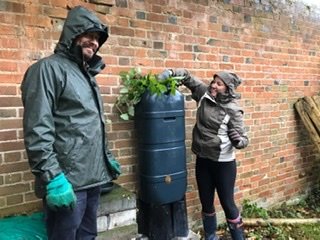
  • In the Walled Garden, the tomatoes are still going strong. We know that the cooler days and nights are coming so the tomato plants have been pruned, removing the leaves so that the plants direct their energy to ripening the remaining fruit. The garlic and onions were also lifted, and after drying nicely for a couple of weeks, have been happily received by all of us gardeners 😊. We have had a new delivery of bricks so that edging around the raised beds can continue, led by the expertise of Cookie and Reg. Our new mower finally arrived so we now have two electric mowers to help manage the grass and meadow areas next year.

  • Staying in the Walled Garden, you’ll see some “new” tables close to the Greenhouse. When a local garden centre closed down we picked up the tables which will be adapted to use as potting and demonstration tables. Also, at that end of the garden, the raspberries which were saved from the ground source heating works have never been super happy there so will be lifted and moved to another part of the garden. This bed will then be planted with Comfrey, specifically Bocking 14 Comfrey as suggested by Shelagh. Comfrey is one of the most useful and versatile plants that can be grown – it’s a fabulous pollinator attractor, a highly effective fertiliser and apparently has potential health benefits for humans (I need to find out more about this).

  • Over in the House Garden, there has been a fair bit of weeding action over September – in the Rose Garden, around the arch leading to the Rose Garden and throughout all of the main beds. Our winter project will be to improve and replant the long border with more perennials and grasses. We also plan to work on the quince and rose arch, pruning the roses so that they flower lower at the sides and leaving more light and space for the quince to grow over the arch itself.

Bell House Garden will be open again on November 5th.

Arrive anytime between 11am and 12:45. Tea and coffee will be available. We encourage a £5 donation that will go towards garden maintenance and activities. Free tickets are also available.

September News for Gardeners

As the first September leaves start to fall and the nights become cooler, let’s reflect on the garden activities over the hot and dry Summer months.

Over in the House Garden, the Bog Garden pond has fared well. It has been a hive of wildlife activity with Damselflies and Emperor Dragonflies being spotted. The latter is a very large, impressive dragonfly - males are pale blue, with an apple-green thorax and a black stripe running the length of the body. Females are similar, but a slightly duller greeny-blue. Both are spectacular. A fact I didn’t know is that Emperor Dragonflies are a characteristic dragonfly of new ponds and, for the first few years, the larvae may be extremely common (courtesy of The Wildlife Trust). Dragonfly larvae have been spotted in our pond, in addition to water boatmen and smooth newts!

Behind the Rose garden, the meadow area has been cut in sections over the last few weeks. This is a technique used to extend the growing season of a wildflower area in the following year. I’m looking forward to seeing the results next year. Some of you may also have been lucky to have seen the leaf-cutter bees in the insect houses in this area. Check to see if they are still there the next time you are in the garden.

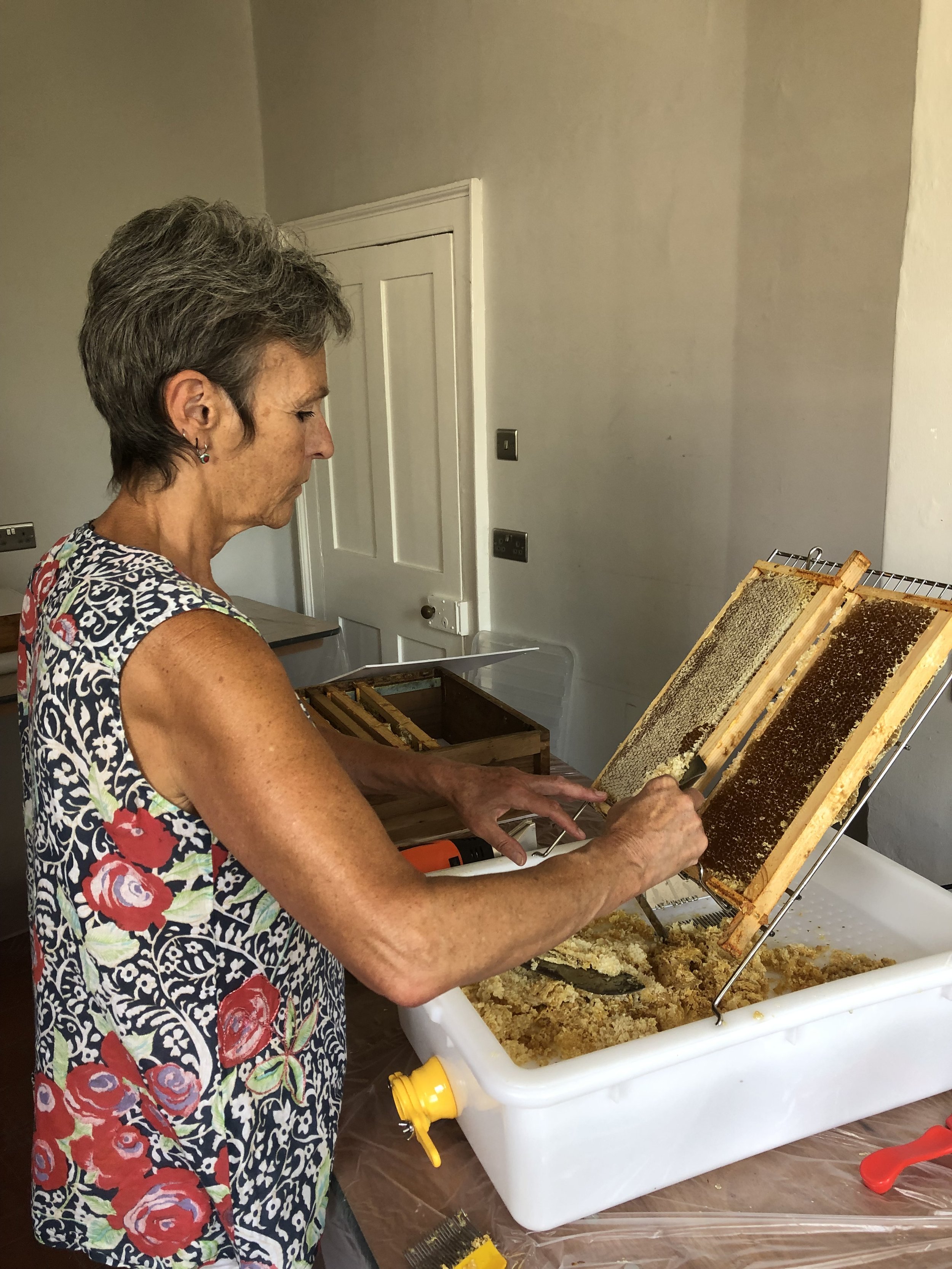
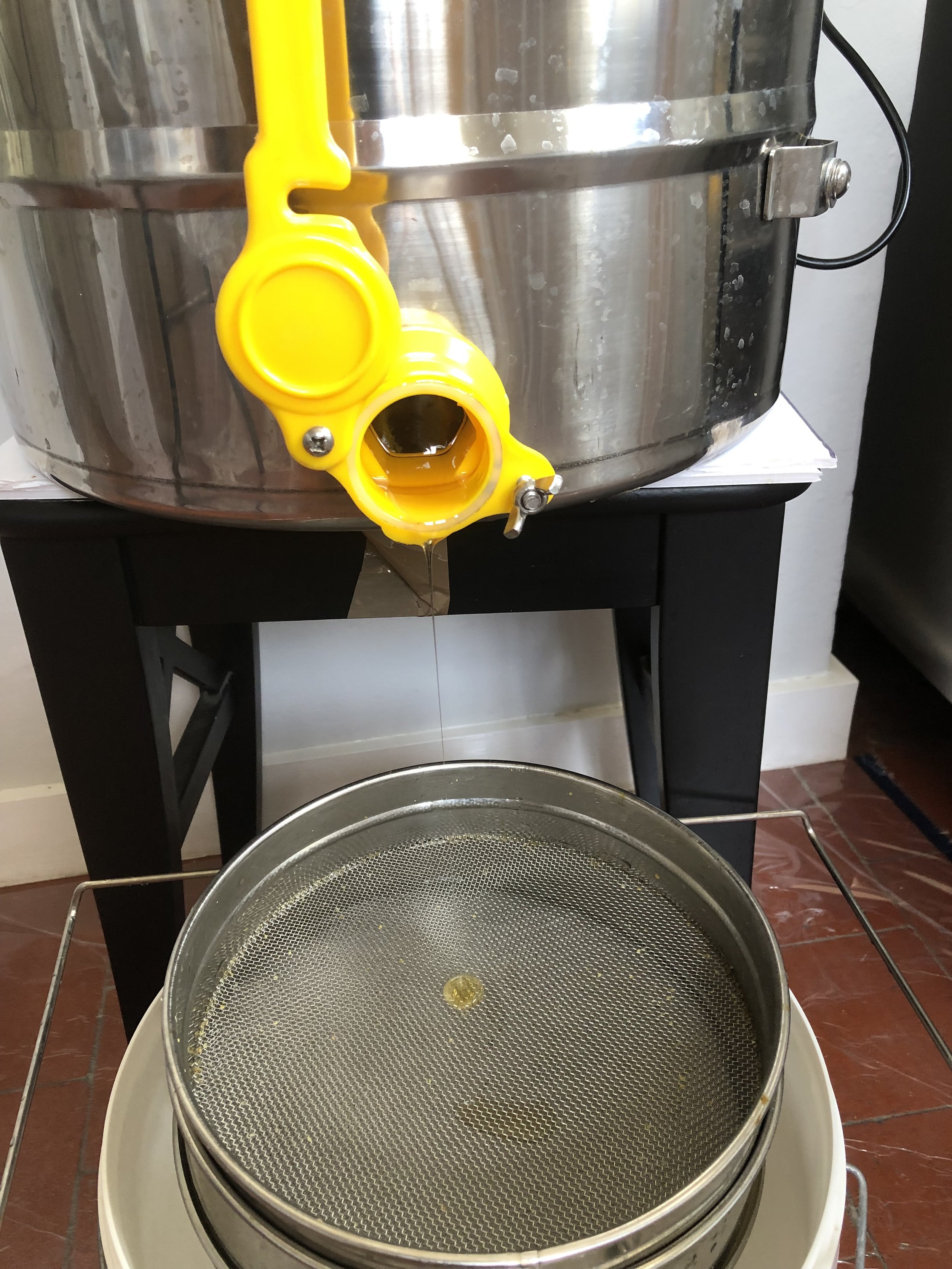
While we are on the subject of bees, Beekeeper Annie had a very busy week back in July with honey extraction in the Filmmaker kitchen. Here’s Annie removing the wax caps from the cells so that when the frames spin in the centrifuge the honey has an uninterrupted passage out of each cell and can be collected via a tap at the bottom of the centrifuge. It really is an amazing process.

Over in the Walled Garden, we have had plenty of produce over the Summer. Tomatoes and courgettes have done extremely well, as have our raspberries and beans and (for the first year I think) – aubergines 😊. We have also had success on the sweetcorn front and a special mention to the mashed potato squashes that are now coming thick and fast. There has been the odd “disappointment” and this year the winner has to be the white sprouting broccoli – all leaves and no actual broccoli heads!
Finally, the Walled Garden has given us a beautiful and colourful display of flowers this Summer. The poppies dominated in the earlier months but were soon followed by the towering verbenas and an abundance of nigella with the cosmos and rudbeckia following. Let us not forget our majestic sunflowers and exceptionally pretty morning glory and sweet peas. I am always excited to see what is blooming when I arrive in the garden.

We are very much looking forward to our Autumn time in the garden, and a big thanks to all of the hours and effort that everyone has put in over the Summer. The results are always worth it. 

With thanks to the Gaynor Hayburn author of the Gardeners’ newsletter