Bell House Winter 2023 Newsletter


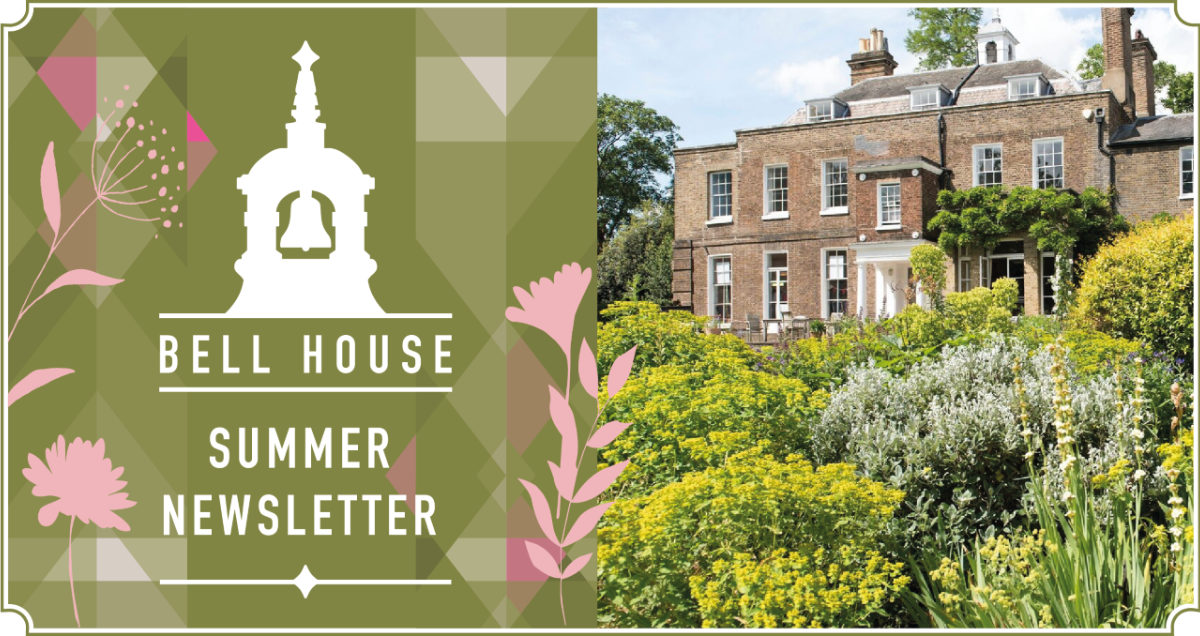
Welcome to the fourth of our seasonal newsletters. In this Winter edition, you’ll find a selection of recent news and updates from Bell House, which we hope you will enjoy!


The Illusioneer at Bell House

12 years ago Barrie Westwall was tempted by a local businessman to take over a small shop, tucked away at the bottom of Half Moon Lane in Herne Hill. It became ‘The Illusioneer Little Theatre and Studio’ - you may have visited it - but sadly it’s now closed. Nowadays Barrie hosts a wealth of events both private and public. He’ll be performing at Bell House this Christmas - Barrie is The Illusioneer!

Barrie’s speciality is getting the audience participating, inviting them into the illusion and leaving them pondering: “how did he do that?”

Barrie has a career in media and his particular expertise is helping organisations communicate better - both with clients and with their own people. But how is this pertinent to Puzzles, Illusions, Minds and Magic? 

“Well magic goes back to ancient Egypt, if not further, when priests and shamans used illusions to establish their power behind the throne." he says.

He uses his skills as an illusioneer to illustrate how to stop people in their tracks, encourage them to question their views and as a result help them see another way forward.

Barrie says: “Magic has always been used as a source of influence, but also at another level, in street markets to gather crowds and sell stuff. That’s a big intellectual range.”

As a dyslexic he was labeled lazy, even slow at school. Thankfully attitudes have improved in recent years but there is still a lot of work before the true value of dyslexics is understood. As Barrie knows, dyslexics think about things differently and this has helped his life as an illusioneer.

He has a long association with Bell House, in fact when it was a private residence, he performed at a Victorian Evening with a cellist, an opera singer and his wife, Annie, the Bell House beekeeper.

You might be wondering who was the businessman that tempted him 12 years ago? Angus Hanton and as many know Angus and Fabienne are behind the magic of Bell House and all that goes on within.

So what about this year’s Bell House The Illusioneer Family Christmas show?

Well it’s just that! It aims to entertain adults and children alike with puzzlements and conundrums and inject a healthy dose of Christmas Magic to set us up for this festive season.

Come along and be confounded!


A first for Bell House - an Artist in Residence
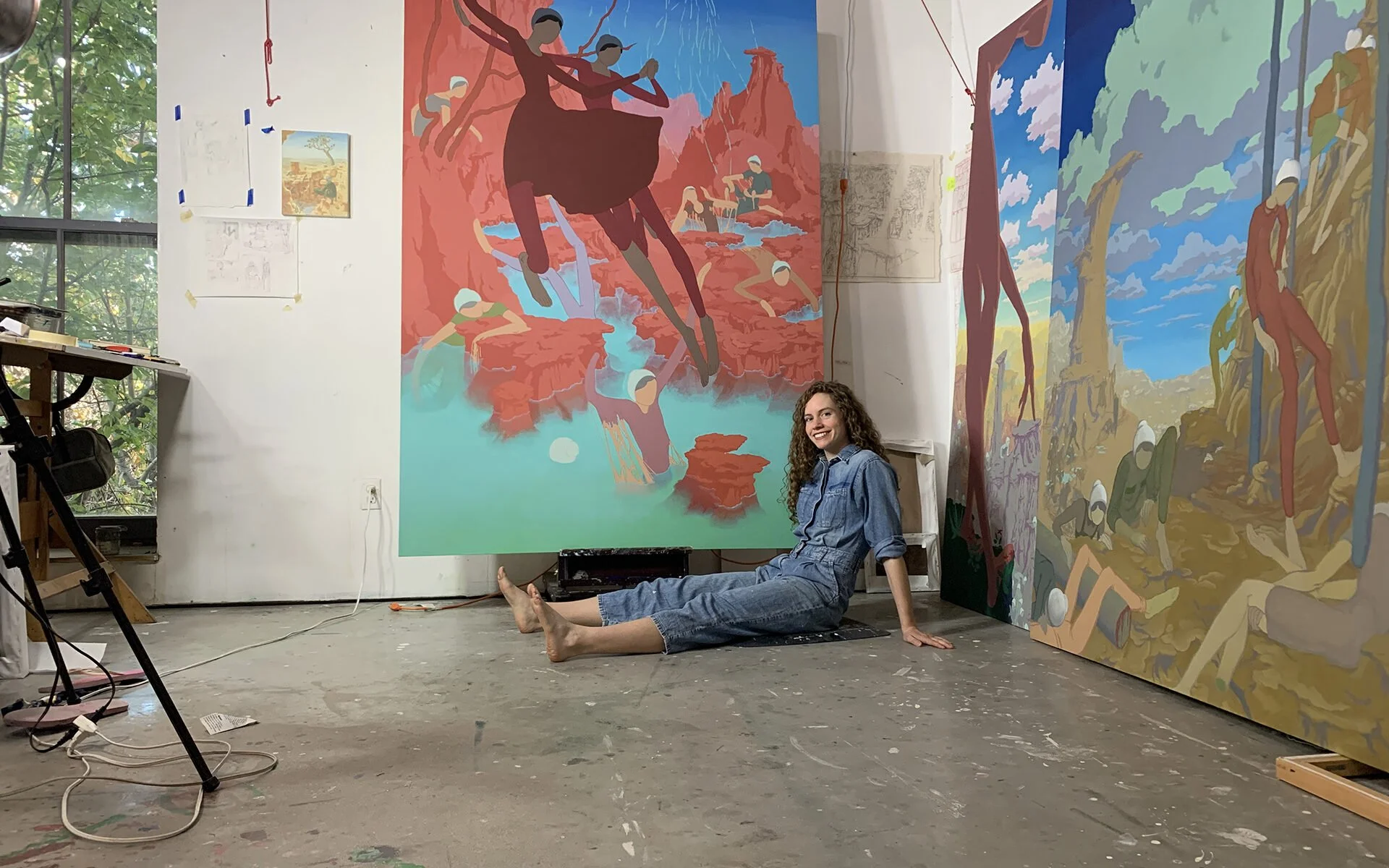
Bell House is excited to announce painter and sculptor Atalanta Xanthe as their very first Artist in Residence.

Atalanta’s role at Bell House will be twofold: as a teacher, running fortnightly art classes, and as a studio artist, producing a series of paintings at Bell House, inspired by the Bell House garden and the nearby Dulwich Picture Gallery - these works will be exhibited at the end of her residency.

She will help to promote Bell House as a place to come, learn and experiment, encouraging independent production of individual art. 

Having taught a range of people, from Masters Art students, to children aged 5, to adults who haven’t picked up a pencil since they were 5, Atalanta is excited to bring her experience to the Bell House community. She’s particularly excited to run classes targeted at young people: “Having access to inexpensive life drawing classes as a teenager was a game-changer for me. Not only was it the first environment where I felt taken seriously as an artist, but seeing so many body types in a non-judgemental context gave me a healthy relationship with my own body-image”. As a dyslexic, she didn’t learn to read until she was 7 and so she understands the power of creativity to help express yourself when struggling with the 3R’s.

Xanthe is an internationally exhibited painter, whose most recent show comprised layered, fantastical paintings which she makes based on large cardboard theatre sets she builds in her studio. Her background in painting at Oxford, Sculpture at the New York Academy of Art, and a decade of life-drawing practice have given her a wide-ranging technical skill-set she’s excited to share with the Bell House community. 

She’ll be opening her studio, in the Barclay’s room, every Thursday, so stop by if you’d like to get a glimpse of her process. 

All in all, Atalanta is the perfect ‘afflatus’ for Bell House - the perfect creative inspiration.

Follow the links below to learn about Atalanta and view more of her work:


“It was the woodlouse that started it.”
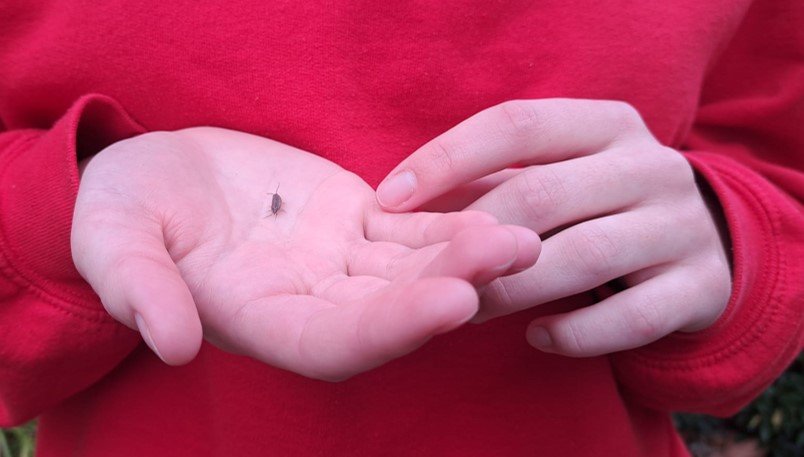
Annie McGeoch, better known as the bee lady here at Bell house, tells us about a school enrichment day last September.

“It all started when a little boy wanted to hold a woodlouse. I was walking around Bell House woodland garden with a group of 18 children. We found a woodlouse instead of a hedgehog on our nature walk and picked it up to have a look. There were several children who had grandparents with gardens and were clearly articulate and knowledgeable about insects. The children were excited but in the large group of 18, not everyone could get close.

For example there was one boy at the back of the group who was desperate to look. He wanted to hold the woodlouse and had never seen one before. I explained that they were alive in the dinosaurs’ era and he was amazed to be able to hold this tiny insect.”

That’s when Annie decided to commit to holding sessions for the non-assertive children. She is having meetings with the head of school and several teachers and they are busy identifying children who they say need nurturing .

Annie learnt another valuable lesson when she was working with the School Food Matters charity at the apiary at Battersea Park Zoo. She takes small groups of five children, suitably dressed in bee suits to see honey bees in their hive. She tells us: “We take a frame from the hive and the children get to hold the comb of honey and look at the bees close up. I talk about how the life-cycle goes in the colony and the children ask lots of very good questions. They leave buzzing with knowledge and a small jar of honey.”

In one of these sessions, a teacher came to her and said she had been surprised by one of her pupils. The teacher knew the child spoke to her parents at home but hadn’t spoken in school since lock-down - and yet this pupil had asked a question. Annie says: “I can only assume my more relaxed approach and everything being so different from a usual classroom lesson, the child felt brave enough to speak.”

The Bell House School Enrichment Programme plans to work more with children who deserve to come to a safe place where they can be brave and ask questions and find things out they didn’t know before. A centre for wider learning. The team want these sessions to steer right away from school subjects and activities and be about finding out and looking and talking. Bell House is not school and is not home - it is a safe place - especially for children who are struggling.

As Annie say: “If you live on the 20th floor behind Kings College Hospital there are no woodlice or snails and certainly no hedgehogs!”

And what sort of fun info do the children learn on one of our days? Well a woodlouse has some cute nicknames - Bible bugs, Cheesy bugs, Coffin-cutters and Tiggyhogs to name just a few.


Grow a Pair ….. of Ears!

The following article was written by Russ Kane OA - Dulwich College 1962 -1971.

In 1962, a time so far back now that it might as well be 1932, I was packed off to boarding school. This was particularly galling as my parents only lived in North London! The boarding house was, unsurprisingly, Bell House. 

It has now been restored to its rightful former glory and my visit in January 2023 was a revelation. It also laid to rest some ghastly ghosts and that day I felt an extraordinary seismic shift in my mental well-being. Now there were just beautiful rooms. The atmosphere was one of charm, elegance and care. Which leads me neatly to my point – the dire state of Men’s Mental Health in the UK.

In 2019 I was reviewing the day’s newspapers for BBC Radio. The main stories could have been anything, but they happened to be a report on the suicide statistics of men in the UK. I was astounded. 80% of suicides were men. The main cause, as stated in every paper, was that ‘men don’t talk’. Within 48 hours I met up with my two business partners, and we formed Men’s Radio Station, a year after the formation of the sister station, Women’s Radio Station.

Our goal was to create a non-judgemental space for men to discuss matters that affected them deeply, Fascinatingly, 50% of our global audience are women – a wonderful bonus. We are on-air globally 24/7 and are now the recipient of dozens of awards, attracting some of the greatest minds of the day to come on-air.

Positive Mental Health is a passion of mine. There is much to say and even more to achieve. Waiting lists to seek professional help are unacceptable and too many people are falling through the cracks. When I was invited to give a talk on the subject at Bell House I jumped at the opportunity. It’s planned for Spring 2024. In it, I’ll explore what has led to this crisis, how we can help on a practical level and how reaching out can be life changing. The message is ‘You Are Not Alone’.

The world of 2023/4 is unrecognisable to 1962 - and it’s accelerating. One thing that has remained unchanged, however, are the challenges that poor mental health and negative well-being can bring to absolutely anyone.

© 2023 Russ Kane


This comes with a Bell House health warning!
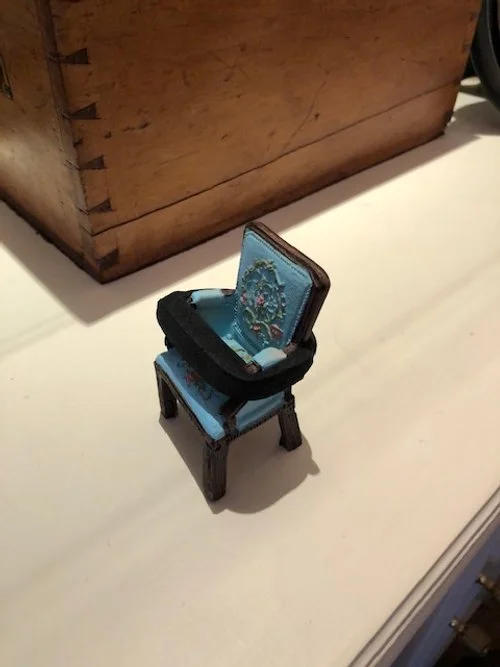
Anthony Harding, who lived at Bell House in the first half of the 19th century, opened the world’s first department store but during his lifetime his main claim to fame was as a ‘six bottle man’.

It was normal for rich men to drink two bottles of alcohol a night; three bottle men like Harding’s son-in-law were common and Pitt the Younger was known as a five bottle man. Six bottle men however were something else.

Not surprisingly Harding lost the use of his legs after drinking that much and had a special dining chair made so his footmen could carry him safely up to bed. One of our volunteers has made a model of the chair – look out for it in our Cabinet of Curiosities next time you are at Bell House.

Alcohol didn’t shorten Harding’s life though; he was 90 when he died in 1851. His coffin was ready and waiting: it had been made years before and kept propped against the wall behind his chair in the dining room.

And what of his son-in-law and Pitt? Alcohol certainly didn’t treat them so kindly - they both died aged 47.
 

Bell House Autumn 2023 Newsletter


Welcome to the third of our seasonal newsletters. In this Autumn edition, you’ll find a selection of recent news and updates from Bell House, which we hope you will enjoy!


Spread the Word. Dyslexia is a Learning Difference.

Darwin told us: “It’s not the strongest nor the most intelligent species that will survive but those who can adapt to change”. This quote is regularly used to challenge businesses with the sign off - “can you adapt to change?”

Things have certainly changed and thankfully moved on from the early days of dyslexia diagnosis, when dyslexia was generally viewed through a negative lens. Instead of being perceived as a learning disorder, it is now more frequently accepted as a learning difference.

The strengths of the dyslexic brain may have evolved, as humans adapted to a changing environment. Darwin recognised that we need to learn new skills and acquire new habits in order to survive, and to be creative, finding novel solutions through exploration. People with dyslexia are traditionally no more or less intelligent than the general population - they just think differently. This different approach enables them to find new ways of seeing things and approaching problems.*

Despite a more positive understanding of dyslexia, we cannot underestimate the difficulties that people with dyslexia continue to face, particularly within a classroom environment, where there is often a strong emphasis on reading and writing, together with rote learning. Education is thankfully adapting, with the introduction of explorative learning through discovery, invention, creativity, new technology and the provision of specialist support - all of which contribute to more positive educational outcomes.

Whilst teaching and learning methodologies have undoubtedly evolved, dyslexia continues to often be misunderstood. A recent survey found that three-quarters of employees hide their dyslexia at work and some parents can still find it hard to accept that their children have dyslexia.

The 'label of Dyslexia' has definitely benefited from famous people speaking out over the years - just Google dyslexia and learning difficulties to see how many experiences are now being shared.

Such stories are heart-warming, inspirational and enlightening. As more adults and parents recognise how common dyslexia is – affecting approximately 10% of the UK population - the easier it becomes to understand the importance of supporting students and employees with dyslexia, and realising how this support will benefit our society.

And so we need to work hard to promote a better understanding of dyslexia as a learning difference and not as a learning disability, to help ensure that an identification of dyslexia will not cause embarrassment. Through open classroom discussion, today’s children already have a better understanding of dyslexia. We need to spread this understanding to help dyslexia lose its historical negative associations. Beyond any diagnosis or label, it is vital that schools and workplaces also respond to needs, and offer support in order to create environments where everyone can excel. 

Bell House has worked hard on doing just this, with this approach at the forefront of Bell House’s work over the many years in which it has supported Dyslexic parents and their children. On September 30th, from 10am to 4pm, Bell House will host its 5th annual Dyslexia Fair, with the theme of ‘Celebrating Strength and Supporting Challenges’.

*University of Cambridge - Dr Helen Taylor and Dr Martin Vestergaar


Pottery and the Art of Patience

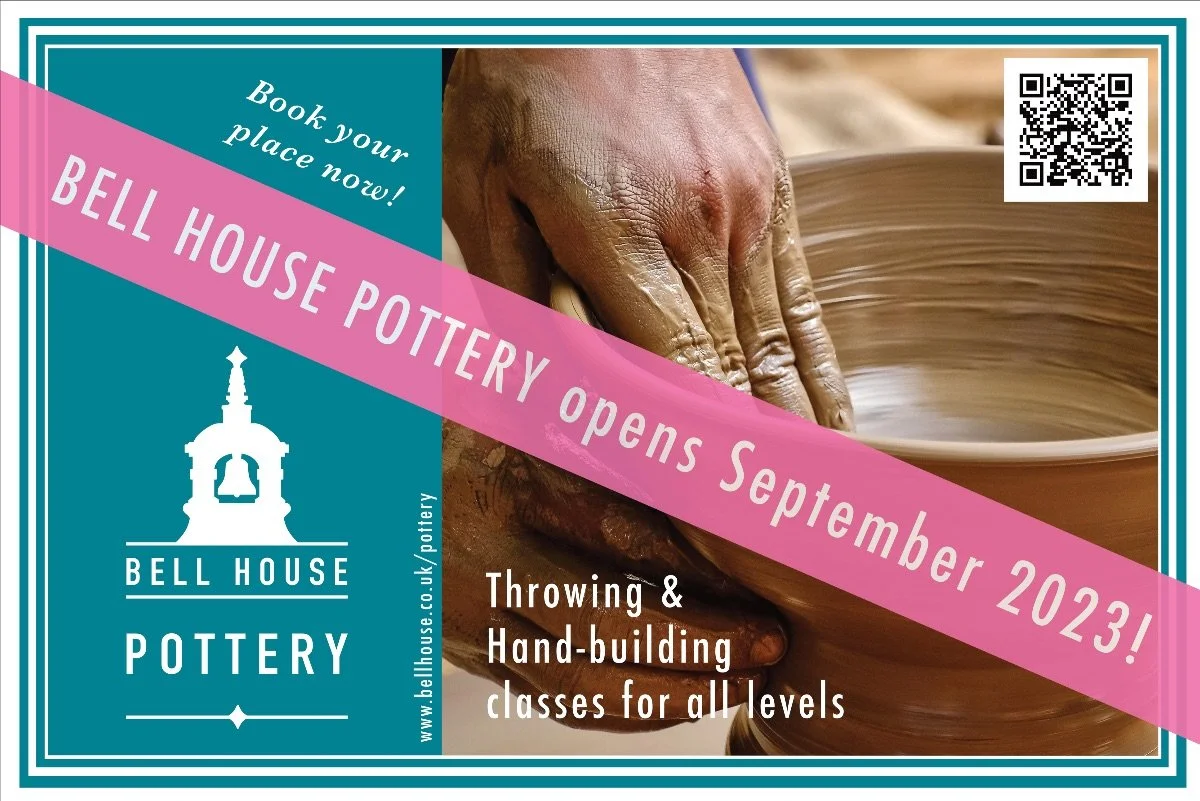
Bell House Pottery is opening its doors in September 2023. This Community Pottery Studio will offer classes for all levels with a focus on enabling learning – which may require some student patience! The following quote from the Pottery team describes the studio’s ethos.

"It may surprise our students, but we want their takeaway from a class in the pottery studio to come from the process of learning the skills of working with clay. It’s not what they can ‘make to take away’ but rather what each student can ‘take away, emotionally and in self-learning’.”

Their hope is that students will develop an acceptance of “this is what I’m learning” and that “with help I’ll get there - in my own time.”

This collaborative and supportive environment will become a safe place for students to express some inner thoughts and ideas which we hope will lead to some very surprising conversations encouraged by this openness.

Ceramicists talk about their ‘core’ - this is not just about their inner beliefs and centre of creativity and ideas - but literally about their body core. You need strength to throw on a wheel and work the clay - often maintaining the same position for hours. Back, arm and shoulder aches are common ailments. A strong core and arm muscles are key to developing the correct potter’s posture! Experienced ceramicists say there is sanity in the repetition of their work - their muscle memory takes over and enables total absorption in the process. Conceptual thinking comes into play, only after the physical process.

Working with clay takes patience - to learn the skills and tools of pottery, to build up the muscles and muscle memory, to learn that the work will come from your central core, - your centre - from your physical strength and emotionally from within. And patience for the practical processes of building, throwing, firing and glazing.

The teachers at the Community Pottery state that their primary goal is to teach the practice and process of ceramics. And when these skills have become embedded, each student will begin to express themselves. And importantly learn that not everything they produce is worth saving. The very process of accepting this ‘waste’ and then recycling the clay, is most liberating!

And how is clay recycled? With a Pug Mill - which happens to be most expensive purchase of the Community Pottery Studio but will be worth every penny!

Teachers running classes this Autumn include:

  • Birgit Pohl - birgitpohlceramice.com

  • Joanna Szwej-Hawkin - asiaceramics.co.uk

  • Kyra Stratoudaki - @kyrastratoudaki_ceramics 

  • Schneider - schneiderschneider.com 


Bell House New Print Room & Bindery

Whilst we’ve been applying the final touches to the new-build Pottery Studio in the Lodge, we’ve also been busy down in the basement of Bell House. This latest project has involved lorries delivering strange heavy lumps of metal to be lowered down the concrete stairs by teams of skilled men using chains and ropes.

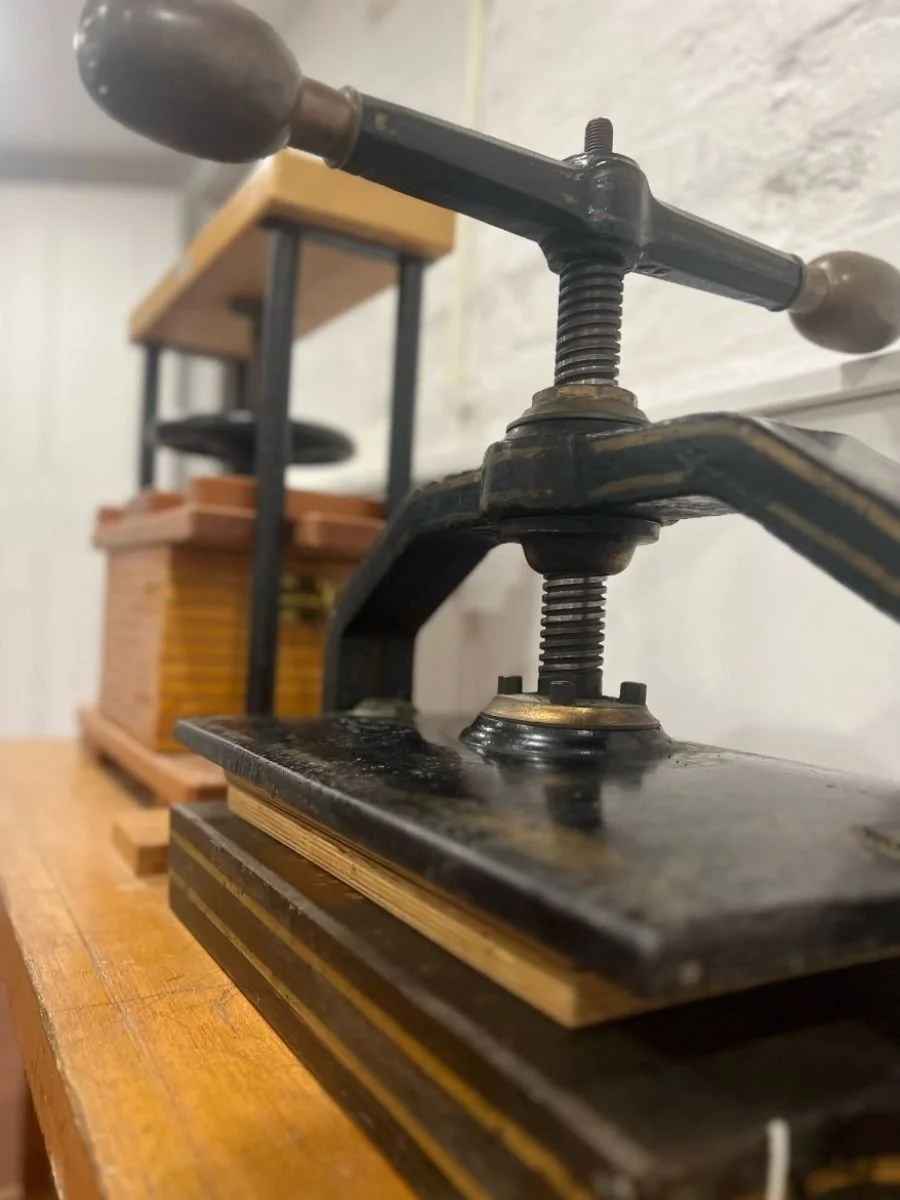
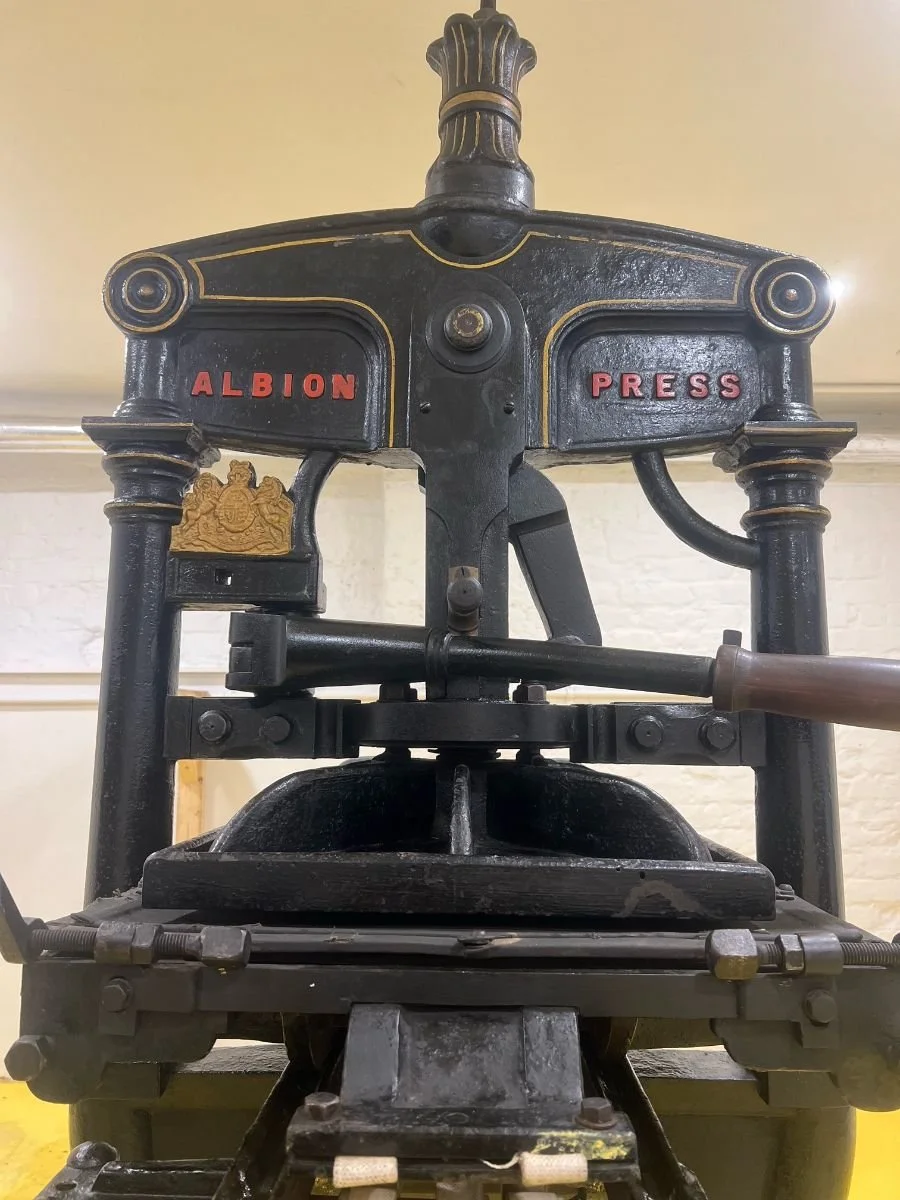
Bell House is thrilled to announce an exciting new addition that is sure to captivate enthusiasts of traditional craftsmanship and vintage printing techniques. Two of the rooms in the basement are being transformed into what is being named the ‘Bell House Print Room & Bindery’. A home to a treasure trove of vintage letterpress equipment and book-binding machinery, including an exquisite 1860s Albion printing press, donated by the Type Archive in Stockwell and a whole suite of book-binding equipment from Dulwich College.

Individually these elements are things of wonder but put together they will lift what we can do.

Simon Trewin and Tania Hurt-Newton are the people behind the Print Room & Bindery initiative. They are experts and enthusiasts of the heritage crafts of letter printing and book-binding. If you’ve not thought much about what’s involved in these ancient crafts, it's worth reflecting on these insights from Tania:

“It’s very physical; there’s no rushing; no instant results; it needs a lot of planning and concentration but it’s so very satisfying. It suits people of all interests because all it requires is some logical thinking and an idea which can be original or borrowed. The process of working things out opens the mind to further possibilities. So there’s something for everyone.”

The Print Room & Bindery will provide more space, allowing visitors to attend a taster session or two, experiencing the history and connection to the past, offered by this new project.

Whilst we are hugely excited about the possibilities offered by the Print Room & Bindery, there is still much work to do to make the space fit for purpose so that we can welcome our visitors to this new world of creativity. It won’t be too long before the Grand Opening is announced – we hope it can be used in some way during our Dyslexia Fair on Saturday 30th September.

Pay a visit to view the work-in-progress and marvel at the wonders of historic technology!


The Albion Press

Bell House and the Garage Press have recently acquired an 1860s Albion printing press which was donated by the Type Archive in Stockwell.

The Albion Press is truly an object of wonder, which may even have a connection to the the local area. It was originally owned, by William Clowes and Co. who secured a contract to print the original catalogues for the Great Exhibition in Hyde Park. The company subsequently produced new catalogues once the exhibition moved to Crystal Palace. 

It may well be that Bell House’s Albion was part of that great endeavour - in which case it is even nicer to welcome it back to South East London!

People have also been asked whether Thomas Wright, the first owner of Bell House and a man who made his fortune from paper and print, would have recognised an Albion Press. The truth is that the Albion was created after Wright’s time a century earlier, but there's little doubt that he would have recognised many design elements and certainly all of the processes. As would the father of modern printing – Mr Gutenberg himself.

The Albion is undoubtedly a beautifully ornate machine that can, with minimal effort, print onto fabric, paper and probably wood. The process is simple and wonderfully satisfying. 

This latest addition to Bell House now needs a name! The Garage Press already has an 1880's Cropper 'Arab' Treadle Press named Gloria - we are welcoming name suggestions for our newly-arrived Albion press!


Bell House Summer 2023 Newsletter


Welcome to the second of our seasonal newsletters. In this Summer edition, you’ll find a selection of recent news and updates from Bell House, which we hope you will enjoy!


Looking for a Quick Fix of Wellbeing?

Just one or two hours a week of voluntary work can deliver a bucketful of wellbeing, with the power to enhance both physical and mental health.

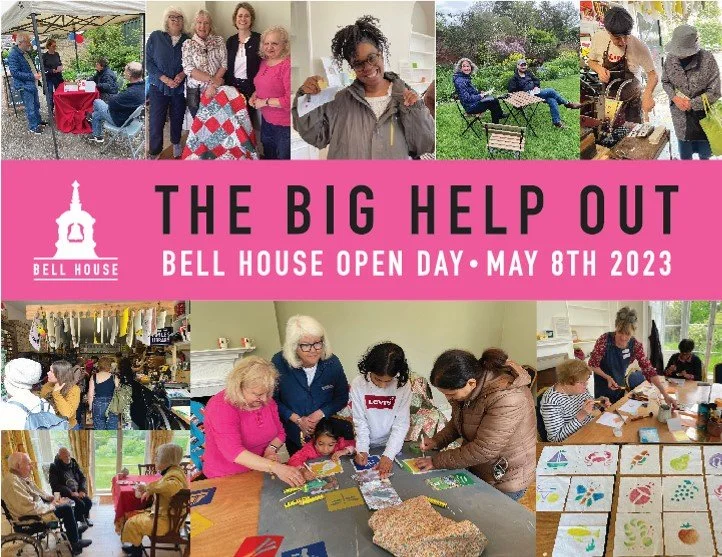
During the COVID outbreak, all face-to-face volunteering at Bell House was sadly curtailed, and some of our regular volunteers have been slow to return. As a non-profit organisation, dependent on our volunteers’ support, we were delighted to participate in the King’s Big Help Out initiative on Monday May 8th to welcome new and old visitors to Bell House, with the aim of encouraging more volunteers.

The Community Help Out Day showcased many of the activities we run at Bell House and promoted the ‘P4 bus route initiative’. Volunteers, led by Ann Revel and with huge support from the Garage Press, the quilters, the gardeners and our art tutor organised a fantastic range of activities for our visiting public to enjoy.

During the four hours, we welcomed a steady flow of 135 visitors including a special visit from local MP Helen Hayes who came along to provide us with her personal and social media support.  

It was wonderful to witness the many positive responses to Bell House and our volunteering opportunities, and a number of initiatives were enthusiastically discussed including: 

• Opportunities to help ‘front of house’ at Bell House events and in so doing get to enjoy it yourself for free. 
• Potential to host regular meetings for older members of the ‘P4 bus community’ - offering an opportunity to chat and make friends. 
• Bell House’s gardening opportunities are always a widely-discussed topic. In order to widen the accessibility of gardening opportunities we explored suggestions to enable children to volunteer at the monthly Open Garden Saturday mornings and to potentially launch Summer evening sessions, more suited to working people.

Without the power of the volunteer, non-profits such as Bell House could not exist. And as it turns out, volunteering helps to enhance our own wellbeing.

So why is Volunteering Good for You?
To list just a few benefits, it can:
• introduce you to new people and friendships.
• provide a sense of purpose and fulfilment.
• boost your self-esteem, making you happier and more fulfilled.
• help reduce stress. benefitting the health of our mind and body. In fact, some studies in older adults have shown even lower mortality rates in volunteers vs non-volunteers.

Nothing gets done by one person alone, which means volunteers have to band together to make a difference for the cause they are supporting.

Surprisingly, this is the first time Bell House has run a volunteering call up day, but it won’t be the last. The Help Out initiative will now become an annual event. We hope to see you next time! 

In the meantime, if you would like to get a ‘Quick Fix of Wellbeing’ at Bell House, please do sign up for volunteering.


Children, Drones and Bumble Bees Helping Pollination

There’s a ‘politics’ in beekeeping. It’s considered a service to gardeners, but did you know that the current trend in bee-keeping is actually detrimental to the ecosystem?

We've all read the reports of ‘bees dying’ and the ‘need to save the bees’, but what is rarely reported is that there are ‘too many honeybees’. Spend a few hours with the Bell House beekeeper Annie McGeoch, and you’ll not only become a fan of honeybees, but you’ll also see the bigger picture.

What you may not already know about bees, and in particular honeybees ….

There are 279 bee varieties in Britain - of which just one is the honeybee.
Scientists and experienced beekeepers believe that the vast number of honeybees, combined with a lack of pollinator-friendly spaces, is putting other pollinators at risk.  

Honeybees make more honey than they need - but why?
We don’t really know! But it’s thought that spare honey is used when forage is unavailable. However, if the hive becomes too full of honey, the queen no longer has enough room to lay eggs and produce her brood - then this is when a swarm is more likely to occur - the queen is leaving the hive with many worker bees, in search of a new home.

Bees can cope with the cold.
In the hive, the worker bees - wings vibrating, huddling together, heads pointed inward - cluster around the queen to keep her and her brood warm. Heater bees can raise their body temperatures higher than others and directly warm pupae as well as hanging out in the empty cells of a brood nest to distribute their body heat around the nest.  

Can bees fly in the rain?  
Yes, they can but it’s dangerous and so they usually don’t. Even mist on a bee’s body can interfere with its flight and a large raindrop can knock it down. The water impedes the bee’s wing beat, which is normally about 12,000 beats per minute. And without the sun, they have difficulty navigating between their food source and their home.

The worldwide overuse of neonicotinoid pesticides and greater urbanisation has killed off honeybees and other pollinators.
In some communities of the World, pollination techniques have become creative! Children climb trees with paintbrushes loaded with pollen,  bumble bees are farmed and pollen is dusted on their legs before they’re released and drones have even been designed to carry out crop pollination! 

If you get stung by a bee - scratch off the poison, don’t squeeze it.
And remember they mean you no harm - you may have just got in the way of one of their bee highways - and after all, when they sting you, they are committing suicide, so don't be too hard on them!

As it transpires, it’s not just the honeybee that makes too much honey for its needs - we humans do too. There are just too many hives being set up in the belief that honeybees will help pollination. But to concentrate on the honeybee as the main crop pollinator is to fail the rest of the insect pollinator community, including flies, wasps, beetles, butterflies and moths.

To guarantee healthy crops of fruit, nuts and veg, to ensure plentiful harvests of non-self pollinating grains and to guarantee a wealth of pollen-making flowers, we need to control the number of honeybees.

And the 278 other varieties of bees deserve our attention and care too. After all, they make a huge contribution to our eco environments in gardens, fields, woodlands and other habitats.

To leave the last thought with the Bell House beekeeper, Annie McGeoch:
“Honeybees are completely different from us - they cooperate with each other in order to survive - it’s a lesson for mankind.”


Windows and Thresholds - a Reflection

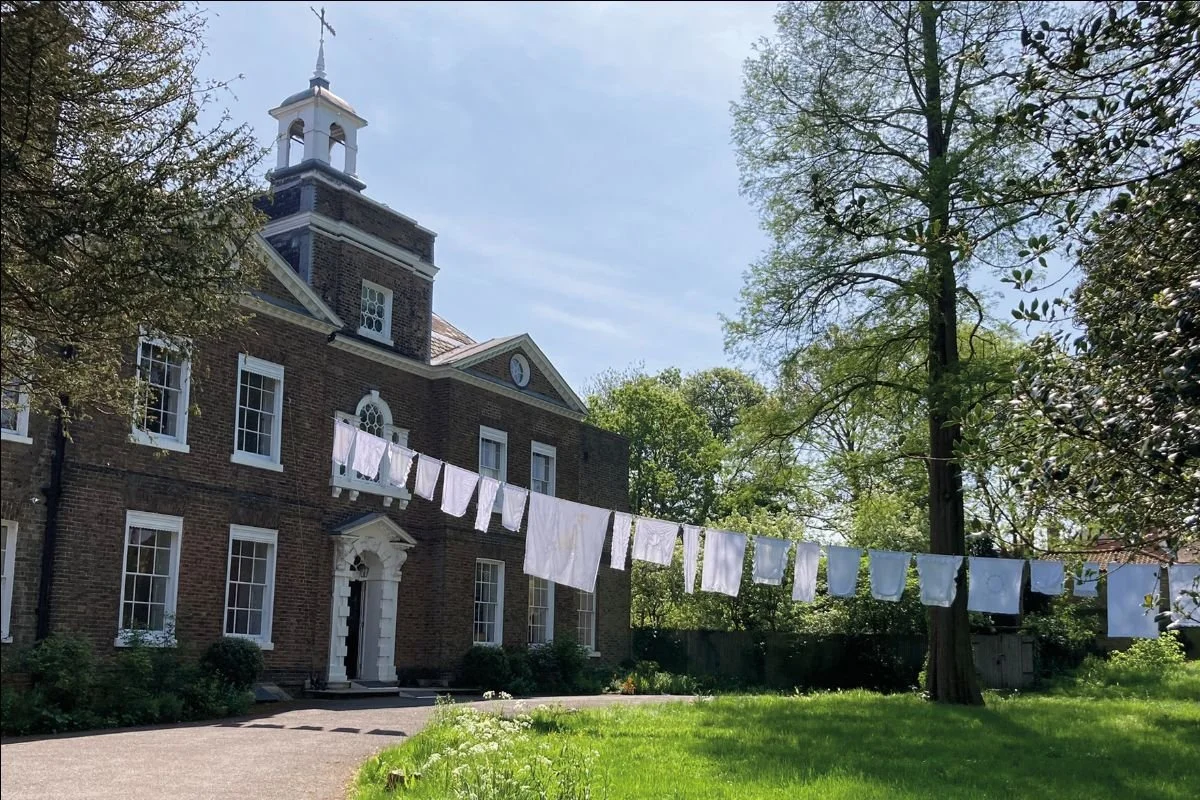
It's rumoured that in years gone by, you’d have been harangued by your neighbours or even fined for hanging out your washing on a Sunday in Dulwich Village. Yet last month for two weekends, Bell House did just that. A line of washing stretched from a tree in the front garden to a top window. It certainly caught everyone's attention but why was it there?

The washing line was making a very public statement to announce the Bell House ‘Windows and Thresholds’ exhibition, featuring over 40 artists as part of Dulwich Festival’s Artists’ Open House. Five female curators each took a room and invited us to look inward and outward. It was a great success, with over 2000 visitors during the weekend.

Lucy Soni, a local multi-disciplinary artist created the washing line piece. The work was named “What’s Left Behind and What We Keep”. Lucy was inspired by the things she found in her mother’s cupboards after her death. These inherited white linens were stained with memories of times past of her mother’s life. 

This attention-seeking work, visible to everyone who passed by, was a reinforcement of how present-day women artists can work, wherever they wish, in the open, outside - something that was frowned upon, and for some prohibited in the past.

The artwork was also a nod to the Dulwich Picture Gallery's current exhibition, which is showing work by the 18th century artist Berthe Morisot. She was one of the most significant Impressionist painters and the only female founder of the Impressionist movement. Morisot lamented that unlike male artists of her time, she was limited to painting early in the morning - preferring to be home by 9am before the ‘masses were out and about’. And so, many of Morisot’s works, depict views through windows and doors.

One work that really got the visitors talking to each other was Monika Kita’s “Who Is it?” As visitors passed by a cupboard in the Gowan room, they heard a knocking sound.  What was it - was someone in trouble - were they trapped - should they open the door and let them out?

And over the first weekend, Laura Moreton-Griffith delivered her performance piece “A Hauntology” around Bell House. Laura played the haunted protagonist wandering, a key in hand, searching for the door it would open.

There were so many wonderful works - paintings, prints, sculptures and installations - sadly too many to mention here. The exhibition works showcased Bell House to perfection - highlighting its history and beauty but also its ambition to be a house which opens its doors and gardens to the local community for all to enjoy.

And in case you're wondering, there were no letters of complaint about the washing line. Kim Thornton, curator-in-charge said: “We wondered if there would be, an artist always wants to disrupt!” There may have been no haranguing this time, but the ‘Windows and Thresholds’ exhibition certainly received a lot of approval from its neighbours!


The Bell at Bell House

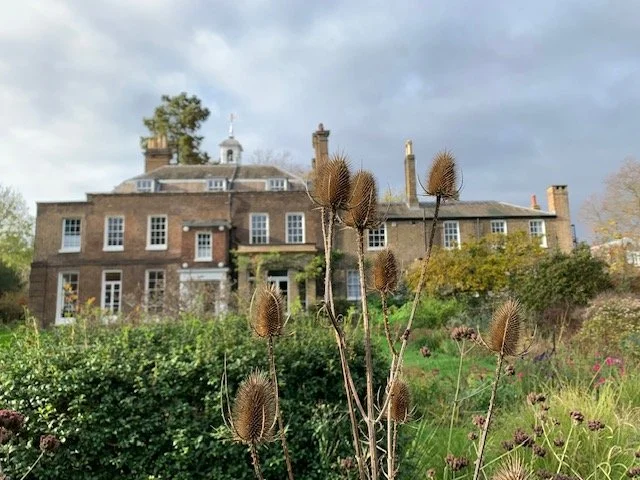
Although a grand house, Bell House wasn’t built for a grand family. It was commissioned by Thomas Wright, a warehouse worker who started his own lucrative business publishing almanacs, bibles and prayer books.

From humble beginnings, Wright later became Sheriff of the City of London in 1779 and Lord Mayor of London in 1785. He built Bell House in 1767 as a rural retreat from City life. At the time, the house included several acres of farmland, later forming part of Dulwich Park. 

Wright was a charitable man, generous with his time, money and business expertise. He supported many local charities and helped fund a fire engine and a shed near the Burial Ground to store it.

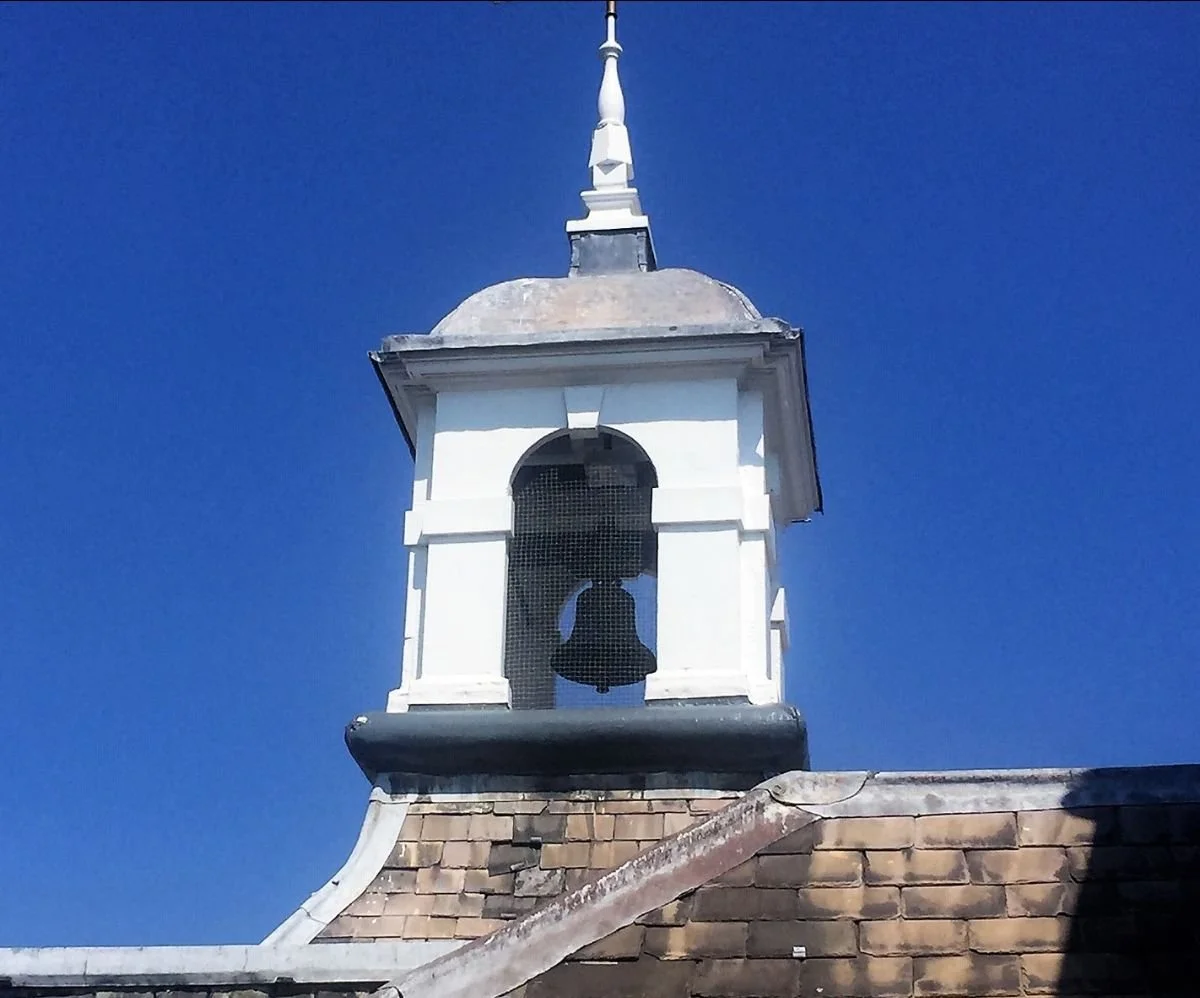
For 100 years, the bell of Bell House was rung when a fire broke out in the Village. According to a local resident Thomas Morris, when a fire broke out at the bakery on Bonfire Night around 1847, the ‘Fire Bell’ at Bell House was rung with all its might.

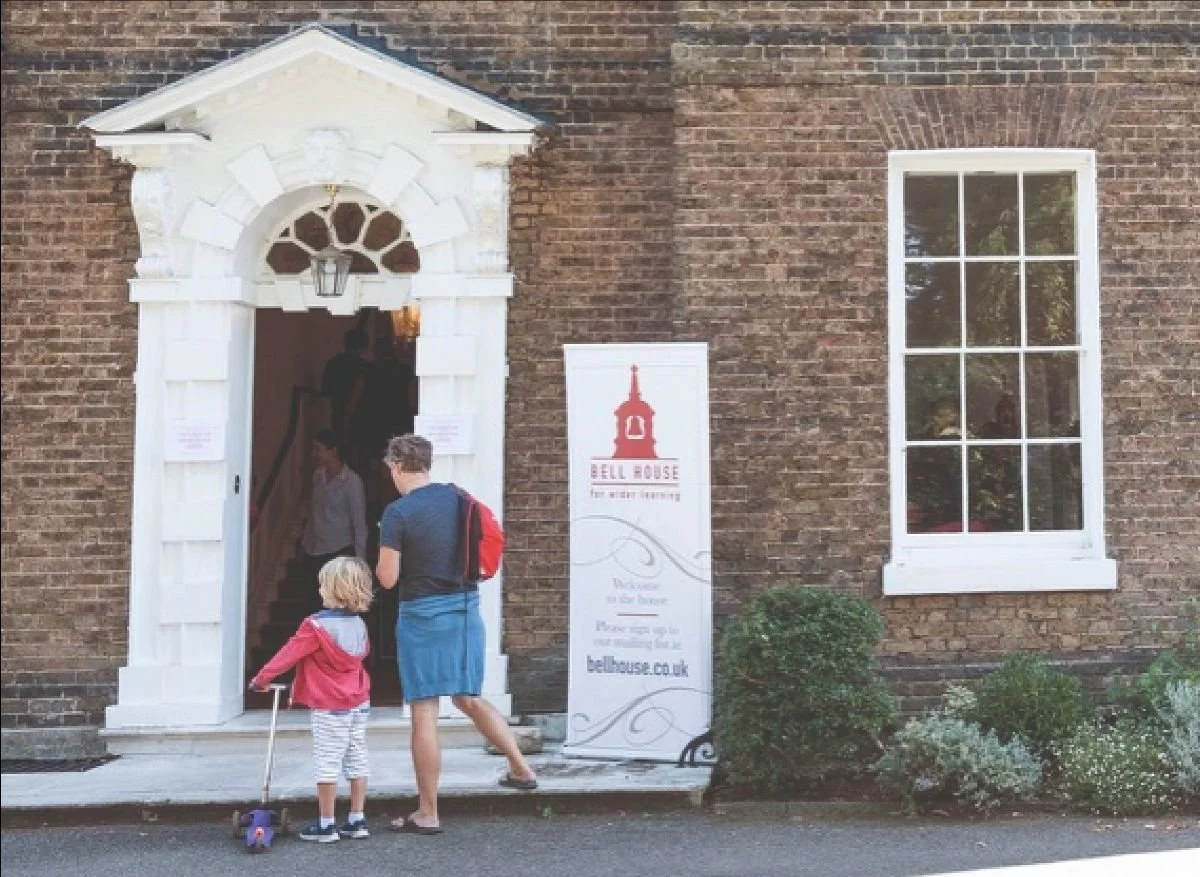
Nowadays it is rung when a person is visiting the house for the very first time. At our recent Bell House Community Open Day on the 8th May, the bell was rung many times to welcome our new visitors.

Come and visit Bell House soon  - if you ask nicely - you may even be able to ring the bell.


Bell House Spring 2023 Newsletter


We're excited to launch our new quarterly newsletter. It’s a chance to share a few short stories which we hope you both enjoy and find interesting.


Bell House - A Magical Place

Lovers of Bell House say it's magical. Visitors and volunteers describe it as a truly special place where people gather to learn, create friendships and enjoy themselves.  There are no rules at Bell House we welcome new ideas, however daft, for events and classes. We are always looking for ways to broaden the appeal.

Sadly not enough people get to experience Bell House. The volunteers who help run the place want to create a more open-door policy to address this, and to make sure that everyone feels welcomed to the house.

The house is part of the infrastructure of Dulwich Village - a beautiful building with very special gardens yet few people really know what goes on inside. There’s a notice board by the gates where walkers will often stop to read the signs but they still don't really understand all that the house has to offer to the community. We want to improve awareness by creating a ‘P4 bus route community’ through which Bell House will reach out and advertise Bell House, a magical place for everyone to share.

Bell House is growing – originally founded as as an educational charity with the aim to help children with dyslexia, it has continually diversified and continues to extend its reach. Over recent years, it has grown its learning from neurodiversity to include health and creativity. The volunteer-led charity is building a new ‘P4 community’ to extend beyond Dulwich to its neighbours in South East London and is looking for new ways to share messages and news.

Bell House wants to share its magic and welcomes ideas for creative learning - however daft.


Dulwich - where town planning was masterminded

Love them or hate them, Southwark Council’s road changes have got us all talking and believing we know the solution to the congestion and air pollution issues.

But what you may not know is that the founder of British town planning was a Dulwich man - Ebenezer Howard (1850-1928) who lived at 4 Ildersley Grove, West Dulwich. Howard wasn’t a professional town planner, but a shorthand writer for the House of Commons.

By listening to all the debates, he understood the problems arising from the Industrial Revolution. People migrated in huge numbers from the countryside to work in urban factories, living in overcrowded slum conditions, breathing polluted air.

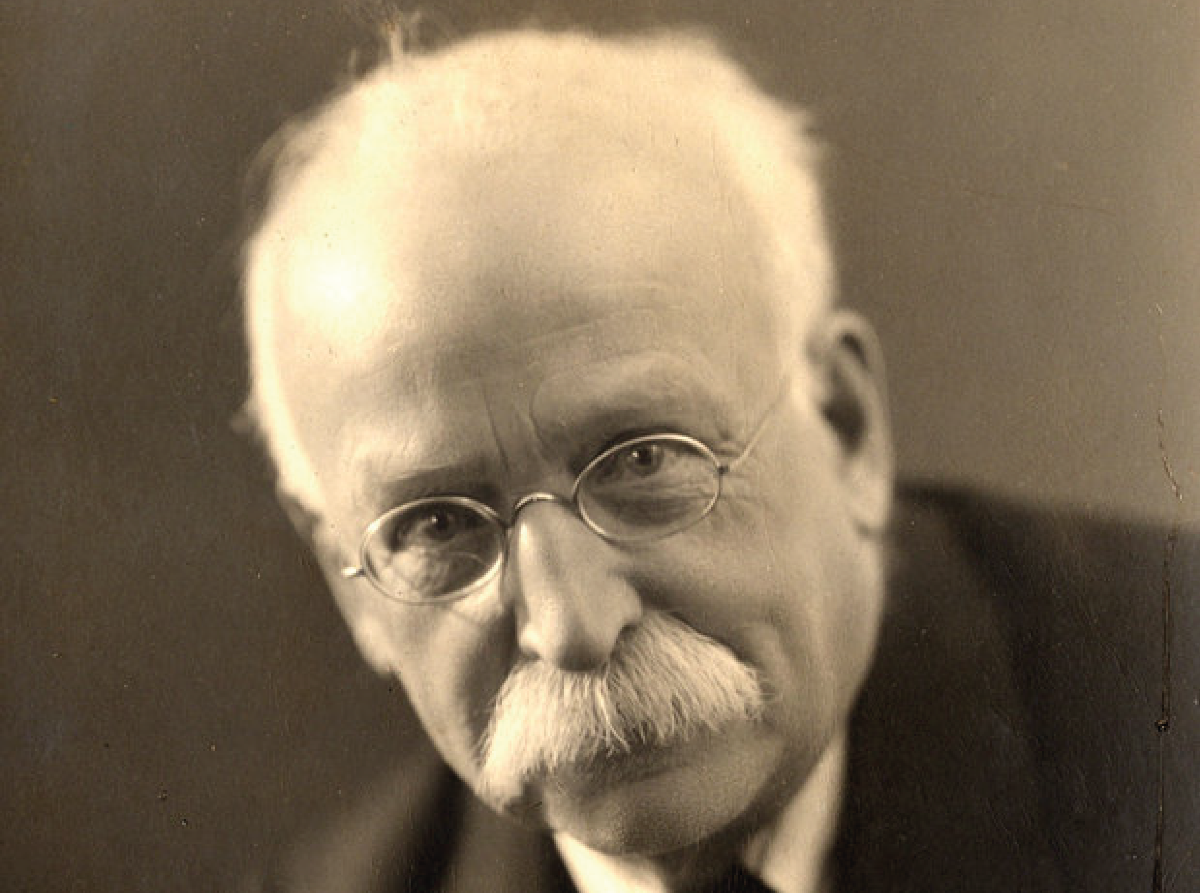
Another Dulwich resident, Henry Aldridge (86 Oglander Road, East Dulwich) campaigned for better living conditions for working people. He was the secretary of the National Housing and Reform Council (NHRC), the organisation established ‘to advocate and work on non-party lines for practical housing reform’.

In October 1894, Aldridge gave a talk to the East Dulwich Radical Club on ‘The Town Problem and the Land’. He spoke of ‘the unhappy environment in which the worker existed - his clothing, shelter and food were the meanest…’

If you'd like to learn more about these and other Dulwich Social Reformers, Duncan Bowie, author of 200 Years of Dulwich Radicalism, is giving a Bell House online talk on Tuesday,  March 7th, 20.00 which you can book using the link below.


Three ways to plan for the gardening year

The long, hot dry summer followed by the recent deep frosts, have been tough for plants in the garden.  Some won’t have survived but in their place we get to try new things.  

Here are three ways we are preparing and planning for the year ahead:

Being less tidy.  It’s challenging but there’s a happy mix where we can enjoy our gardens and support wildlife and biodiversity. We’ve left long grass, long stems and seed heads over the winter to encourage biodiversity. Dave Goulson’s book, The Garden Jungle, is a great reference.

Considering what we plant.  Anything new in the garden should earn its place.  We’ll look for open flowers which allow in pollinators, different flowering seasons, plants which will be happy in their spot and won’t need watering once established. Take a look online at the Dixter garden for inspiration. https://www.greatdixter.co.uk

Planning our mowing.  We will mow our main lawn soon, varying the cutting heights around paths and edges and then leave through May. If left alone, lawns will be rich in daisies and clover for bees and other pollinators.  The key is variety in the cutting heights and no feeding or spraying.  Plantlife.org.uk is a great resource.

If you are interested in helping in the garden and learning together, come and speak to us at our Open Gardens on the first Saturday each month from 11.30am to 1.00pm.

Photo: Sara Lloyd


Domino - you're fired!

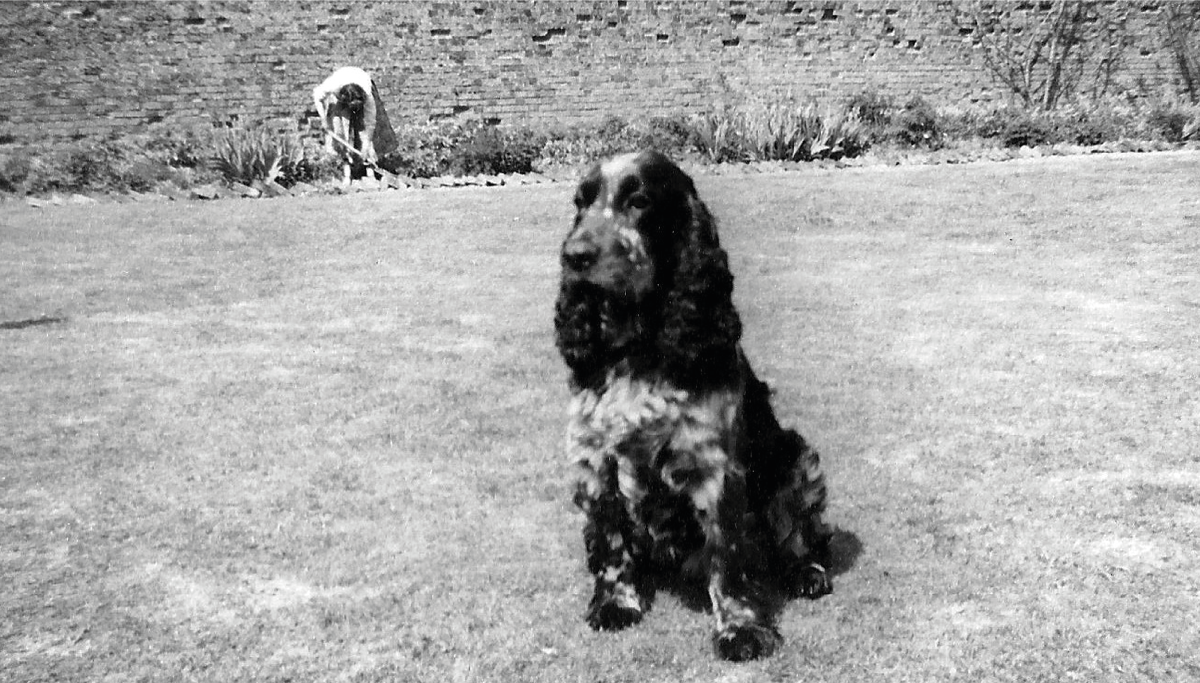
During the 1957 flu epidemic, the Bell House dormitories were turned into a sick bay as Dulwich school’s sanatorium was full. The doctor would solemnly progress through the dorms, followed by Miss Law the Matron and the House Master’s wife, Patricia Knight. 

Following in their wake came Domino, the Knight’s blue-roan spaniel, ‘gathering up as many slippers in his mouth as he could’. Domino was expelled when he tripped up the doctor.

However, Domino was useful in other ways: food for the invalids was brought down from the school but as it consisted of ‘gristly slices of cold meat and even colder potatoes’, it was often surreptitiously slipped to Domino. 

Check out Domino’s portrait in the Cabinet of Curiosities next time you’re at Bell House.