
In the 2024 Winter edition, you’ll find a selection of recent news and updates from Bell House, which we hope you will enjoy!
“Never throw anything out without asking …” Restoring a treasured house and finding treasure.
by Angus Hanton, Building Volunteer
For the last few years Bell House Dulwich has spent any surplus funds on the restoration and development of its buildings and grounds. On day one, in September 2016, we found a sword of a type made by George Widdowson a metal craftsman who owned the house in the mid-19th century. Since then we have had many finds, both inside and out, guided by the words of Sharon O’Connor, the Bell House historian, who told us, “never throw out old stuff, even scraps of paper, without showing me first.”
While building the pottery studio and the room for the ground source heat pump we came across a perfectly intact skeleton of a pigeon which must have been over 50 years old, and digging in the garden revealed coins, bottles and a Victorian jar for hair gel. These finds inspired us to set up a small museum cupboard as well as the “Cabinet of Curiosities” in the rack that had been for the boys’ shoes and boots, when the building was a junior school boarding house.
Bell House is Grade II* listed so general maintenance and minor repairs do not need permission. Even so, we often ask for advice from Southwark and the Historic Houses Association when deciding which materials and fixings to use. For the brickwork we employ a lime mortar specialist, Matthew Wilson, who recently rebuilt the two largest chimneys making then vertical and shorter. He also brought along a few apprentices, who are learning preservation techniques.
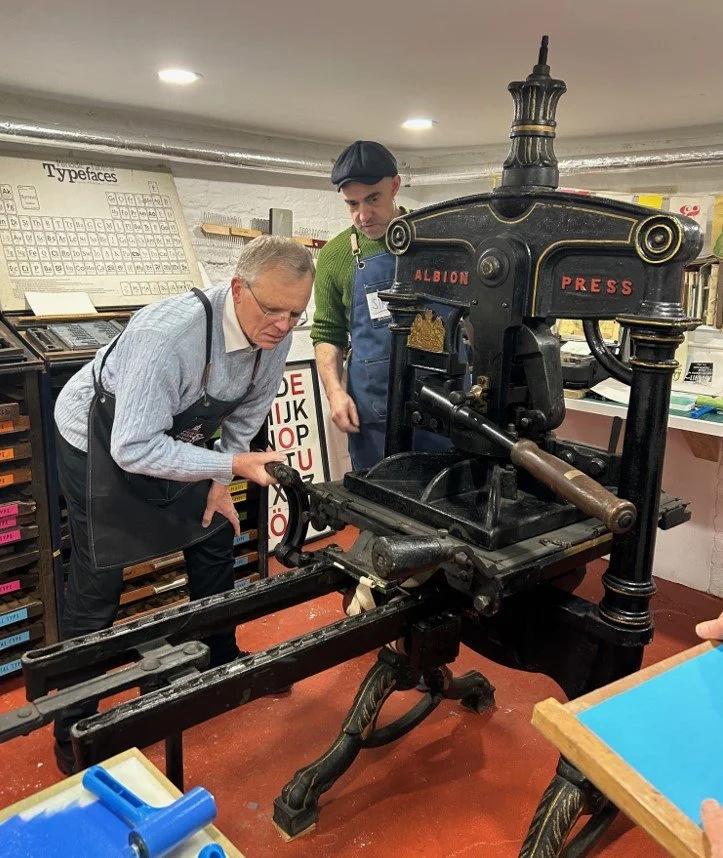
Some of our recent restoration works have been functional such as Jarek’s rehabilitation of the basement so that it can be used for courses on the Albion Press, letterpress printing, and bookbinding. All works prompt detective work to find out how the rooms were used previously - in the cellar there is some Pink Floyd graffiti from the boys in the 1970s who used the cellar as their games den.
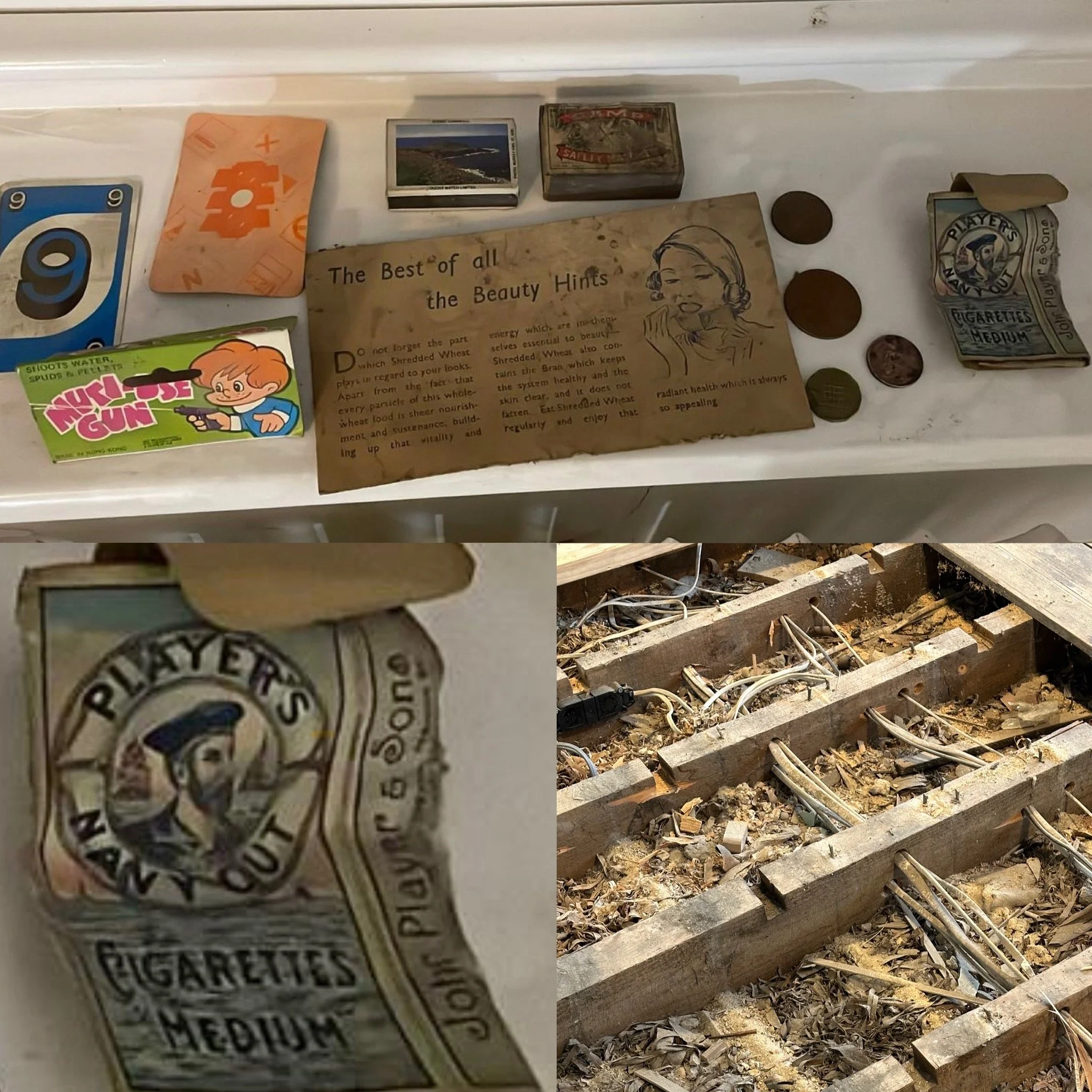
This winter Jarek and Merlin - who have been working on the house since the beginning (2016, not 1767) - took up dozens of floorboards in the Victorian extension on the North side so that we could clear the spaces between the joists and insulate for sound and heat. There was literally a skip-full of rubble and wood shavings to clear but amongst it we found lots of historical artefacts from the time when these rooms were used as dormitories: UNO cards, handwritten notes, and a set-square. There is an advert for shredded wheat entitled, “Best of all the beauty hints’, and packaging from a ‘Multi-Use gun” for firing bits of potatoes. A dozen or so old cigarette packets and old matchboxes had also been discarded, probably by the builders who put in the heating in 1946/7 or those who did the rewiring in the 1970s. Show-me-first Sharon supplied some of these photos.
The Bell House Dyslexia Team announce their exciting ‘big’ plans for 2025
by Lydia Baldwin and the Dyslexia team
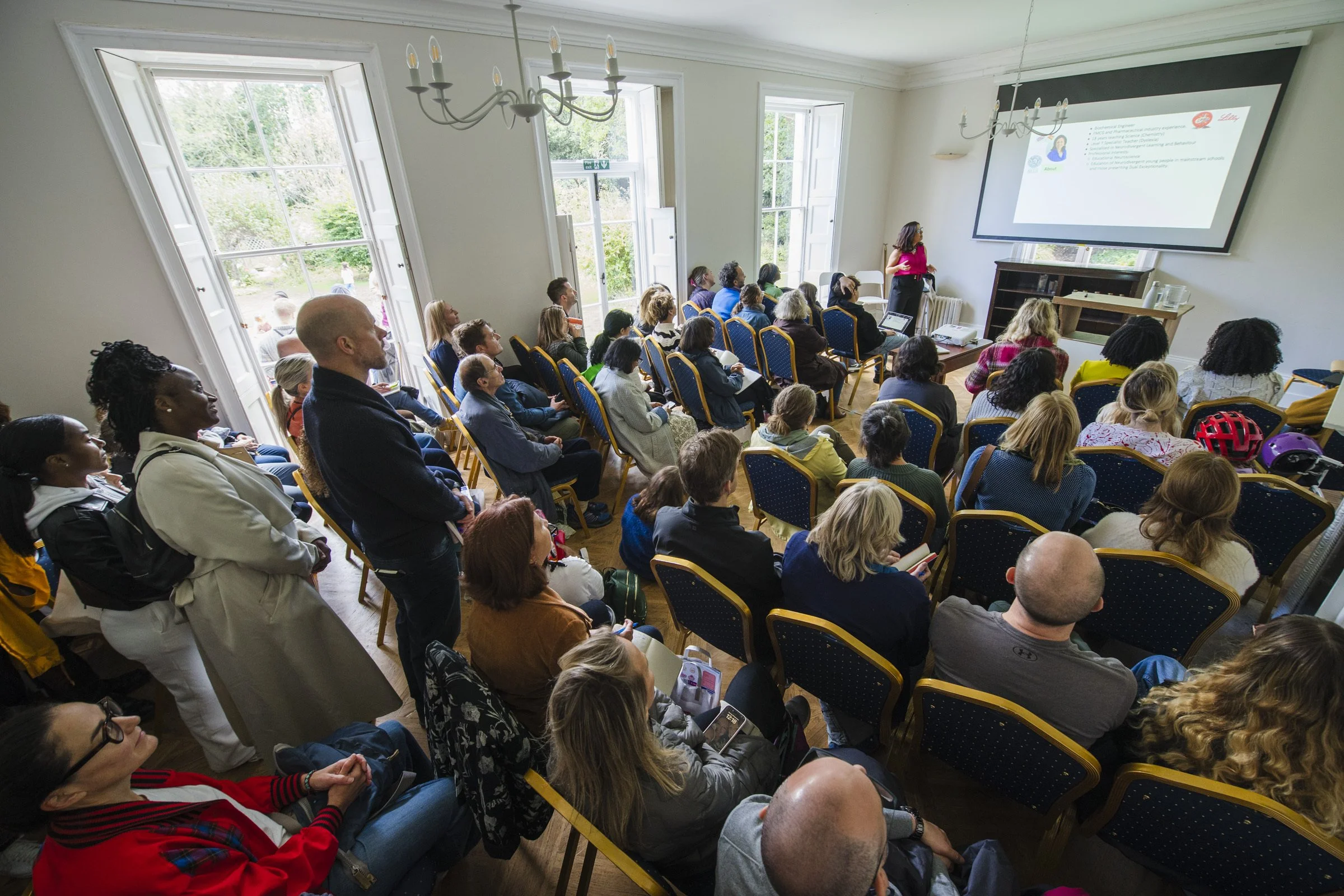
The Dyslexia Fair at the end of September was buzzing with the usual energy and positivity, as we welcomed nearly 400 visitors in glorious sunshine. This year’s programme explicitly reflected the rapidly growing recognition that Dyslexia often sits alongside other Specific Learning Difficulties such as ADHD, Dyspraxia, Dyscalculia and ASD. Being aware of this likely ‘cooccurrence’ is one of the challenges – and opportunities - for parents and carers, specialists, educators and students.
After the fair, the Dyslexia team, which has expanded in the past year, held a strategy session to reflect on the fair and consider how our increased capacity may be put to best use in the coming year. We have agreed that our priority in 2025 is to expand Bell House’s reach within the local community, finding practical ways to bring local families and students to Bell House for advice, support and connection.
In the immediate term, the dyslexia team is offering coffee mornings at local schools where a specialist will talk to parents about dyslexia and how they can support their children. One recent coffee morning was very well attended, and we have two more in the works.
We are continually looking for ways to bring local children, students and families to Bell House, building on the parenting workshops and touch-typing courses that will continue in 2025. The Fair’s Advice Clinics were as popular as ever, with the available slots booked out very quickly. So thanks to the expansion of the team, we will offer these on a monthly basis from January, with slots bookable in advance via the website. We will also be applying for funding to establish a bursary-based after school offer for children with dyslexia and literacy difficulties.
We had fantastic feedback about many of the speakers, some of whose talks were so popular that there was standing room only! (See photo above) We will be kicking off the 2025 Talks programme by inviting our 2024 Fair speakers to host an online talk, offering an opportunity for others who were not able to attend on the day. The ongoing programme will continue to look at the frequent ‘cooccurrence’ of dyslexia alongside other Specific Learning Difficulties and prioritise practical, cost-effective tips and strategies which parents and individuals can put into place. Finally, we will be increasing the number of screenings and assessments that Bell House can offer, thanks to the expansion of the team.
We would again like to thank everyone who attended the Fair and who provided such valuable feedback. We are excited about the year ahead and about welcoming even more people into the Bell House community to get support, advice and connection around dyslexia and other neurodivergent needs.
Great Excitement for the very first Bell House Writing Festival April 2025
by Raul Peschiera, Bell House Writing Team
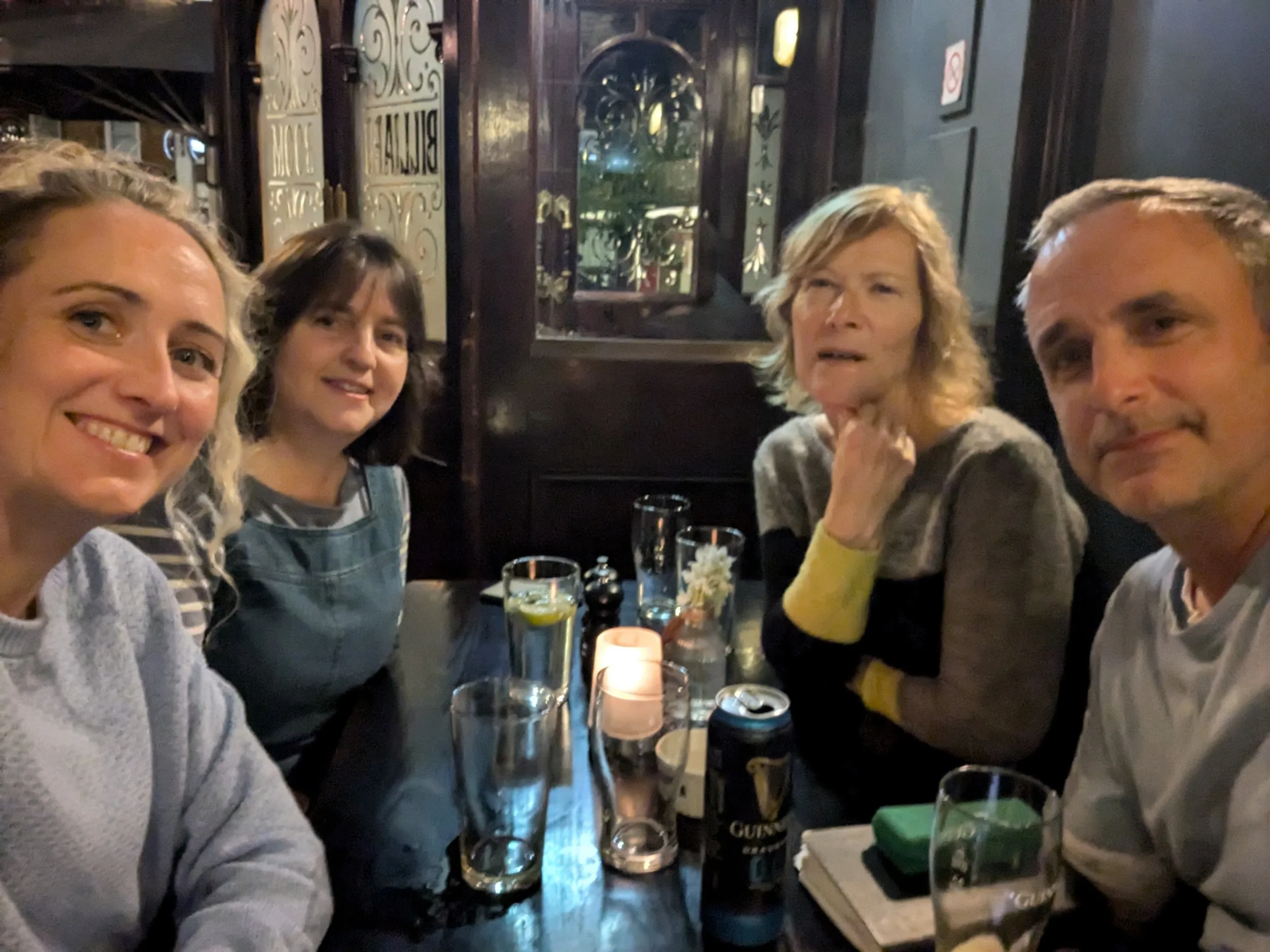
A highlight of the Bell House creative writing programme is its commitment to building a vibrant community. (See photo above.) Writers of all levels are invited to share their work, discuss challenges, and connect with others who are equally passionate about storytelling. On 26 April 2025, Bell House will host its first one-day Creative Writing Festival, celebrating fiction, poetry, and prose, with panel discussions, open mic sessions, workshops, and more.
Bell House’s creative writing programme is not only a place to develop technical skills but also a nurturing space where creativity flourishes. With courses led by experienced writers and instructors, Bell House is the ideal setting for anyone looking to start their writing journey or advance their existing craft, right in the heart of Dulwich.
For beginners, Bell House provides foundational courses that introduce essential writing techniques, including character development, plot structuring, suspense, narrative style, and the basics of poetry. These sessions are perfect for those looking to explore creative writing for the first time, rekindle a dormant passion, or complete a cherished work in progress. Classes include writing exercises, group discussions, and gentle feedback, allowing new writers to feel encouraged as they navigate the creative process.
Experienced writers can delve into advanced workshops focusing on areas like dialogue, scene-building, descriptive prose, and manuscript polishing. These courses include specialised sessions on honing voice and style, helping writers refine their craft and deepen their storytelling abilities. Peer review and instructor feedback play a key role in these classes, enabling participants to gain fresh insights and discover new ways to enhance their writing. Participants from the storytelling course have now set up their own autonomous writers’ group, meeting once a month.
Bell House also offers focused poetry writing workshops, catering to both new poets and those looking to expand their poetic skills. These workshops explore elements such as rhythm, imagery, and structure, encouraging writers to experiment with poetic forms and discover their unique approach to poetry. Whether participants wish to craft free-verse or try their hand at more poetic forms, such as sonnets and ballads, each session provides a space for creative exploration and self-expression.
The creative writing programme at Bell House offers workshops designed to inspire, challenge, and support writers at all stages of their journey. Set in the welcoming, historic Bell House, our courses foster creativity in a supportive and collaborative environment. Each session is crafted to help participants expand their skills, build confidence, and unlock their unique voice.
Join us to find your voice, explore new genres, and connect with a welcoming community of writers.
“Have you read the one about the “Parable of the Vinegar?”
by Sharon O’Connor, Bell House Historian
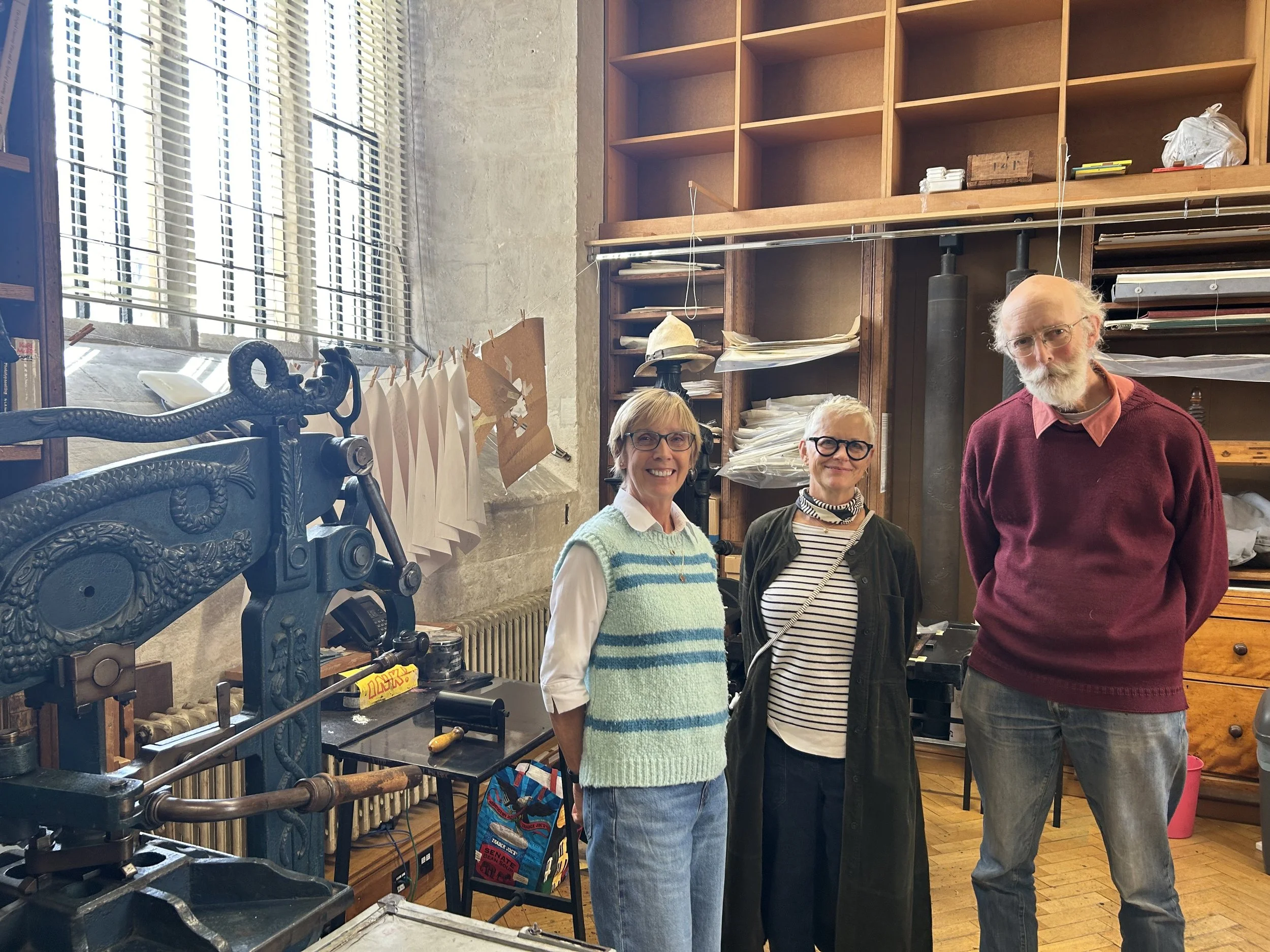
Bell House volunteers Tania and Sharon recently visited Oxford to follow in Thomas Wright’s footsteps, to see where he made the fortune that built Bell House and meet with university staff. Above is a photo of them with Richard Lawrence, Superintendent of The Bibliographical Press at the Bodleian Library, Oxford University - (as Sharon says: “They do like fancy titles!”)
Thomas Wright made his fortune from paper and books. That makes it all the more fitting that we now have a letterpress studio and a book bindery at Bell House. And what is extraordinary is that during their visit, Tania and Sharon were able to give the Oxford University Press staff new details about Thomas Wright’s printing techniques!
In 1765 his firm, Wright & Gill, won the contract to print religious books for Oxford University, when Oxford dismissed the previous contractors for printing books riddled with errors. One book was mocked as the ‘vinegar bible’, because the parable of the vineyard was printed as the parable of the vinegar.
Thomas Wright’s books were popular and within two years of winning the contract he had earnt enough to build Bell House.
Wright & Gill printed in the Clarendon Building which still stands opposite the Bodleian Library and there were ‘large and elegant’ apartments for entertaining university VIPs. Their bible became the standard Oxford text. It has a modern style with simplified spelling, fewer capital letters. The more important books within the bible begin on the right-hand page, resulting in extra white space - unusual for the time - given paper was expensive but making for a more visually pleasing and easier to navigate book.
During their visit to Oxford, Tania and Sharon spent time in the historic print workshop, now housed in the Schola Musicae, tucked away in the Bodleian Old Library quadrangle. The room has the original 17th century stands that Thomas Wright’s workers used, with their upper case for storing capital letters and their lower case for small letters and punctuation. Like Simon and Tania in our print room, the Oxford printers use innovative materials to print, even toy bricks! Tania talked about print activities for schoolchildren and swapped useful tips.
Tania and Sharon also visited the Oxford University Press and handled the extremely rare 17th century “Fell types” and usually kept securely locked away! (“Fell Types” is a collection of typographic materials assembled for The Oxford University Press by Dr John Fell, Bishop of Oxford, educator, author, editor and typographer.)
Our volunteers saw Oxford’s almanacs, like the ones Thomas Wright made in London. (Oxford University Press had a monopoly on publishing the annual almanacs for Oxford University from 1674 through to 2019.)
Our printers are now planning even more workshops and events for Bell House so look out for those as they get booked up very quickly.