

Welcome! In this Summer newsletter we celebrate 10 years since Bell House opened its doors as a charity. Here’s just a few glimpses of what we have achieved so far.
Bell House Dulwich at 10: Education and Community
by Sharon O’Connor
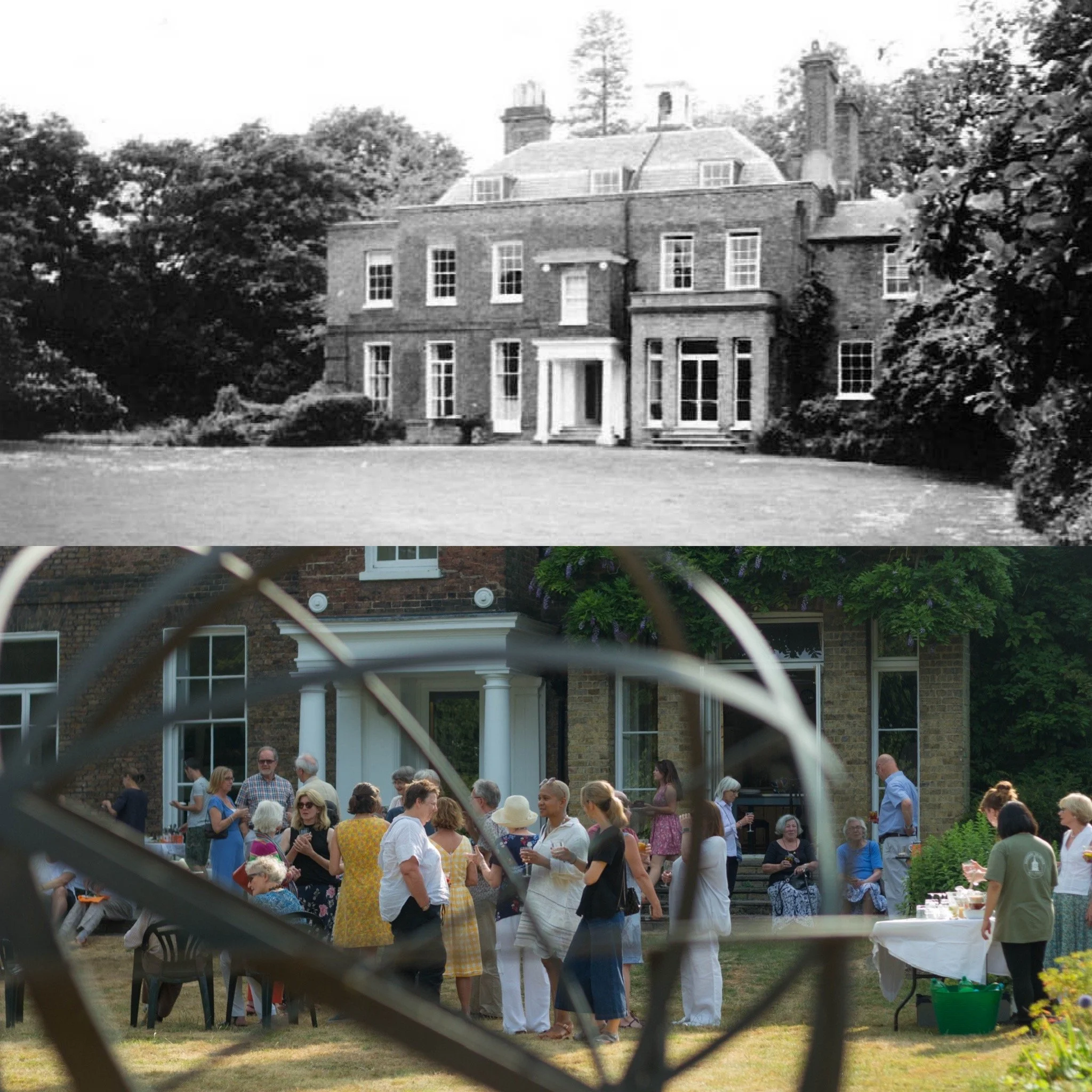
Since 2016, Bell House has steadily expanded its programme and now offers creative workshops, courses, talks, performances and community events. Visitors might join an art class, attend a concert, learn lifesaving skills, adopt touch-typing or discover the world of honeybees. At times the entire house is transformed into an art gallery. People hone their sewing skills making quilts for premature babies. Filmmaking is both taught and used as a way to get events to a wider audience: 15,000 people have seen the local history talks via YouTube. Health-based projects began with dementia support and now cover anything from social prescribing to women’s health. The breadth of activities reflects a belief that learning should not be confined to any one area or stage of life.
Over time, the site itself has become an integral part of the charity with the rooms and gardens an active, inspiring resource. The cellars now house a letterpress and bookbindery studio offering a wide range of courses, while a purpose-built pottery studio welcomes newcomers and experienced potters alike. Regular open days invite visitors to enjoy the gardens and explore the house’s rich history.
Significant work has also been undertaken to preserve and improve the house. Restoration projects have included renovating 50+ windows and uncovering the historic ha-ha. At the same time, Bell House has invested in sustainability such as installing a ground source heat pump, solar panels and insulation, ensuring the building can serve the community while reducing its environmental impact. Similar skills are passed on to the community through the popular Repair Hub where people can bring objects and learn how to fix them.
As Bell House celebrates its first ten years, it does so with a clear sense that learning should be accessible, enjoyable and lifelong. Its success reflects the same spirit that shaped the house when Thomas Wright built it: a belief in community and shared benefit.
10 Years of Gardening at Bell House
by the Garden Volunteers
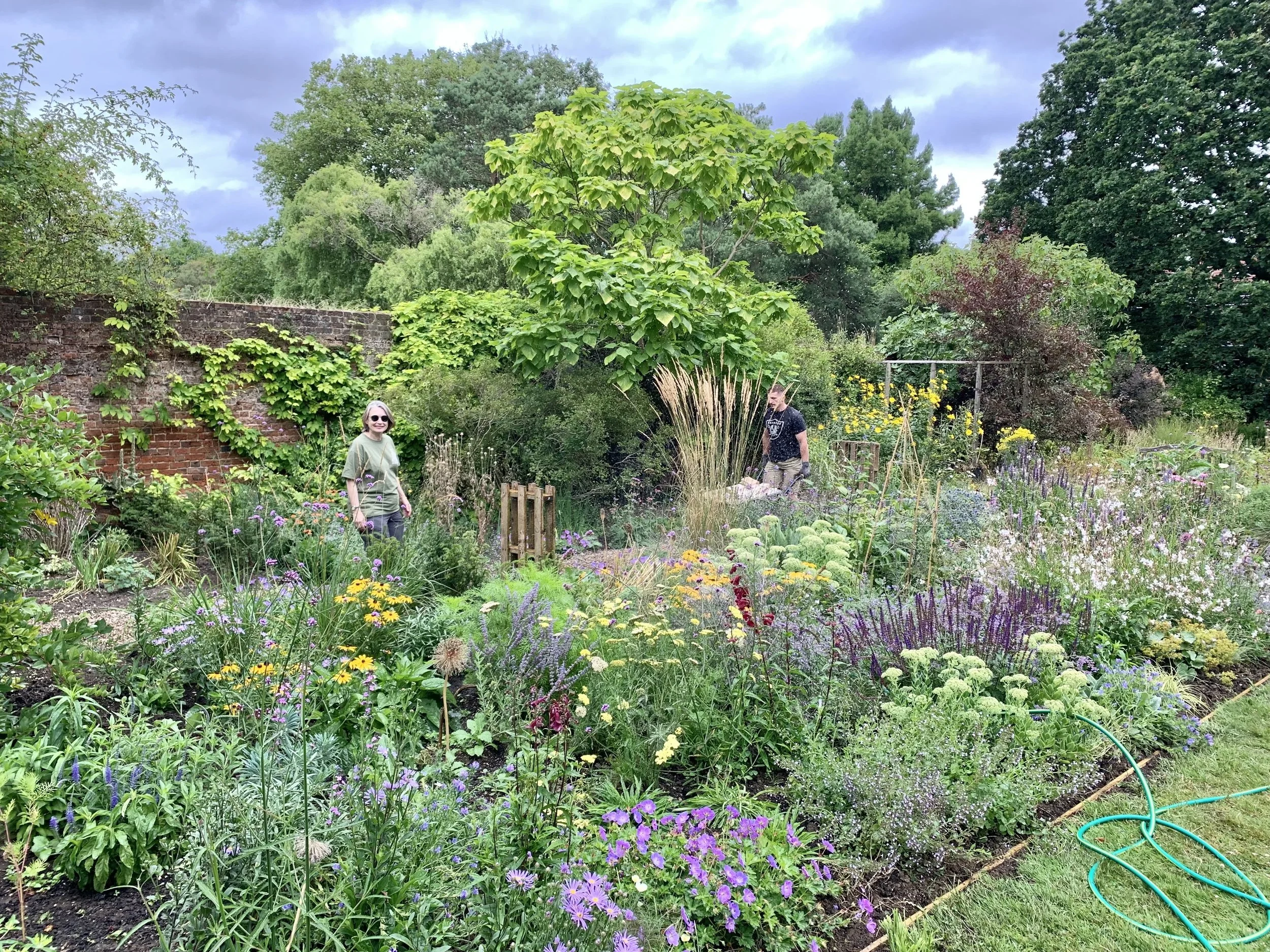
Image © Sara Lloyd
Volunteer gardening began in September 2017, a suggestion over coffee, between friends. "How about a gardening group?" There were nine the first Saturday, none of us professional gardeners but everyone keen and willing. We wanted to look after the garden, grow a community. We put up a welcome board and gave the growing group of volunteers coffee and croissants after ninety minutes of gardening.
One year in, we decided to start growing vegetables. A greenhouse followed, roses in the front, clearing of the front lawn and ha-ha, new compost bins. Duke of Edinburgh volunteers came forward with their parents, some of whom we persuaded to stay.
Our aim was gardening for community and wellbeing, but each new volunteer and new skill brought the chance to do more. In 2019, we opened for the Open Garden weekend, sessions became two hours, the grass became longer and we focused increasingly on how to support wildlife.
During COVID the garden became a lifeline. We stayed open, working within and adapting to changing requirements, with a list of suggested jobs on a board. We dug a bog garden in the hollow beneath the bridge and installed the winding dead hedge.
Eventually there were more volunteers, more expertise, more experience. We grew to three sessions a week, added ponds, shared produce, and were introduced to a fruit tree expert who advised on orchard trees to plant. After some consideration we began hosting the monthly Open Garden on the first Saturday of each month.
The year 2023 was when we started to grow organically. With the gift of the Pickwick garden, things really started apace. We opened up the fence line, recycled materials as habitat posts and shelters, built a circular log wall to enclose the bees in their new apiary. The next winter was spent organising and building sheds. Successful grant applications allowed the planting of native hedges and new beds with plants for pollinators. The polytunnel meant growing more from seed and propagation, and gave us somewhere to work on wet days. The Pavilion gave us an HQ to organise, run sessions and a warm space for coffee.
There’s more planned. The dry garden is starting to take shape and new beds, structures and planting schemes will emerge in the future. We’re recording wildlife, planning bio-blitzes, gardening as organically and as thoughtfully as we can.
We garden for wildlife, for visitors and for our volunteers. We’ve made friends, grown in our knowledge and gone on to do bigger things. None of this venture would be possible without the community we have created between us, the many many hours of dedicated volunteering, and the visitors to our open days who through their encouragement and generosity allow us to do more.
The Evolving Arts Events at Bell House - Behind the Exhibitions
an interview with Lucy Macdonald
How did you get involved?
I first started at Bell House as a beekeeper with Annie McGeoch as my mentor. Then, this time last year, having taken early retirement, it allowed me to pitch an idea to the Arts Events volunteers to put on an exhibition focussed on crafts grounded on traditional skills yet are contemporary. The display was entitled Threshold, running over three days in December with six exhibitors: a rug maker, basketmaker, embroiderer, painter and two printmakers.
A quarter of the exhibition sales went towards supporting the Bell House Creative Health project which partners with local health charities to demonstrate how art can enhance wellbeing and bring people together.
Do you plan exhibitions?
Yes, among six of us in the Arts Events group including Rosie Bayliss, artist-in-residence, and Anna-Maria Amato, group co-ordinator, where we rotate on who organises the exhibitions.
We had Saturday Characters in April, a life drawing exhibition co-curated by Rosie and Chris Allen, a member of the group and an apprentice in the Print Room.
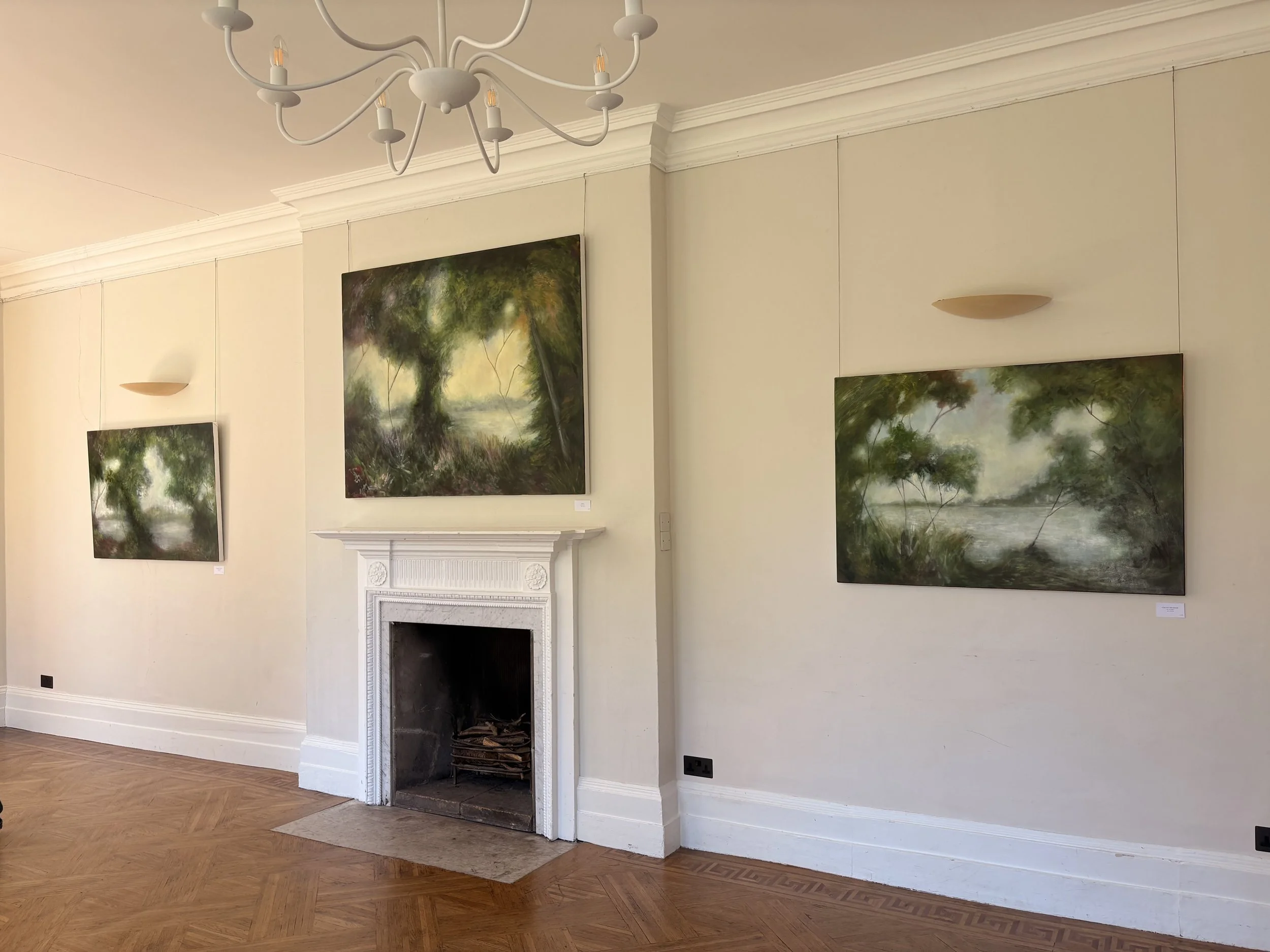
I have just curated Viridis, a solo exhibition of Alexandra Oliver's landscape paintings, of which 25% of sales fundraised for the Bell House Adult Literacy group.
Beth Worth has an open call inviting artists to submit works for The Flower Show, taking place on June 12-14th.
We also branch out and invite others to curate. In October, Kirsten Hecktermann is putting on an exhibition of embroidered panels and smaller works by Kenyan artist, Dhahabu Ngambau Dadu, and will feature a stitching/free-hand embroidery workshop.
Collaboration?
All volunteers in the Arts Events group support one another from helping hang displays, to invigilating and running the Private View. The exhibitions wouldn’t be successful without the help of other volunteers, including those who lend their expertise. Sven Arnstein and Liam Sherriff recently recorded footage at the Viridis exhibition to create a short film. The Print Room members Simon, Tania and Chris have all helped with hand printing invitations and promotional materials.
Benefits?
The objectives of the group are to enjoy working with artists to support them on their career journey, foster collaboration, and raise funds to support the Charity's ongoing projects.
If this appeals to you and you’d like to join us, please contact [email protected].
Annie’s Nurture Group: Reflections
by Annie McGeoch
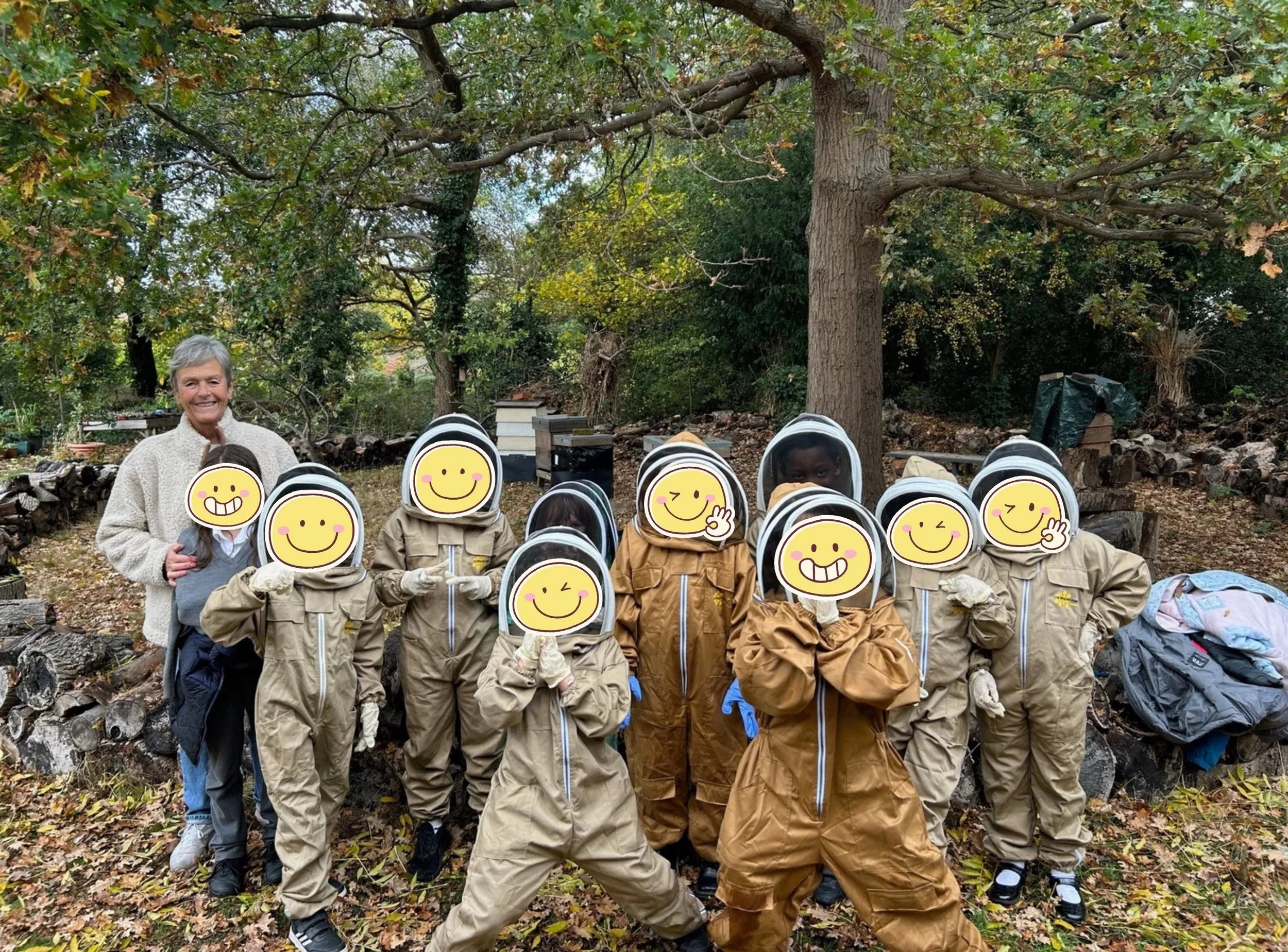
The Nurture Group evolved from the School Enrichment Programme, a single day out for up to sixty children organised in partnership with a local school just before the end of term.
At these meetings I noticed that there were some children who could manage those large groups and hectic days but some seemed at sea. I had a meeting with the headmistress of Crawford Primary school in Camberwell and we discussed what I and Bell House could do to improve the lives of some of the children. She suggested a Nurture Group where we would take a small group of children out for the afternoon. For three years we met on Wednesday afternoons at Bell House for an activity or an outing. It became clear that half a day was not always productive as we were short of time. By the time we had walked from the school to the bus stop, taken the bus to Dulwich Library and walked across the park to Bell House, we only had an hour before we had to travel back, often arriving late.
This year, we start making our way in the morning and return in the afternoon on Tuesdays, allowing an appropriate amount of time for travel and activities. The idea is that it's experiential learning - no aims and objectives, no measured outcomes. Just ten 7 to 10 year olds having a day out outside of school. The school selects the group members, described to me by the headmistress as the children who are perfectly behaved, though not necessarily in a positive way: they are the quiet ones alone in the playground, not engaging with the noise and all the activity around. Most were not born in London but speak adequate English while also speaking another language at home. They are from Afghanistan, Syria, Iran, Kosovo, with parents often working zero-hour contracts where one goes out to work when the other comes in to sleep, not allowing time or resources for outings. What the group is offering is a chance to make friends, to have something to talk about in school, and “stick out” a bit. It turns out they are envied by other children for their outings and the chance to go to Bell House.
The idea is to help them feel like individuals. We use their names a lot, talk about birthdays, family members, siblings, simply showing interest in them like we would with our friends. It’s about establishing relationships so they could support one another in school when surrounded by larger groups.
We have had outings at the Battersea Park Children's Zoo, Jurassic World, Horniman Museum and the Dulwich Picture Gallery. Had hot chocolate at a café, practicing not to make a huge mess. A trip to the Vauxhall City Farm, and one afternoon spent in the park, talking to dogs and their owners. At Bell House we did clay sessions, a drama workshop, printing courses, and heard stories of the history of the house. Before the end of summer, we will head to Westminster Abbey, the House of Parliament, and finally, a picnic in Ruskin Park.
If anyone has ideas for activities or would like to help with the outings, message [email protected]. We will have a new group of children next year so it would be great to have a new team member or two - it's always good for the children to meet new people.
Bell House Pottery is delighted to welcome its second Potter-in-Residence in August
by Birgit Pohl
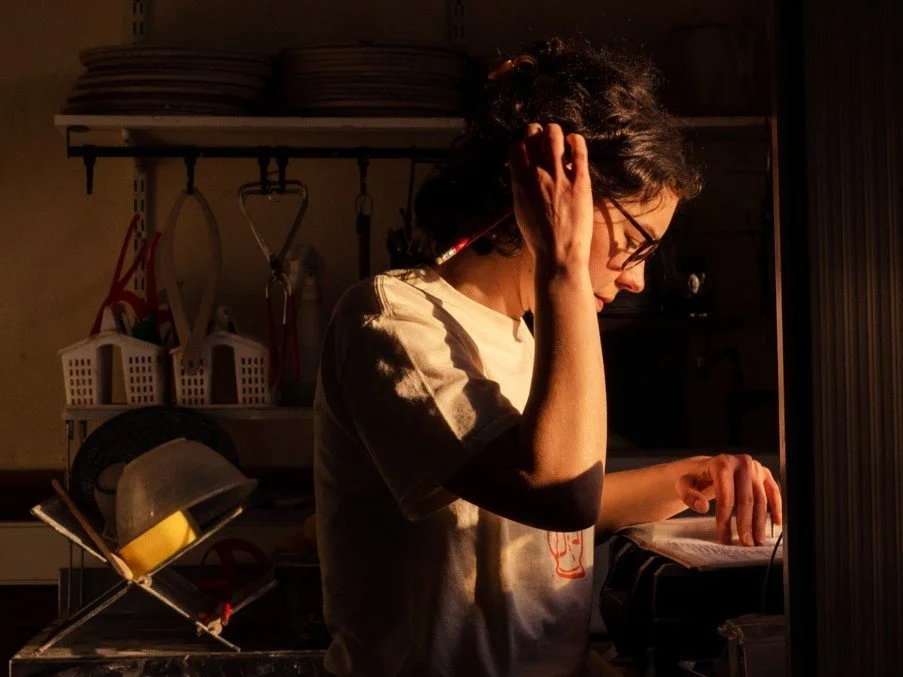
On 11 September 2023, a modern pottery studio was opened in the grounds of Bell House.
The pottery studio has been a core part of the Bell House mission to provide creative learning to the widest community. Working with clay can be a satisfying creative pursuit with tangible results. In a kind and supportive environment, pottery classes can also support people struggling with mental health.
Burgess Architects, who specialise in sensitive restoration of historic buildings, were commissioned to design the pottery studio with sustainability and energy efficiency in mind. Key features include solar panels, a ground source heat pump, and the use of natural materials such as Douglas fir, with its low carbon footprint. The big picture window at the back of the studio looks out onto the beautiful Bell House garden.
A variety of courses and workshops are being offered to potters of all levels.
This summer, we are pleased to announce our second Potter-in-Residence.
Megan Cox is a potter living and working in Liverpool. Her work is grounded in a philosophy of slow living - valuing thoughtful design, mindful making, and the quiet beauty of everyday life. Megan’s work is inspired by the traditions of British studio pottery and a deep fascination with medieval and Anglo-Saxon pottery. Drawn to the simplicity, raw beauty, and enduring forms found in these historical pieces, as well as the use of local, natural materials. During her residency, she will utilise access to the vast collections of pots found in London museum collections. Through an open, iterative process of making and testing, she is hoping to create a body of work that establishes a visual language connecting the past and present, resulting in a resolved series of functional vessels that integrate form and surface within contemporary use.
Megan is planning on running a workshop centred on stamp-making and surface decoration towards the end of her residency. Keep an eye on the website for updates.