

Welcome to the third of our seasonal newsletters. In this Autumn edition, you’ll find a selection of recent news and updates from Bell House, which we hope you will enjoy!
Read more10 year olds have fun at a Bell House School Enrichment Day
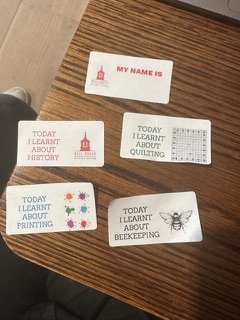
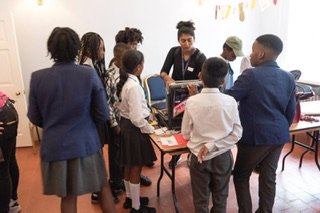
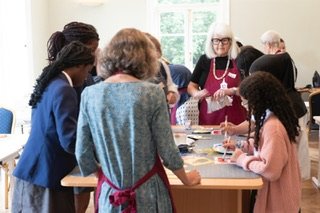
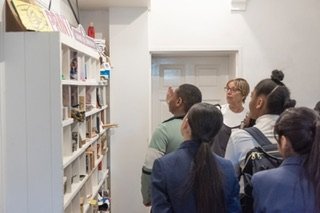
60, yes 60, 10 year olds had a wonderful day of making and doing at a Bell House School Enrichment day on Wednesday 12th July.
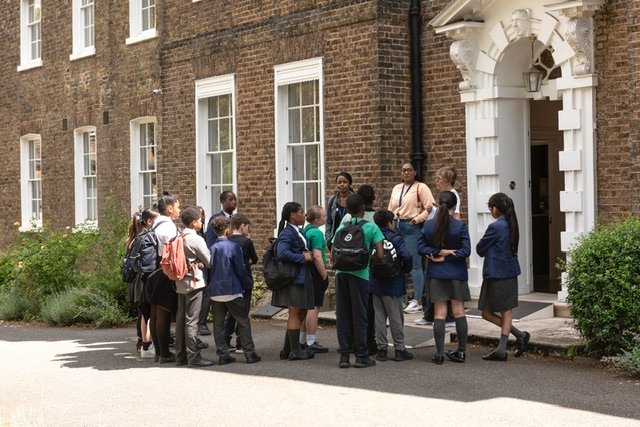
Pupils from Crawford School came to experience and learn about everything that Bell House has to offer from the volunteers who help make all this possible.
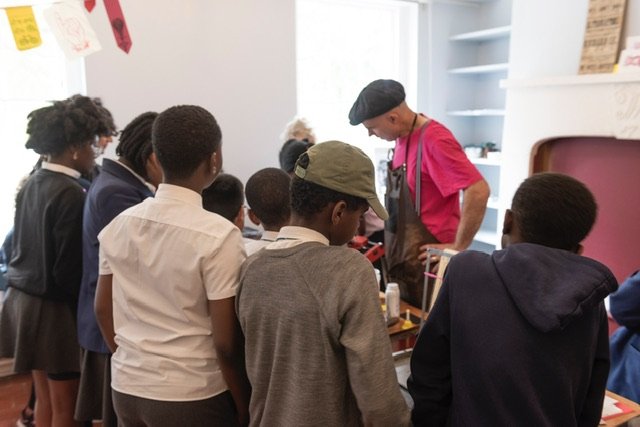
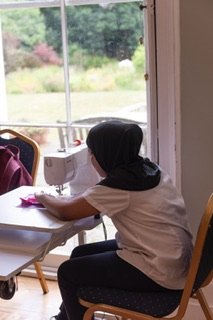
It was a glorious sunny day and the children enjoyed a full day of enthralling activities from printing with Simon, Beekeeping with Annie, Quilting with volunteers from the Quilt Academy, Sharon telling the secrets of the house - and if that wasn’t enough they enjoyed cakes baked by Frances. With a lot of help from Janis, Cher and Laurel the day was declared a huge success. And thanks to Ian the whole day was recorded on camera.
And they travelled on the P4 bus!
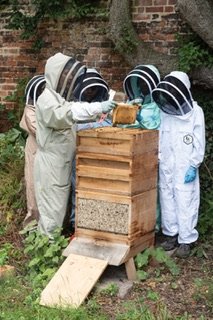
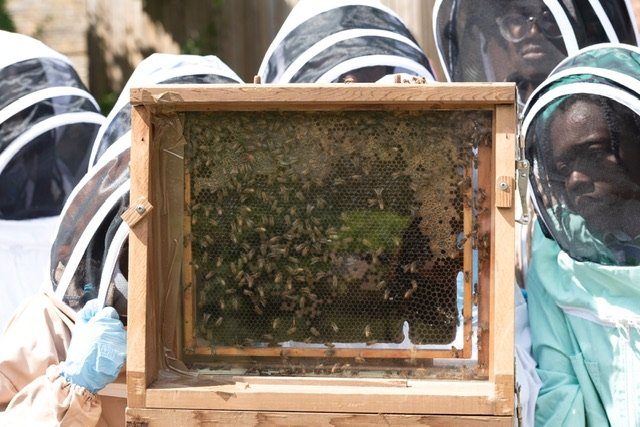
The students even had the right size beekeeping suits to wear!


Bell House Pottery - 3 months to go!
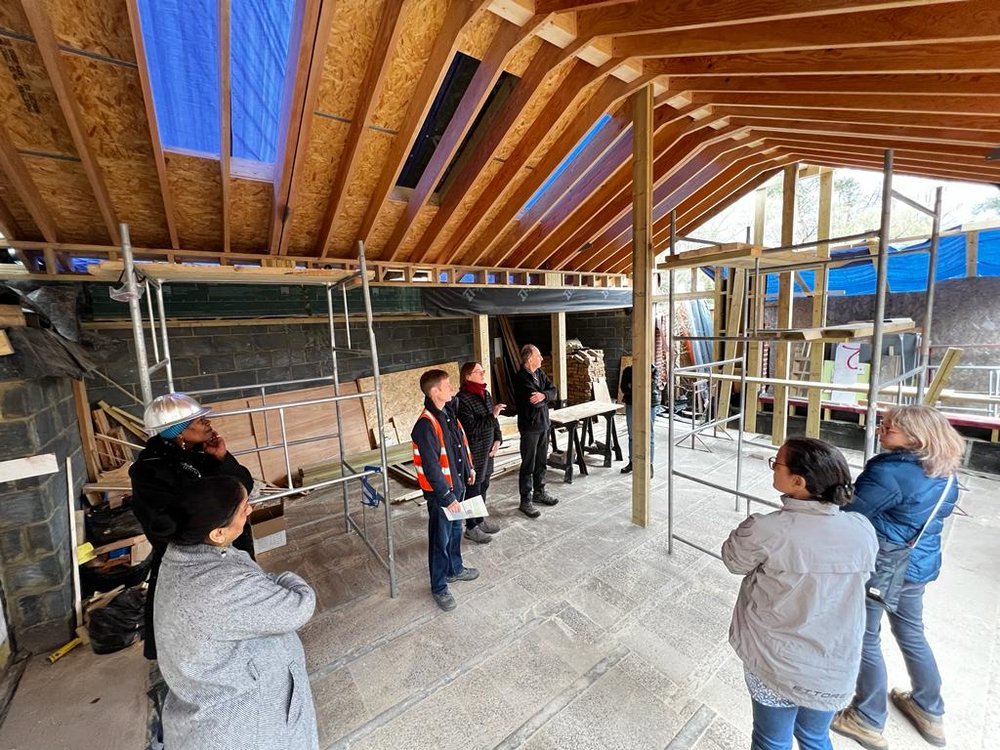
Countdown to the new pottery opening for use. Three months to go!
Most people familiar with Bell House in any way will already know about the wonderful new facility which has been taking shape over the past months, tucked away between the outbuildings and the garden, not at first obvious from the road. Gradually, as buildings do, it has been emerging from the usual confusion of a building site and is now nearing completion. Classes are planned to start in mid-September and booking is already going well. A great deal of interest was shown by everyone who came to ask about the pottery and look at the architect’s model, which was on display on the Open House and Dulwich Festival days. Even those who had no experience of pottery were enthusiastic about this new local resource and its potential.
The building itself is very carefully designed to exploit the lovely position of the site, overlooking the gardens, and to complement the existing style and atmosphere of Bell House and its grounds. Sound principles of sustainability are at the heart of its construction, and will continue to be adhered to once the pottery is in use. For example, solar power and a ground source heat pump will provide much of the energy needed, and clay can be recycled routinely from any items not required by their ‘creators’. Encouraging news for those of us beginners who are bound to have a few mishaps!
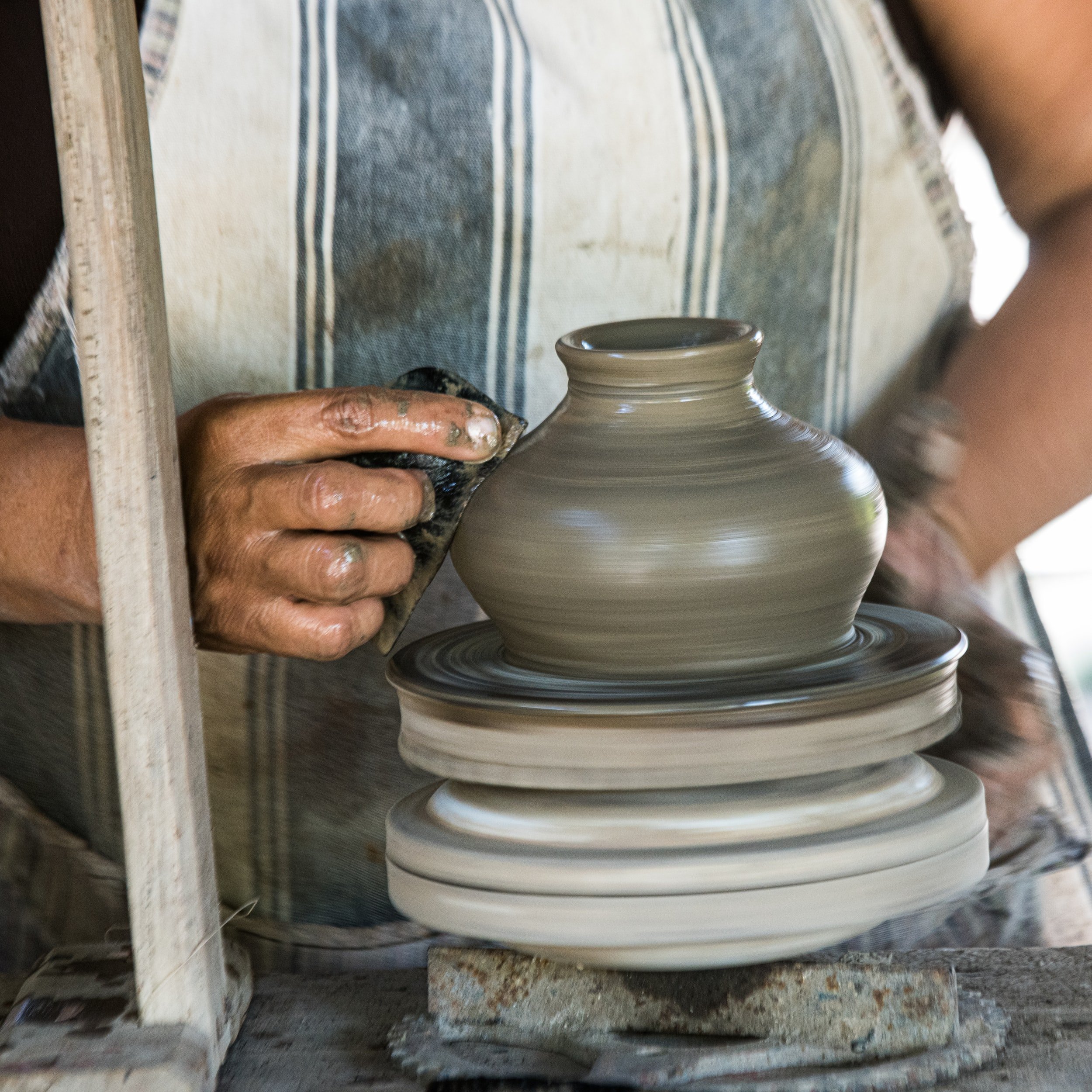
If you have already booked a class, or if you are thinking of doing so, what can you expect in the autumn? A spacious and bright room, with a warm atmosphere, closely connected to the natural world of the garden outside, with all the inspiration that might provide… Classes of eight- small enough to allow plenty of attention and support but providing a friendly atmosphere in which to learn together… Enthusiastic and experienced tutors, each bringing different styles and techniques as potters… And, as autumn moves into winter, an afternoon or evening to look forward to as you acquire a totally new skill or explore an existing talent.
Bell House Summer 2023 Newsletter
Welcome to the second of our seasonal newsletters. In this Summer edition, you’ll find a selection of recent news and updates from Bell House, which we hope you will enjoy!
Read moreMay 20th - World Bee day
There are 279 varieties of bees in the UK - the honey bee is just one of them.
7 years ago Bell House said ‘yes’ to bee hives. The first one was secondhand and cost £50. Each hive can have up to 60,000 individuals.
Honey bees feed on nectar and pollen which they can reach with their tongues.
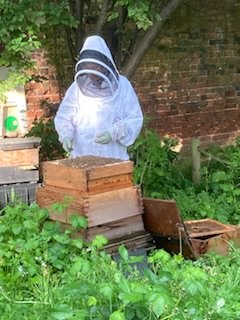
Bell House now has 3 established hives which are taken care of by our beekeeper, Annie McGeoch. Annie has been interested in bees since the age of 6 - her grandad had hives in his garden in Lancashire - and she remembers those times fondly. Annie says she particularly loves the smell when a hive is opened.
Honey bee
If you’d like to find out more about honey bees you can book a place on one of Annie’s talks. Visit the website to book.
But as it’s World Bee day on Saturday 20th May here’s a shout out for just a few of the other bees you may have heard of.

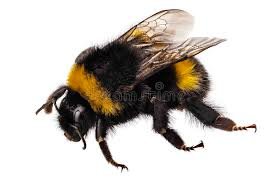
Bumble bee
Bumble bees are beautiful large clumsy balls of fluff. They are a social species, nesting in colonies ranging from a few dozen to several hundred bees. There are 24 varieties. Each variety has different food tastes and these include brambles, buddleia, thistles and rhododendrons.
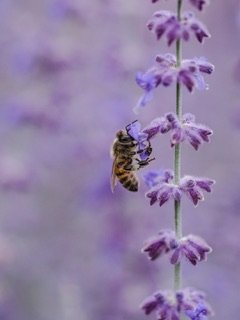
Common Carder bee Credit Aaron Burden
Common carder bee is a little bee and the only UK species with all-brown colouring and no white tail. They range from ginger to a pale, sandy brown depending on how sun-bleached they are. They are found everywhere from arable land to urban gardens. Gorse, dandelions, dead-nettles are some of its favourite foods.
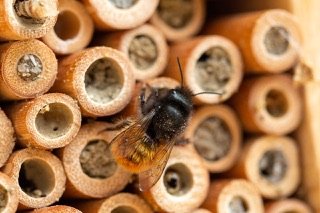
Red mason bee
Mason bees buzz about in front of brick walls. This solitary species nests in cavities in wood, hollow stems and walls. They have boxy heads and large powerful jaws. Red mason bees are seen in built-up environments with plenty of gardens, churchyards and urban green space. And they are the bee most likely to be taking up residence in your bee hotel. Look out for a black head, brown thorax and orange abdomen, and in females, a lot of fluff.

Mining bee
Mining bees nest in the ground and they belong to a 67 strong group of diverse bees ranging from 5-7mm long. They feast on shrubs like hawthorn, fruit trees, dandelions and buttercups and much more.