

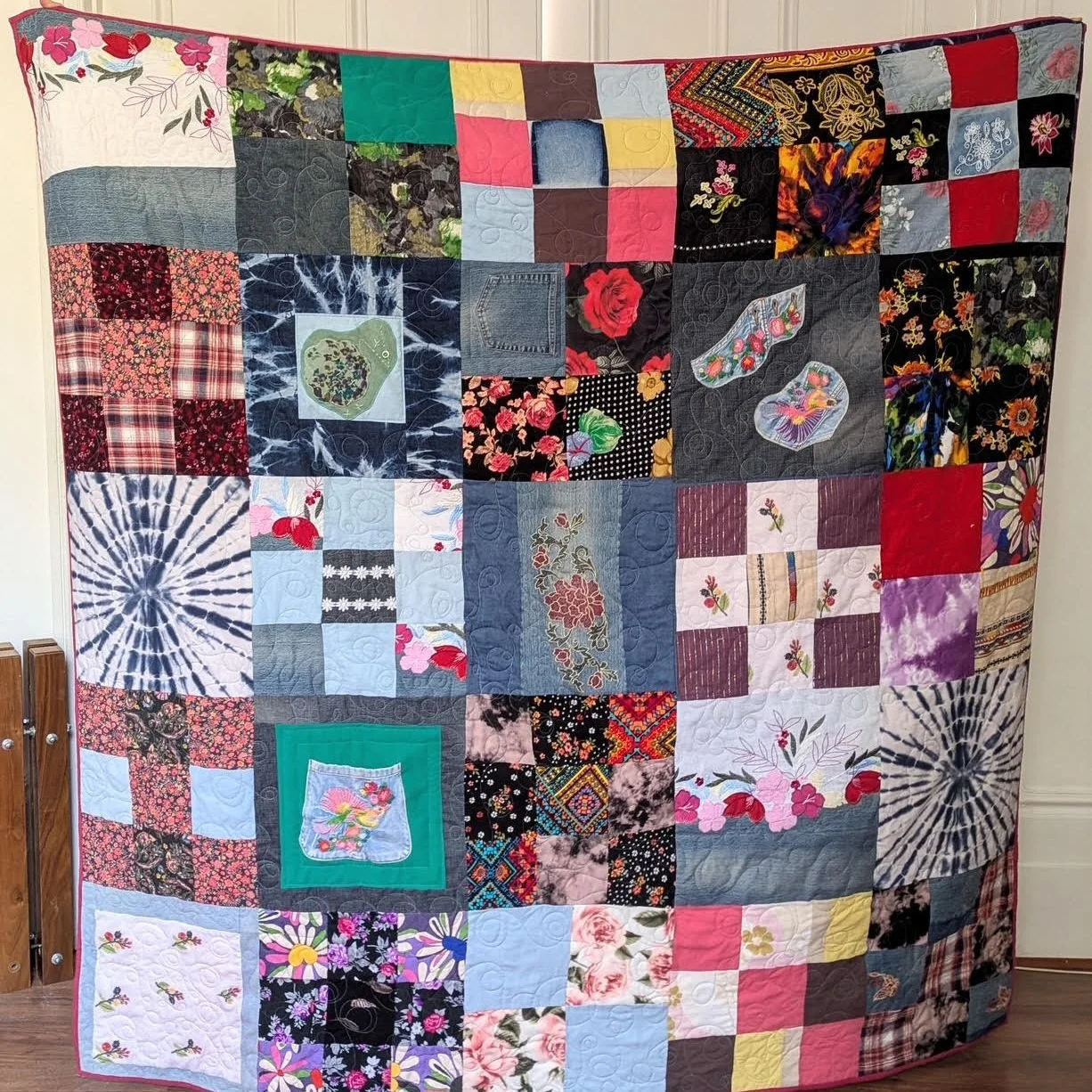
DIY SOS wanted to have a memory quilt made for bereaved siblings living on together in the same house after their mother’s death.
DIY SOS found Catherine-Marie Longtin, an art quilter based in Peckham, and asked her if she could make such a quilt. She was enthusiastic, but knowing that she had less than a week to make it, knew she couldn’t do it alone and needed some volunteers to help her. She contacted Marianne ten Kate, a fellow member of the London Modern Quilt Guild, for help. Marianne quickly realised that she knew EXACTLY who could get the job done. Marianne spoke to Janis Fuller, her fellow Quilt Academy tutor, and they hatched a plan. The mother’s clothes, chosen by the siblings themselves, arrived at Bell House on Friday lunchtime, and under Catherine-Marie’s artistic guidance, a large group of eager and joyful QA members, joined by members of Dulwich Quilters, worked to make the blocks. In addition, another group of equally keen QA stitchers made each of the five siblings a cushion from their mother’s clothing to keep in their own rooms.
An heroic effort resulted in a quilt top and all the cushions being made by 5pm. Janis made the backing from two huge pieces of ticking, to Catherine-Marie’s exacting standards, and Marianne quilted it on the Saturday on her long-arm quilting frame. It was ready for Catherine-Marie to add the binding and deliver it to the programme makers by Wednesday.
Catherine-Marie and Wendy Regan went to the DIY SOS ‘grand reveal’ at the newly renovated home and met some of the family. Tears were shed all round, we’re reliably informed.
The programme, featuring the finished quilt, aired on the 24th October on BBC1.
Bell House Autumn 2025 Newsletter
Welcome to our third Autumn seasonal newsletter. In this edition you’ll be introduced to our first Potter in Residence, our new House Guardians and our new Artist in Residence.
For one month only… Rowena Hamilton in the Pottery Studio

Rowena is the first Potter in Residence at Bell House, spending August working in the studio. The studio was scheduled to be closed as all the teachers were taking their well deserved holidays and so the idea to offer it to a working potter was a winner.
Rowena successfully applied and was also given a bedroom in the house.
She was late to potting, having spent many years working in museums and galleries. But it was here that she became interested in pots of all shapes and sizes but particularly the older ones. She was fascinated by a theory about basket weave sometimes found on ancient pots. The theory goes that early potters learnt this by accident. Woven baskets were not waterproof, so were lined with clay. When a basket was thrown away in a fire they found in the embers clay pots with a basket weave. Basket weave is a decoration she now uses on some of her work.
Over covid and looking after her mother who had dementia, Rowena started to work with clay with her mother. They both found deep satisfaction working with the clay - moulding with their hands. And this was the start of her move to become a potter.
She graduated in 2024 from Clay College in Stoke. This college specialises in preserving the dying elements of traditional potting - both practical and technical skills teaching the traditional ways of working with clay not available at most other teaching institutions. As Rowena says - Clay College delivers “self-sufficient potters”. She now continues the tradition of functional pottery through her work making tableware.
Rowena has a ‘tiny’ studio with an electric kiln at her home and also works in another small studio where there is a collectively run wood kiln. So the Bell House studio - its size and functionality - has been a very special opportunity for her. She came with plans to “work on form, hand building and textures - to perfect shapes and techniques - not to be distracted by glazes - the pure process of potting is that you have to spend time on the form and then leave time for drying and firings”.
So what are her reflections on her time in Bell House?
In her first week she felt the big studio unblocked her - the physical space gave her head space. She has been surprised by how ‘wildly’ creative she felt - some of her ideas haven’t worked but they’re stored for future reference she says. She feels this wouldn’t have happened in her home studio. She felt very comfortable out of her comfort zone and it‘s given her the confidence to know she can work almost anywhere.
The studio has a huge window looking out into the Bell House gardens and Rowena has enjoyed chatting with the volunteer gardeners over a cuppa. She’s learnt from them and in particular about baskets (and has been told about a collection at Kew Gardens which she hopes to visit at some point). She’s also met Emma, one of the new Guardians who gave her the idea to make some small plant pots for seedlings. She has made some and what is even more helpful is that Rowena can use the pots to fill the spaces between larger pots in the kiln. Another win-win.
One of the less positive learning experiences was the impact of such a sunny spot for a studio. It has been very hot and she found hand building very difficult. To be successful you need to keep the clay moist and in such hot drying conditions this was very hard - but a learning experience nonetheless.
Rowena believes it is a privilege to eat and drink from handmade pottery and this is how she approaches her processes - so she is very mindful of her role in this.
Just to return to her covid experience with her mother. Her mother was a dentist and had worked in schools. She had a wonderful collection of teeth that she would show to the pupils - one in particular was a sperm whale’s tooth. These teeth have been fascinating to people over time - their size and shape - and Rowena decided to make a replica of one but to make it even more interesting to make it into a rattle. These rattles have now become a part of her collection - she makes egg shapes as well - she calls them ‘Fidget Toys’ - an object for handling and thinking - she doesn’t like to use the word ‘de-stresser’!
Photo above of Rowena in the Bell House garden with one of her sperm whale tooth fidget toys and some of her plates on a table drying in the sun and ready for their first firing.
To find out more about Rowena and to see her work and online shop visit:
rowenahamilton.works
Instagram: @row_hamilton
Facebook: Rowena Hamilton Pottery
Author and Photo: Sally Graham
Meet Emma and Ted - our new House Guardians
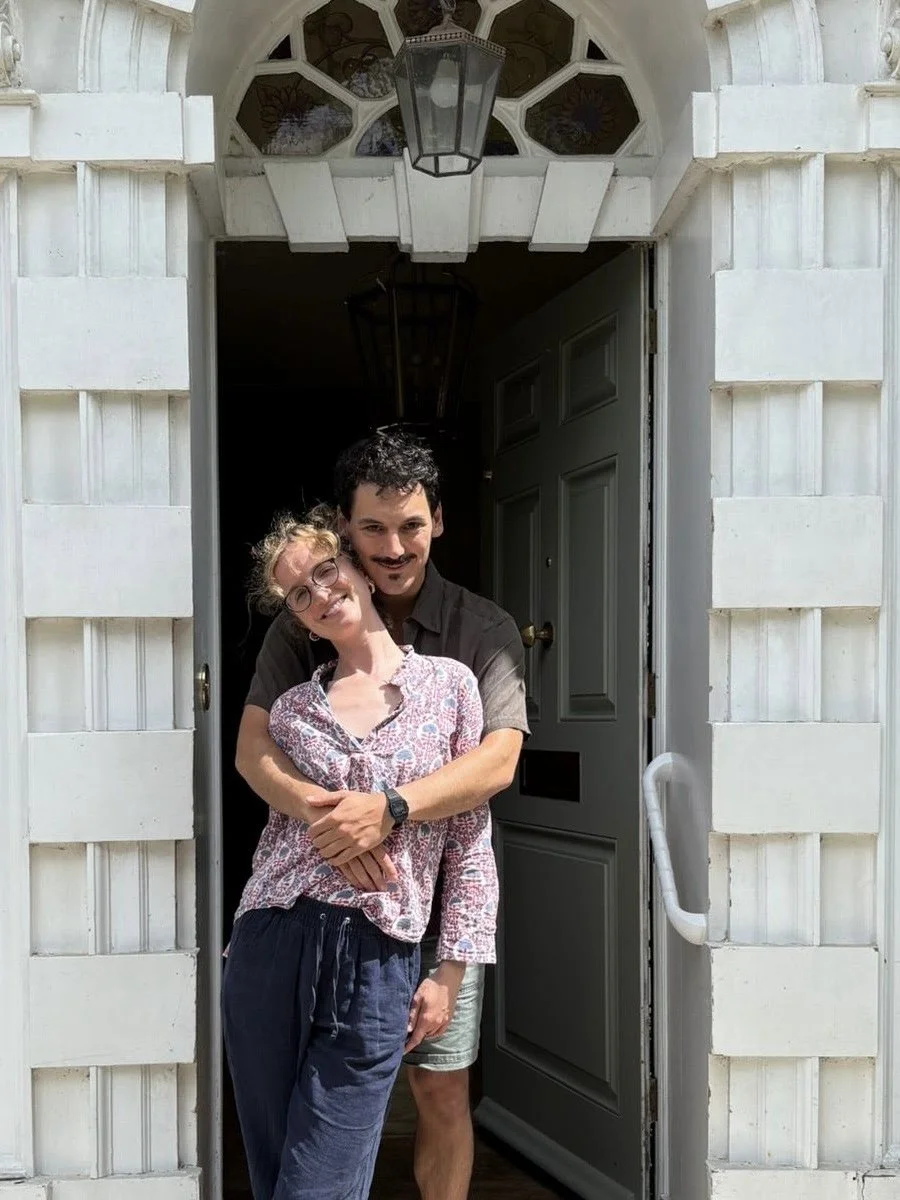
1. How did you become the Guardians for Bell House, and what does the role involve
Emma first got involved with Bell House as a garden volunteer, spending a year learning from the brilliant horticulturalists and garden designers Sarah H., Shelagh, 'Cookie' and others. It was one of the wonderful gardening volunteers, Sara, who informed Emma about the opportunity.
We’d also come across the former guardians at Kingswood Arts, where we’re involved on the Community Advisory Board, and we have mutual friends in common. After Jack and Laura moved to Manchester, we knew we had big shoes to fill: they were such pioneers of community life in this part of London!
The role itself is varied. It’s a mix of contributing to keeping the house safe and secure, pitching in with cleaning, supporting events and charitable activities, and generally being a friendly point of contact. No two weeks are ever quite the same, which keeps it exciting.
2. What drew you to becoming Guardians, and what do you hope to gain from your time here?
Two of the charity's pillars, mental health and neurodiversity, are really close to our hearts.
Emma’s late mother worked as a highly specialist speech and language therapist for the NHS, Ted works as a psychiatrist, and Emma now tutors with a particular focus on supporting students with SEN. It feels really meaningful to bring those threads into the work we do here.
We also feel strongly about supporting educators. Devastatingly, a friend ended their own life, shortly before Emma’s mother passed away, brought to the fore how incredibly important it is to support those on the frontline of education. Being here gives us a chance to contribute to wellbeing work that can make a difference for teachers and learners alike.
But we'd say the most immediate draw was community. We’ve always loved communal living — we previously shared a home with ten adults, and Emma spent nearly a decade abroad living in shared houses and co-operatives. It's equally an honour to share this role with Anna and Jarek, who have many years' experience of communal living.
3. What would you like your impact at Bell House to be?
Although it’s still early days, we’re eager to support and help develop the wellbeing activities at Bell House.
With the support of Cher and the events team, Emma’s starting a mindfulness series from mid-September with a much-loved local yoga teacher.
Recently she also ran a “Reset & Renew” workshop in the garden, blending mindfulness, yoga and sound healing; it was a joy to host alongside a local sound healer she’s long admired.
One dream is to fundraise for sound healing equipment, so we can offer free sound bath meditations at Bell House to mothers living with chronic illness in Southwark — something very close to Emma’s heart, in memory of her own mother.
On the education side, Ted is hoping to use his experience of working with young people with ADHD to set up an ADHD Advice Clinic to support local young people and families.
We also love welcoming the artists-in-residence, as well as the recent potters like Rowena and Andy. We're keen to support future residencies. It feels like such a privilege to share a home with them; they bring so much creativity, conversation, and inspiration, both to the wider community and to our own dinner table chats!
4. Could you tell us something unexpected about yourselves?
Between us, we speak eight languages and have lived in 14 countries. But maybe more surprising is that we’ve both spent over a decade practising martial arts! It’s had a significant influence on us: from how we approach breathwork to mental discipline, and even our shared interest in Eastern philosophies. Those lessons continue to shape the way we live, and the work we do today.
Author and Photo: Emma and Ted
Rosie Bayliss - our new Artist in Residence
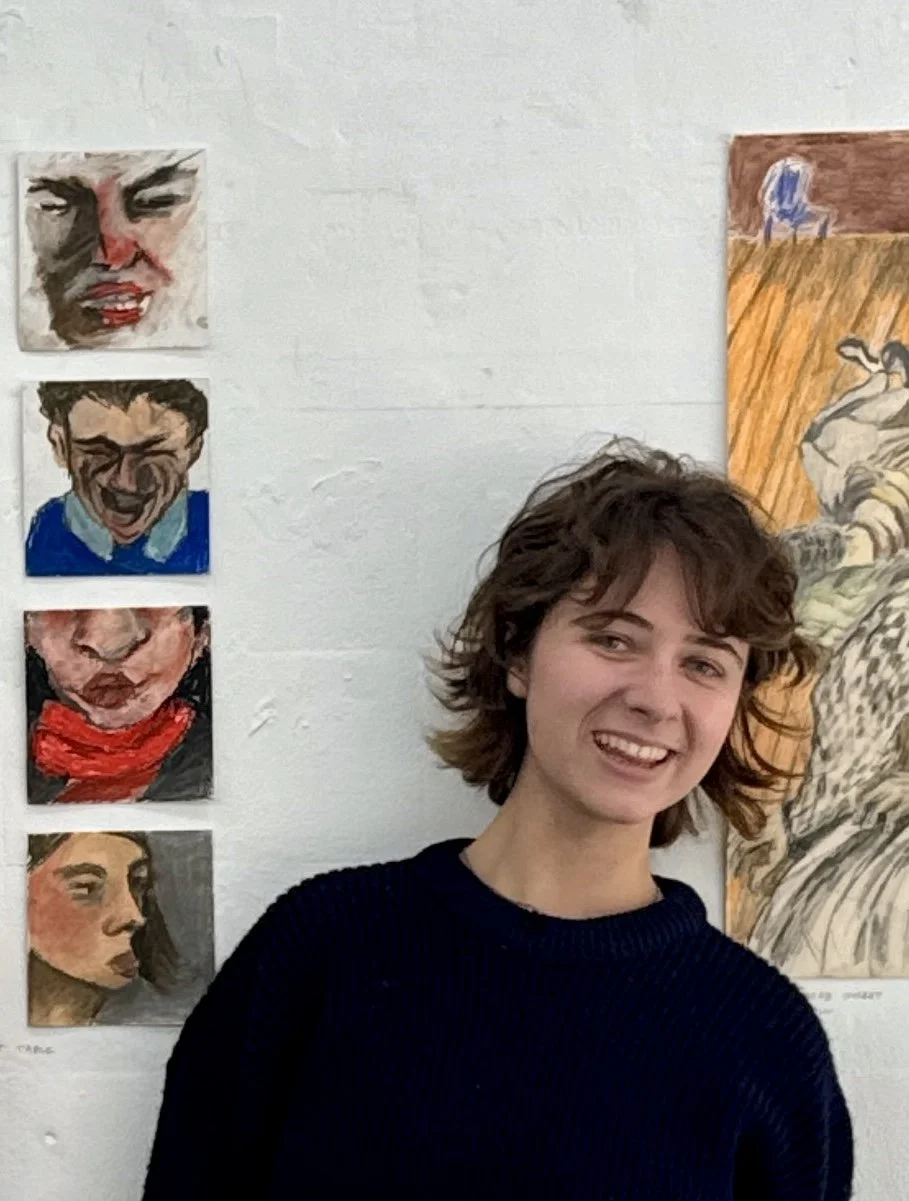
1. How did you become the ‘Artist in Residence’ for Bell House?
I first heard about Bell House through a friend who runs workshops here. I visited for the open studios and later for the open gardens, and was struck by the generosity of the community and the outreach programming. After spending time in the space and meeting volunteers, I raised the idea of a residency with the board and it all came together.
2. Tell us a little about yourself and your ‘art journey’ so far.
I grew up in South London and later Brighton, where I completed my art foundation. I then studied Fine Art and Writing at the University of the West of England, a rare BA course that allowed me to explore both painting and writing. The tutors and technical staff were incredible. After graduating in 2022, I received the Dreamtime Fellowship, which gave me a studio and bursary at Spike Island, Bristol, for a year. My work, both written and visual, explores unlikely connections and unreliable narratives.
3. What do you hope to gain from your time here?
Being the Bell House artist in residence offers me the space and time to focus on my practice. I’m excited to create new work inspired by the house, gardens, and Dulwich Picture Gallery. I’m also excited to run workshops and contribute to making art more accessible, something I’m very passionate about.
4. Have you been asked to get involved with activities at Bell House—for example the Art Studio sessions or outreach projects? What would you like to bring to this side of things?
I’m running a fortnightly Saturday drawing class exploring different approaches to life drawing. It’s inspiring to see how people interpret the same guidance in unique ways, which reinforces the importance of art as self-expression. I’m going to start working with the Bell House Creative Health committee to expand outreach and bring workshops to specific communities.
5. Apart from your art, what else would you think we’d be interested in knowing about you?
I love reading and writing, especially about storytelling and how we create narratives to make sense of our lives. I enjoy conversations about people’s creative practices and am passionate about amplifying underrepresented voices. Outside of art, I also love cycling and a pub quiz!
Author and Photo: Rosie Bayliss
Bell House Summer 2025 Newsletter
Welcome to our Summer newsletter - it’s time to tell you what’s been going on…
What’s New @ the Bell House Pottery?
by Jim Belben
Raku
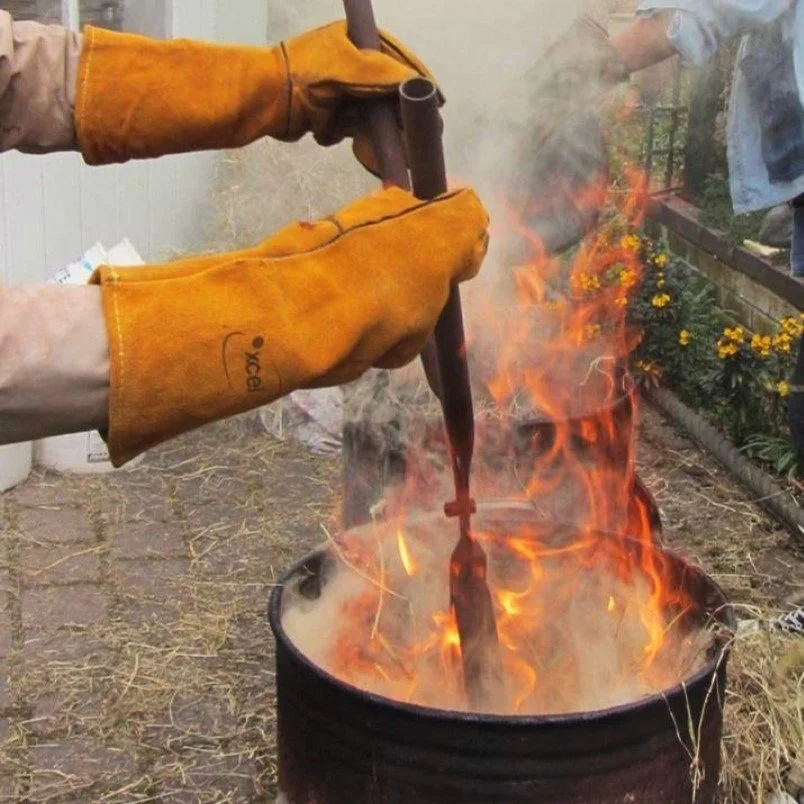
Anyone who has watched the Great Pottery Throwdown will have witnessed the excitement of Raku. This ancient Japanese art is famous for its dramatic 'live' outdoor firings with a strong element of surprise.
Well, in July, Raku will come to the Bell House Pottery for the very first time!
We have spaces for 32 students across four courses from beginners to intermediate. The making sessions will be led by Gaby Mlynarczyk who is the latest recruit to our teaching team, then the following weekend the glazing and dramatic outdoor firing will be led by visiting Raku expert Andy Mason. To book your place, please click here.
‘Let’s Clay Together’
From the start, one of the aims of the Pottery was to extend our reach to people who we know would enjoy and benefit from a pottery session but who can’t afford it or don’t yet know the benefits. We feel like we have made significant progress over the past year.
We now offer two half price places for every course which are paid for thanks to the generosity of other students, many of whom give a top-up donation when they place their order.
We are also gradually building links with community organisations who we invite to the pottery for a free ‘Let’s Clay Together’ session. We try to run at least one per term. We have so far hosted two school groups, a Ukrainian youth group, a GP practice, Kingswood Arts, and most recently the Paxton Green Timebank. Next up is to work with Aphasia Reconnect thanks to the introduction made by the Creative Health group.
If you know of a community group whom you think would benefit from ‘Let’s Clay Together’ please email me, [email protected]
Potter-in-residence
Following the success of the artist-in-residence scheme, we are proud to announce our first ever potter-in-residence, Rowena Hamilton from Derbyshire.
Rowena is based in the Peak District in Derbyshire. Since graduating from Clay College in August 2024, she has been making functional and decorative pots on the wheel with some hand-built elements. Her work references archaeology and anthropology.
During her residency she’ll research and develop new shapes, combining forms and textures from basketry and other found materials.
This is particularly exciting because normally our studio would close during August to give the teachers and technicians a break. To see it well used over the summer will be so exciting.
Thanks to everyone in the Bell House community for their incredible support of the Pottery over the past two years. It has been an amazing and rewarding journey to everyone involved and we are very excited about the future.
“Doing our best” in the Bell House Garden “thanks to our volunteers”
by Martin Cook
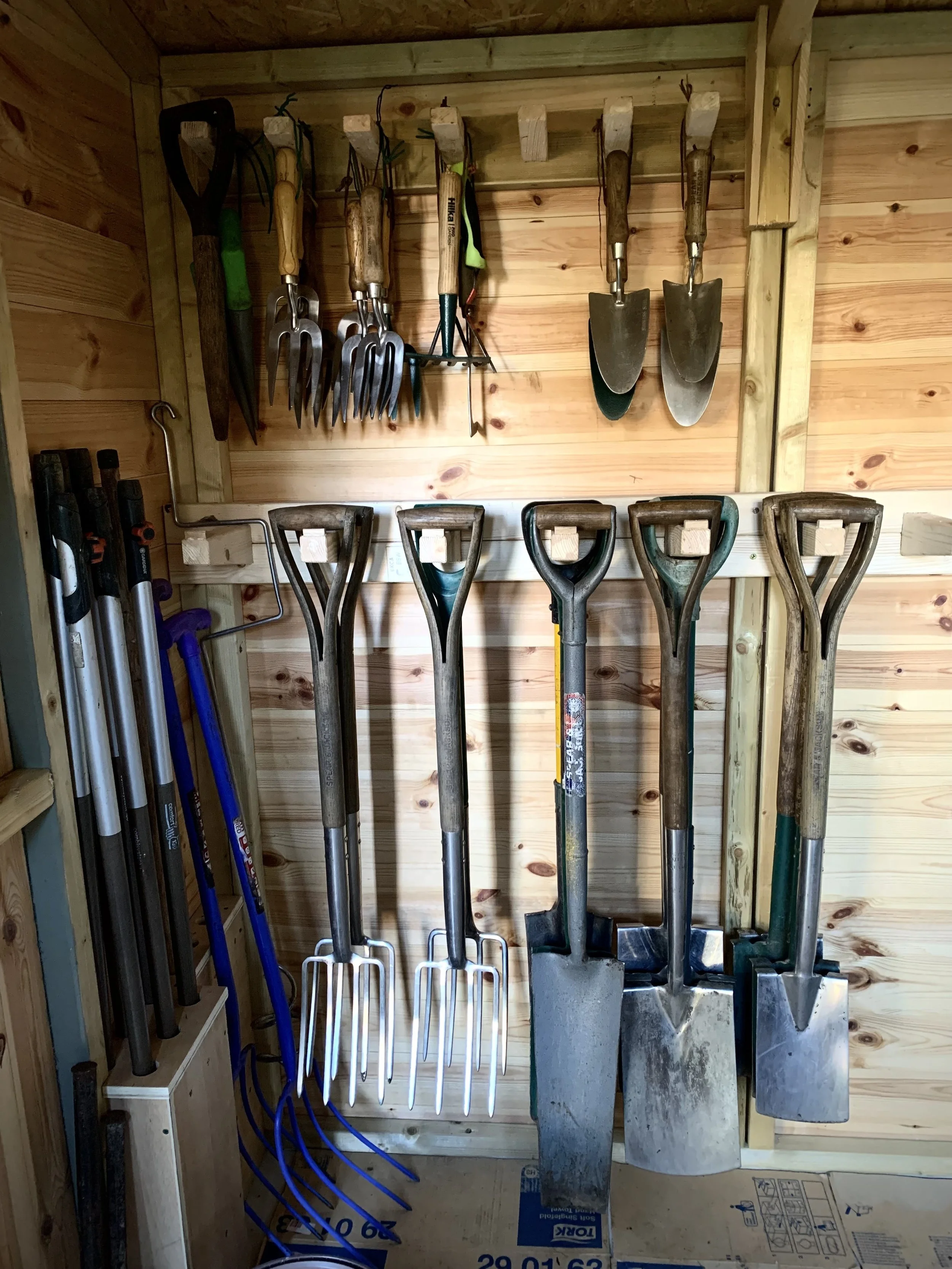
Image © Sara Lloyd
It's been another successful, fulfilling and encouraging year in the garden at Bell House.
Re-shaping
The pollinator bed planted late last spring is maturing really well. This was funded by a grant from the London Bee Keepers Association (LBKA). We have added plants and developed the new 'Pebble' bed, so the borders along the South wall are shaping up really well. We have planted new climbing roses around the roped terrace, an area which gets lovely late afternoon sun and have been gradually moving existing turf about to reshape the house lawn. The walled garden goes from strength to strength. Herbs particularly seem to thrive in our raised beds.
Native species
We have seen far more butterflies this year, hopefully because of our planting efforts, but definitely helped by the dry, warm early spring. Toads are in the compost again, plenty of newts in the wildlife pond and some plump tadpoles have survived our introduction into the dipping pond. We watched a Sparrowhawk nest and raise a fledgling in one of our oaks last summer. We are gradually seeing a wider range of native species in the meadow beds and the snakes head fritillaries were magnificent. In the Pickwick grassland we have lady's smock appearing.
Garden HQ and Tool Shed
The tool shed is now well stocked and in full use and we are meeting in the beautifully refurbished building, the garden pavilion (which we like to call our HQ! ) but will be used by all projects at Bell House. It’s situated next to the bees.
The polytunnel success
The polytunnel is being well used and we’ve had good early food crops. Bought in plug plants have been successfully grown on and mostly planted out in the garden. On our regular open days, visitor numbers have increased. It's lovely to see people relaxing, sipping coffee and enjoying the garden. Our plant sale offering is gradually improving and brings in welcome income to help with funding and increase the range we can stock.
Volunteers - our not so secret army
We have roughly 60 active volunteers, whose skill set has improved enormously. The social atmosphere is delightful and we can see there is a strong feeling of ownership developing. However, we have realised that as areas are improved, the maintenance effort has to go up enormously! So we would welcome more volunteers please. Landscaping the pottery entrance is the next big project. As well as improving the entrance, it will provide new, dry garden conditions, to broaden our range and habitats.
Our ethos remains the same. To do our best for wildlife, in terms of the variety and quality of habitat and food source we supply. We have added new habitat towers using the old pickwick fence posts and in many other areas. It's been a challenging dry spring and we could really do with some decent rain, but we do our best to give things the conditions they need to thrive, watering deeply when needed and mulching heavily.
Happy gardening all.
The Incidentals - an in-depth look at the exhibition
by Kim Thornton
Each year Bell House opens its doors for the Dulwich Festival Artists’ Open House and invites a team of curators to create a thought-provoking exhibition. The show is a survey of contemporary artists practising and exhibiting in London.
This year’s theme was The Incidentals. The curators, Kim Thornton, Lucy Soni, Min Angel, Sarah Sparkes, Jane Millar, Léonie Cronin, Monika Kita and Lucy Bainbridge approached this in a variety of conceptual ways such as whether any painting brush mark could ever be considered incidental or unimportant, through contemplating the incidental nature of materials or by searching for incidental every day subject matter. In total they invited over 70 artists whose works would contribute to the story each curator wanted to tell.
Bell House welcomed in the region of 2,000 visitors during the two May weekends of the exhibition, some local and some who had travelled to see the work of artists they knew or had discovered on social media. The exhibition was overall very well received.
But of course, everyone evaluates and perceives art differently depending on their own experiences, beliefs, feelings and views. As Whoopi Goldberg said, “Art and life are subjective”. However, it can be interesting to learn more about the thinking behind an artwork as a doorway to a different kind of viewing experience.
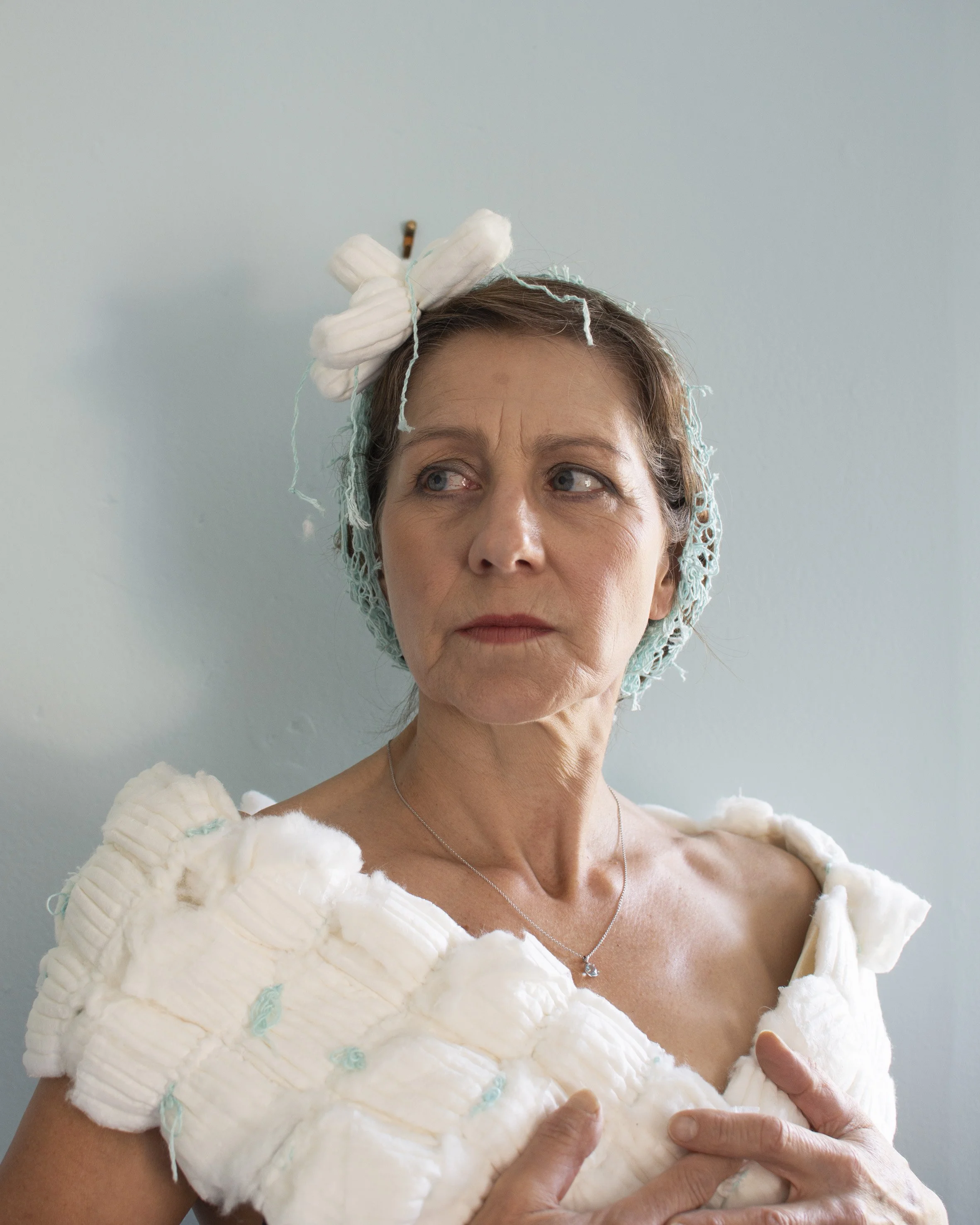
In the Wissman Room you may have come across a small, framed photograph of a woman wearing a stole with some kind of fascinator in her hair. On closer inspection the material that these objects are made of becomes apparent. They have been carefully fashioned from tampons, an everyday item used at some point by almost all women around the world, yet something discrete that is not usually made visible.
The work was born from a parliamentary debate in 2015 where the notion of female sanitary products falling within the government’s list of luxury items for tax purposes was discussed. The idea was to impose an additional 5% tax on these “non-essential, luxury” items.
The artist Kim Thornton, who uses humour and rebellion to explore contemporary issues and the politics of being female, decided to make a ‘luxury’ tampon stole and fascinator to comment on this ridiculous idea. The tampons are carefully stitched together with their blue strings pulled from them and knitted into the hairnet or used as tassels for the stole. The staging of the photograph was inspired by an image of Queen Elizabeth the Queen Mother and the framing references postage stamps where royal profiles are commonly placed.
Bringing Poetry to Bell House
by our featured Volunteer: Matthew Otor

A Little Background - Why Poetry?
I grew up always feeling like I had something to say. From as early as I can remember, I'd gather kids in my compound and just talk to them - there was this sense that something inside me was waiting for an outlet. I felt like I had a different opinion or perspective that needed to be shared.
Initially, I thought politics might be my path. I was drawn to how members of parliament could make their words carry such weight and meaning. However, when I stumbled upon spoken word poetry on YouTube, I just knew this was what I'd been searching for. It's been a life-altering journey ever since.
Discovering Bell House
I was new in town and actively looking for poetry communities when I found Wendy and Robert's Fringe event on Eventbrite. I thought it would be perfect for me, though I didn't realize the audience for that event was quite mature - everyone was surprised to see me there!
Despite the initial surprise, I had such an amazing time. Right after the event, I had a chat with Angus where I mentioned that I used to host poetry events back in Lagos. He immediately asked me to explore the idea of hosting one at Bell House. And that's how "Poets at Bell House" was born.
The Vision Behind Poets at Bell House
When we started planning, the thinking was simple but ambitious: create a space where poetry could flourish authentically. We wanted to build something that honored both the art form and the community that surrounds it.
Ambitions
We're hoping Poets at Bell House becomes a household poetry event in London - a place where experienced and emerging poets alike can share the same stage and tell their stories unapologetically. Our vision is to create a safe space where poets can express themselves with complete freedom.
We're also focused on increasing our production value and creating much better content that truly befits the amazing poets we host. The dream is to grow into more frequent editions, building a stronger, more vibrant poetry community.
A Personal Favourite
One of my favourite poems I've written is titled "SCUM" - Society Cannot Understand Me. In it, I tell two vivid stories of people in society we would typically consider as lowlife and useless, but I reveal their backstories - showing how they became the "monsters" we all see today.
Poetry allows us to look beyond the surface and find the humanity in everyone's story. That's what we're building at Bell House: a space where every story matters, every voice is heard, and every poem has the power to change someone's day.
Poets at Bell House continues to grow as a vital part of London's creative community, offering a platform for authentic expression and meaningful connection through the power of spoken word.
Bell House Spring 2025 Newsletter
The four seasons of 2024 have flashed by! We are so excited to bring you our Spring quarterly newsletter with four new Bell House articles which we really hope you enjoy reading.
“A home from home”. QA Quilts adding a colourful touch to the Ronald McDonald House in Camberwell
by Janis Fuller and Marianne ten Kate - QA founders
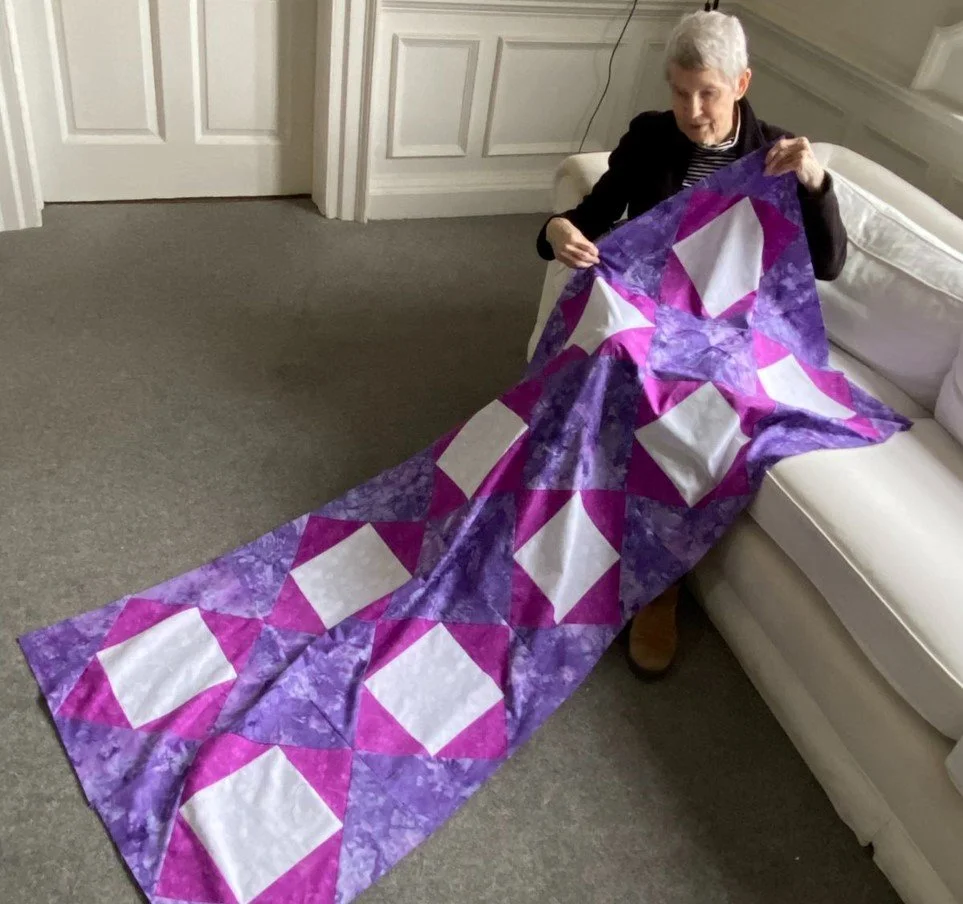
Photo credit: Marianne ten Kate
The Quilt Academy - QA for short - has been making quilts for Project Linus* for children and babies in King’s College Hospital since we began in 2018. Angus was keen for practical skills to be part of the Bell House mix, so in 2017 he contacted Dulwich Quilters. Janis and Marianne, who run QA, are both members of Dulwich Quilters and took on the challenge of sharing their passion for all things quilting in weekly drop-in sessions at Bell House. Charity quilts are a staple of quilters far and wide, so the makers are encouraged to make one and then they are hooked!
These colourful and cuddly textiles came to the attention of Ronald McDonald House** staff who also work with King’s to support the families of those children. Families who live far from King’s can stay nearby in the RMH residential home in Camberwell.
It’s a newly refurbished building with 24 bedrooms, each with twin beds which can be used separately or joined, in now gleaming wonderful hotel-like rooms.
And therein lay the problem.
The rooms needed something special to make them feel like a “home away from home”. Both family and young patients benefit so much from the daily, often day-long ward visits. Afterwards, the families are able to return to the RMH and make a meal, meet with other siblings and parents and rest ready for the next day.
RMH staff asked Project Linus if each room could have a pair of quilts to make the beds look inviting and cosy. It would be an ideal way to make the haven they create at RMH to feel like home too.
If there’s one thing we know about at QA, it’s making quilts and we love a challenge. It takes a lot of time and effort to make a beautiful and hard wearing quilt — one that can be washed and loved for years.
Each month, the QA stitchers learn a new block of just the right size to make a beautiful quilt top. Quilt blocks are made of pieces of fabric, known as patches, sewn together often in complex patterns. Quilt tops are variously made from repeating blocks set together, or a design appliquéd onto patches, or plain patches set together — as long as the geometry works and the maker is happy with the result. The photo above is of Gill, a QA regular, with a partially completed Economy Block quilt top to one of our RMH quilts.
We learned during the Covid-19 pandemic that to get a big job done, we need to involve other quilt groups. Dulwich Quilters, Half Moon Stitchers and Shirley Quilters are going to pitch in, but QA is best placed to make many of the quilts as we have benefited so much from the generous fabric donations we receive and the ability for us to store them (and our purchased supplies) at Bell House.
Each quilt requires approximately 10 yards of fabric — just over 9 metres — and 2.5 metres of wadding (the stuff in the middle). We can supply most, but not all the fabric from our ‘stash’ of fabric, but the wadding has to be purchased and we will need a lot of it. So we rely on sales at Bell House events and the generosity of our quilters and friends.
We’re happy to be part of this wonderful project and would welcome any support to get our beautiful quilts into Ronald McDonald House as soon as possible — and there is ALWAYS another beautiful block or technique we need and want to share.
*Project Linus
No “Rough Sleeping” for the Bell House Honey Bees
by Annie McGeoch, Bell House Beekeeper
The bees have been surviving winter for the last 35 million years. All the 60 kinds of bees in London have ways of coping with the cold and damp. But the difference with honey bees is that we as humans help them, or try to. They are still wild creatures and can leave at any time but humans have offered them cavities that they can live in. They still respond to the seasons and weather and changes in them. The connection to seasons and change is part of the pleasure of keeping bees.
In the wild they would have a nest in a hollow tree at least 20 feet above ground. Humans have been working with the bees taking their winter stores for at least 8000 years. There is a drawing carved on a cave wall in Spain showing humans taking honey.
At Bell House we try and mimic the insulation of thick tree walls so the bees can stay in a warm almost closed cavity and control the heat and scent environment they live in. Communication in a totally dark warm cavity is by scent that the queen produces and is passed from bee to bee and fills the cavity. By insulating and providing thick walls in the hive, the bees can keep the colony in a cluster.
The colony consists of one queen, some drones (males only during the summer) and thousands of female worker bees. Each summer female worker only lives about 6 weeks. In the autumn the summer worker bees die away and winter bees are bred that live 6 months until the spring. We always talk about worker bees but there are really two kinds of worker bee.
The bees use propolis, an antibacterial mixture of pine tree resin and beeswax to seal the drafts and control the ventilation and use honey stores around them in the nest as another layer of insulation. The bees cluster round the queen and slowly work inwards to care for her then work their way back to the outside of the cluster.
On a warmer day in winter with sunshine the outer bees will go out of the box to defecate and may even collect supplies of pollen or nectar if the snowdrops or crocus have flowered. Once the days begin to lengthen the queen will start laying and the larvae will need protein to grow. Mostly we hope the cluster moves over the food stores and the honey bees eat their own supplies . At Bell House I always leave at least 30 pounds of honey for the bees to use over winter.
It is not clear why bees make so much more honey than they can possibly eat over the winter, maybe after centuries of human interference they have evolved to make more than they need.
There are a series of evenings booked into the garden and apiary during the 2025 season. We will look at the planting for all invertebrates in the beautiful garden and then don bee suits and look inside a beehive.
What connects a 10ft tall Paper Sculpture of a Polar Bear and Bell House? Read on…….!
Mike Coates Interviewed by Sally Graham
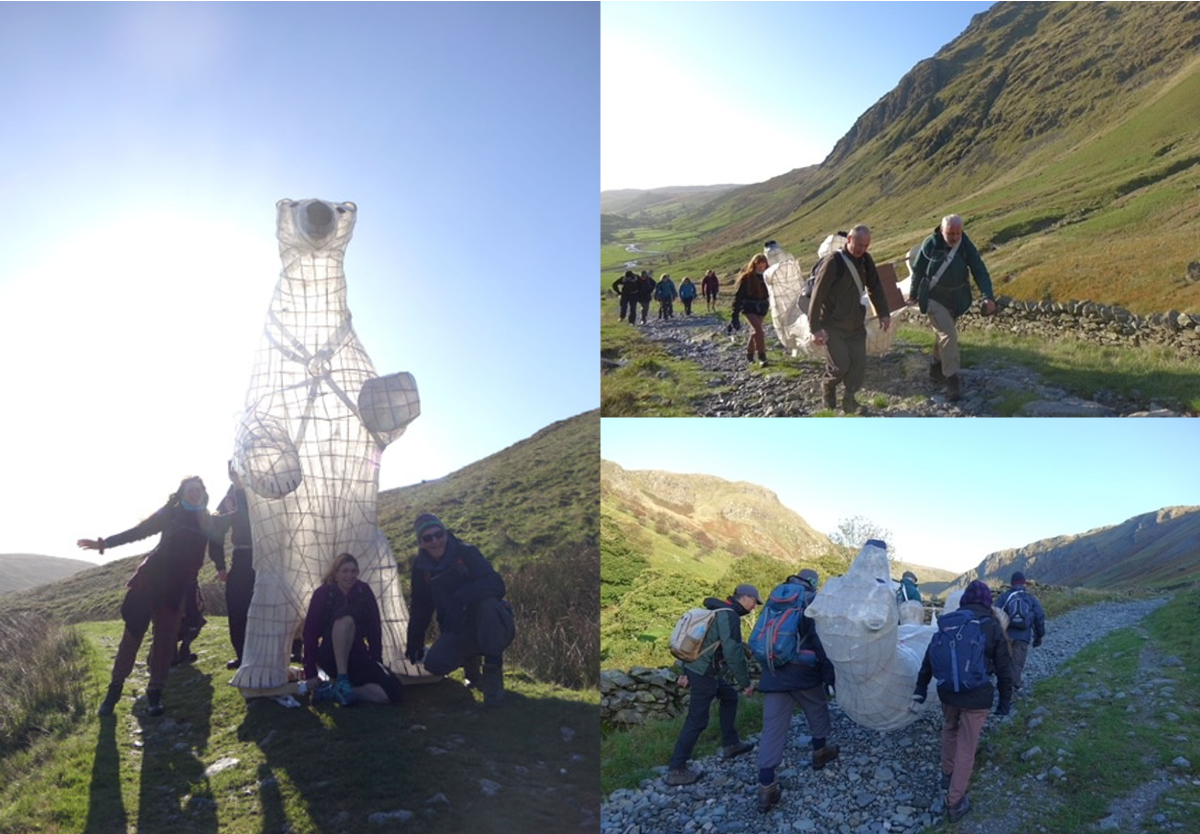
Photo credit: John Jessel
There are so many wonderful volunteers running Bell House - our unsung heroes as we call them.
We start with an interview with Mike Coates - a previous house Guardian and now an indispensable employee and volunteer.
How and when did you discover Bell House?
Mike and his family had lived in East Dulwich for 30 years and had driven though the village many a time and even had a coffee or two in the Dulwich Picture Gallery café - but they’d never noticed Bell House - after all, it looked like “just another huge village property”.
It would take something quite remarkable for Mike to discover Bell House.
How did you first become involved with Bell House?
Mike had informally met Suzanne Jessel - Bell House Dyslexia extraordinaire - and one day in October 2021 she told him about her plans for a weekend in the Lake District. She, and her husband John (the photographer), were helping a Quaker artist to transport a 10ft tall bamboo and tissue paper sculpture of a Polar Bear. The bear was being ’walked’ from Shropshire to the COP26 conference in Glasgow as a protest about climate change. (BTW - the number of the COP doesn’t match the year.) By coincidence Mike was going to be walking in the Lake District that same weekend and he asked if he could help out.
During their walk Mike and Suzanne had a chance to really chat. To cut a long story short, Mike and his wife Sarah were looking for somewhere to live and Suzanne said “Perfect. We’re looking for Guardians for Bell House - would you be interested?".
What are your strongest memories of the time you and your wife lived at the house?
When Mike met Angus and Fabienne he found they had so much in common - most importantly a keenness to “build community”. After many years of teaching Mike had moved to London to take a course in community building - this was exactly the plan for Bell House.
Mike’s strongest memory of his time in Bell House?
Being inspired by Angus and Fabienne’s vision for Bell House.
What is your involvement now you are a volunteer?
Mike is employed on Thursdays and then volunteers on Saturdays. His nickname is “Man Thursday” - but that doesn't say it all.
You’re known as ‘Mike can sort/fix anything”. Have you ever got ‘stumped’ when you’ve been asked to help out with something?
To quote Mike: “If I’m stumped, I’m probably not the right person to be performing the task. I’ve finally learnt that not everything is my responsibility!”
But normally he knows who should be asked. As he says: “I may not be able to solve the problem myself but it does mean I no longer have to worry about it.”
Apparently Angus’s nickname for Mike is ”Henry Kissinger, known as the peacemaker.” No surprises there!
If you were asked to become the ‘Bell House Cryer’ what would you shout out through the streets of Dulwich?
Mike said he would refuse to be the cryer. He has never wanted to be a ‘front man”.
However he does applaud the vision of Bell House. To finish with Mike’s thoughts: “This ties in with my values - it’s all about the community - about development and cohesion.”
A big thank you to Mike.
The Bell House Exhibitions Team - serving the local artist and community
by Anna-Maria Amato, Leader of the Exhibitions Team
The exhibitions team came about in response to the many requests Bell House received from artists and the community to hold exhibitions.
As a result there was a call out for people to do just that - to organise exhibitions in the house, outside and in addition to the annual Artists’ Open House which takes place in May. The aim is to utilise the space by creating shows which ‘enrich visitors' curiosity and in turn, their relationship to the house and their lives outside Bell House.
Anna-Maria was asked to lead this team. “I selected the team members based on their enthusiasm and reliability, and appreciated that different people will have different contributions to offer. I am excited by our valuable group members and the unique team we have."
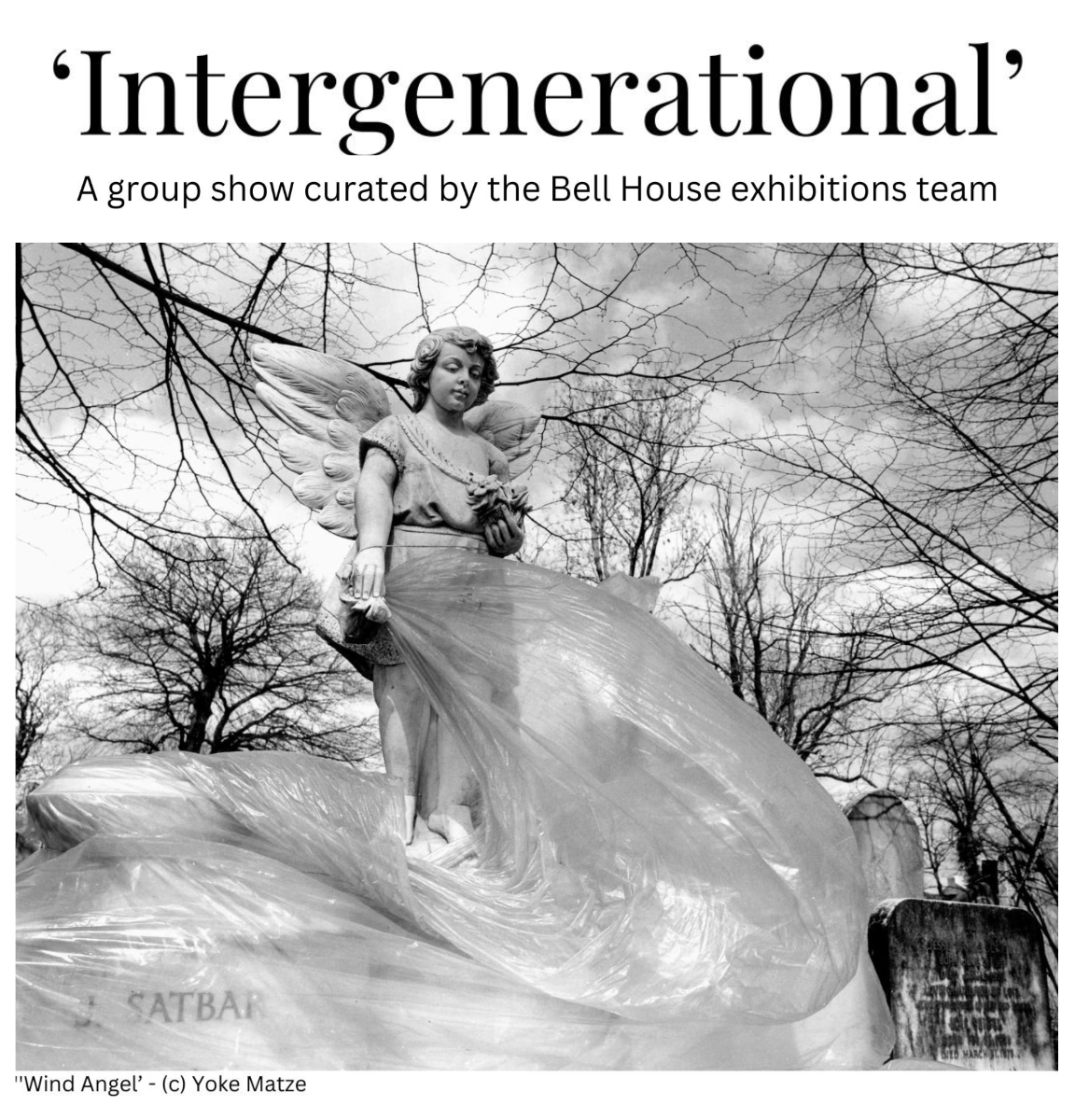
The first exhibition the team will open is titled ‘Intergenerational’. We were initially inspired to work with this theme, in response to the recent Dulwich Picture Gallery exhibition ‘Yoshinda: Three Generations of Japanese Printmaking’, which displayed journeys through the generations within a family of printmakers.
We used this as a springboard to investigate art which covers generations, explores generations and describes generations. In addition we have designed a workshop which will bring visitors into practically exploring the theme with us. There will be a list of briefs - fun and thoughtful, plus guided activities if you wish, and a chance to make a zine or family portrait telling your story of intergenerations.
The artists we invited we felt explored the theme from many facets and therefore we believe will make a varied and interesting show. The artists explore family connections, the cycle of life, memories, heritage, shared histories. The art work will reflect how the past informs our understanding of life and creativity.
The artists are varied in their styles, materials and concepts, from Jo Lewis, who creates with ink and watercolour, exploring movement, natural processes and stasis to Helen Barff’s work which is concerned with memory, explored through playing with the perceived physicality of textiles.
‘Intergenerational’ promises an interesting and exciting show. It’s free and no booking required, so do visit - it’s running next weekend!
Bell House Winter 2024 Newsletter
In the 2024 Winter edition, you’ll find a selection of recent news and updates from Bell House, which we hope you will enjoy!
“Never throw anything out without asking …” Restoring a treasured house and finding treasure.
by Angus Hanton, Building Volunteer
For the last few years Bell House Dulwich has spent any surplus funds on the restoration and development of its buildings and grounds. On day one, in September 2016, we found a sword of a type made by George Widdowson a metal craftsman who owned the house in the mid-19th century. Since then we have had many finds, both inside and out, guided by the words of Sharon O’Connor, the Bell House historian, who told us, “never throw out old stuff, even scraps of paper, without showing me first.”
While building the pottery studio and the room for the ground source heat pump we came across a perfectly intact skeleton of a pigeon which must have been over 50 years old, and digging in the garden revealed coins, bottles and a Victorian jar for hair gel. These finds inspired us to set up a small museum cupboard as well as the “Cabinet of Curiosities” in the rack that had been for the boys’ shoes and boots, when the building was a junior school boarding house.
Bell House is Grade II* listed so general maintenance and minor repairs do not need permission. Even so, we often ask for advice from Southwark and the Historic Houses Association when deciding which materials and fixings to use. For the brickwork we employ a lime mortar specialist, Matthew Wilson, who recently rebuilt the two largest chimneys making then vertical and shorter. He also brought along a few apprentices, who are learning preservation techniques.
Some of our recent restoration works have been functional such as Jarek’s rehabilitation of the basement so that it can be used for courses on the Albion Press, letterpress printing, and bookbinding. All works prompt detective work to find out how the rooms were used previously - in the cellar there is some Pink Floyd graffiti from the boys in the 1970s who used the cellar as their games den.
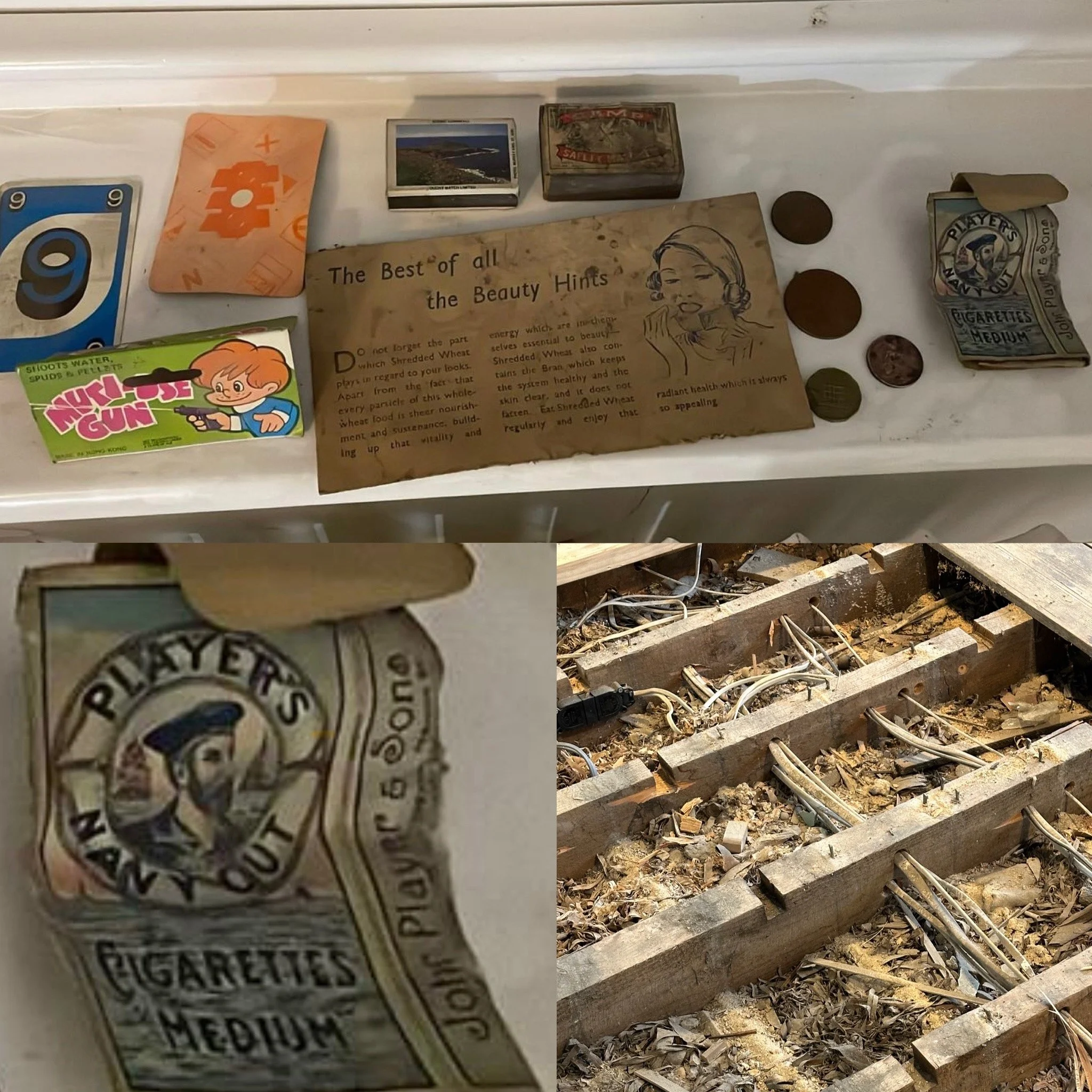
This winter Jarek and Merlin - who have been working on the house since the beginning (2016, not 1767) - took up dozens of floorboards in the Victorian extension on the North side so that we could clear the spaces between the joists and insulate for sound and heat. There was literally a skip-full of rubble and wood shavings to clear but amongst it we found lots of historical artefacts from the time when these rooms were used as dormitories: UNO cards, handwritten notes, and a set-square. There is an advert for shredded wheat entitled, “Best of all the beauty hints’, and packaging from a ‘Multi-Use gun” for firing bits of potatoes. A dozen or so old cigarette packets and old matchboxes had also been discarded, probably by the builders who put in the heating in 1946/7 or those who did the rewiring in the 1970s. Show-me-first Sharon supplied some of these photos.
The Bell House Dyslexia Team announce their exciting ‘big’ plans for 2025
by Lydia Baldwin and the Dyslexia team
The Dyslexia Fair at the end of September was buzzing with the usual energy and positivity, as we welcomed nearly 400 visitors in glorious sunshine. This year’s programme explicitly reflected the rapidly growing recognition that Dyslexia often sits alongside other Specific Learning Difficulties such as ADHD, Dyspraxia, Dyscalculia and ASD. Being aware of this likely ‘cooccurrence’ is one of the challenges – and opportunities - for parents and carers, specialists, educators and students.
After the fair, the Dyslexia team, which has expanded in the past year, held a strategy session to reflect on the fair and consider how our increased capacity may be put to best use in the coming year. We have agreed that our priority in 2025 is to expand Bell House’s reach within the local community, finding practical ways to bring local families and students to Bell House for advice, support and connection.
In the immediate term, the dyslexia team is offering coffee mornings at local schools where a specialist will talk to parents about dyslexia and how they can support their children. One recent coffee morning was very well attended, and we have two more in the works.
We are continually looking for ways to bring local children, students and families to Bell House, building on the parenting workshops and touch-typing courses that will continue in 2025. The Fair’s Advice Clinics were as popular as ever, with the available slots booked out very quickly. So thanks to the expansion of the team, we will offer these on a monthly basis from January, with slots bookable in advance via the website. We will also be applying for funding to establish a bursary-based after school offer for children with dyslexia and literacy difficulties.
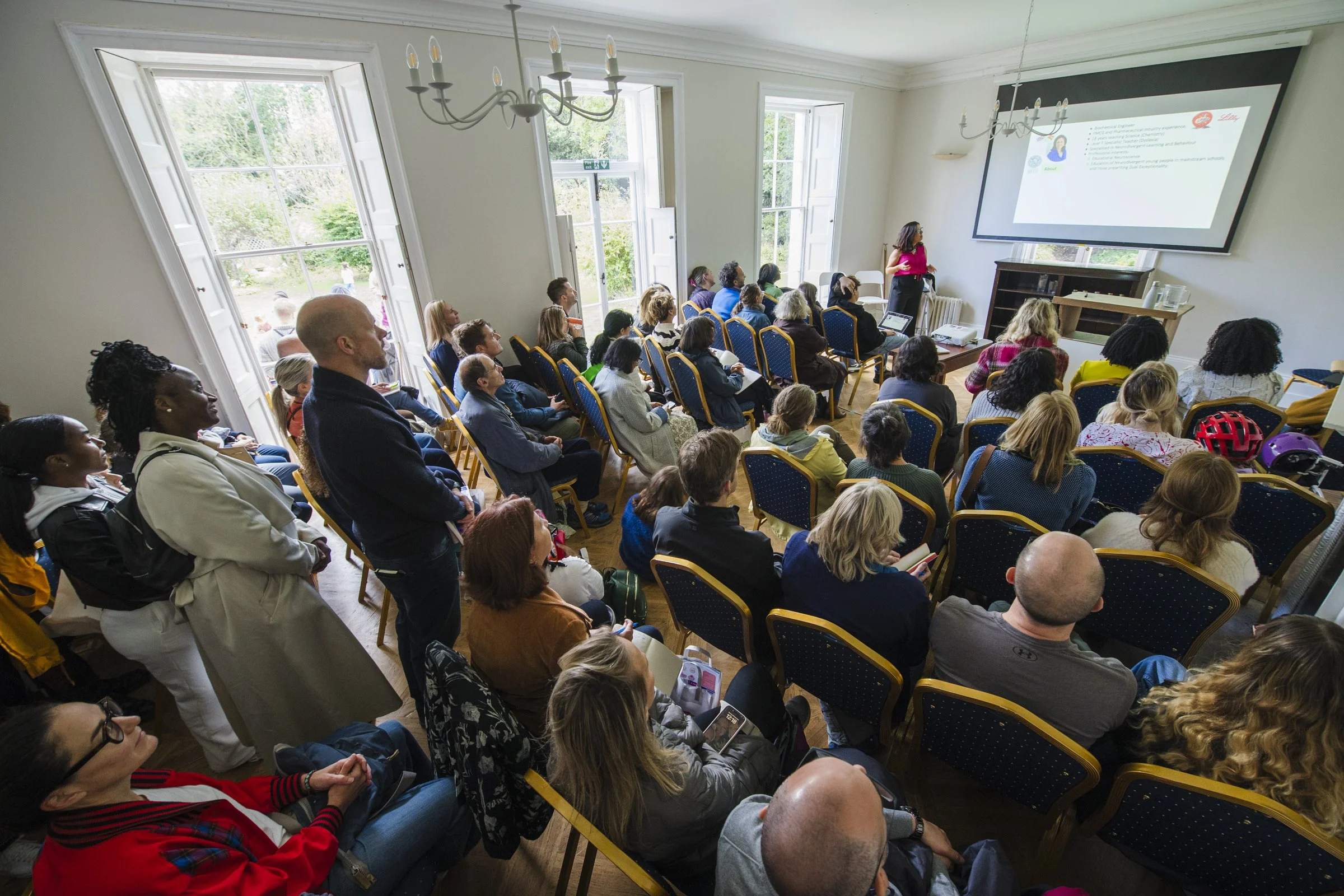
We had fantastic feedback about many of the speakers, some of whose talks were so popular that there was standing room only! (See photo above) We will be kicking off the 2025 Talks programme by inviting our 2024 Fair speakers to host an online talk, offering an opportunity for others who were not able to attend on the day. The ongoing programme will continue to look at the frequent ‘cooccurrence’ of dyslexia alongside other Specific Learning Difficulties and prioritise practical, cost-effective tips and strategies which parents and individuals can put into place. Finally, we will be increasing the number of screenings and assessments that Bell House can offer, thanks to the expansion of the team.
We would again like to thank everyone who attended the Fair and who provided such valuable feedback. We are excited about the year ahead and about welcoming even more people into the Bell House community to get support, advice and connection around dyslexia and other neurodivergent needs.
Great Excitement for the very first Bell House Writing Festival April 2025
by Raul Peschiera, Bell House Writing Team
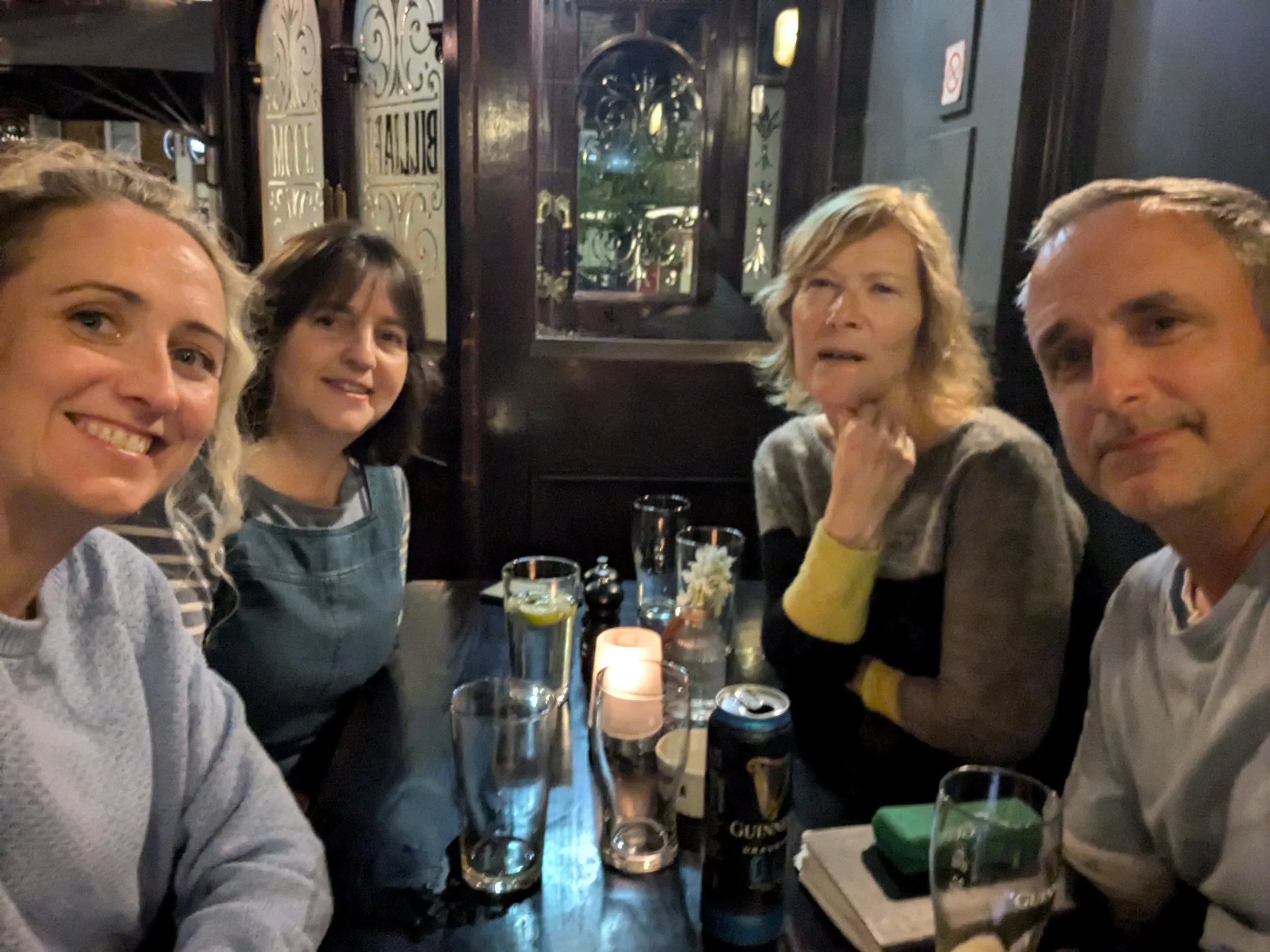
A highlight of the Bell House creative writing programme is its commitment to building a vibrant community. (See photo above.) Writers of all levels are invited to share their work, discuss challenges, and connect with others who are equally passionate about storytelling. On 26 April 2025, Bell House will host its first one-day Creative Writing Festival, celebrating fiction, poetry, and prose, with panel discussions, open mic sessions, workshops, and more.
Bell House’s creative writing programme is not only a place to develop technical skills but also a nurturing space where creativity flourishes. With courses led by experienced writers and instructors, Bell House is the ideal setting for anyone looking to start their writing journey or advance their existing craft, right in the heart of Dulwich.
For beginners, Bell House provides foundational courses that introduce essential writing techniques, including character development, plot structuring, suspense, narrative style, and the basics of poetry. These sessions are perfect for those looking to explore creative writing for the first time, rekindle a dormant passion, or complete a cherished work in progress. Classes include writing exercises, group discussions, and gentle feedback, allowing new writers to feel encouraged as they navigate the creative process.
Experienced writers can delve into advanced workshops focusing on areas like dialogue, scene-building, descriptive prose, and manuscript polishing. These courses include specialised sessions on honing voice and style, helping writers refine their craft and deepen their storytelling abilities. Peer review and instructor feedback play a key role in these classes, enabling participants to gain fresh insights and discover new ways to enhance their writing. Participants from the storytelling course have now set up their own autonomous writers’ group, meeting once a month.
Bell House also offers focused poetry writing workshops, catering to both new poets and those looking to expand their poetic skills. These workshops explore elements such as rhythm, imagery, and structure, encouraging writers to experiment with poetic forms and discover their unique approach to poetry. Whether participants wish to craft free-verse or try their hand at more poetic forms, such as sonnets and ballads, each session provides a space for creative exploration and self-expression.
The creative writing programme at Bell House offers workshops designed to inspire, challenge, and support writers at all stages of their journey. Set in the welcoming, historic Bell House, our courses foster creativity in a supportive and collaborative environment. Each session is crafted to help participants expand their skills, build confidence, and unlock their unique voice.
Join us to find your voice, explore new genres, and connect with a welcoming community of writers.
“Have you read the one about the “Parable of the Vinegar?”
by Sharon O’Connor, Bell House Historian
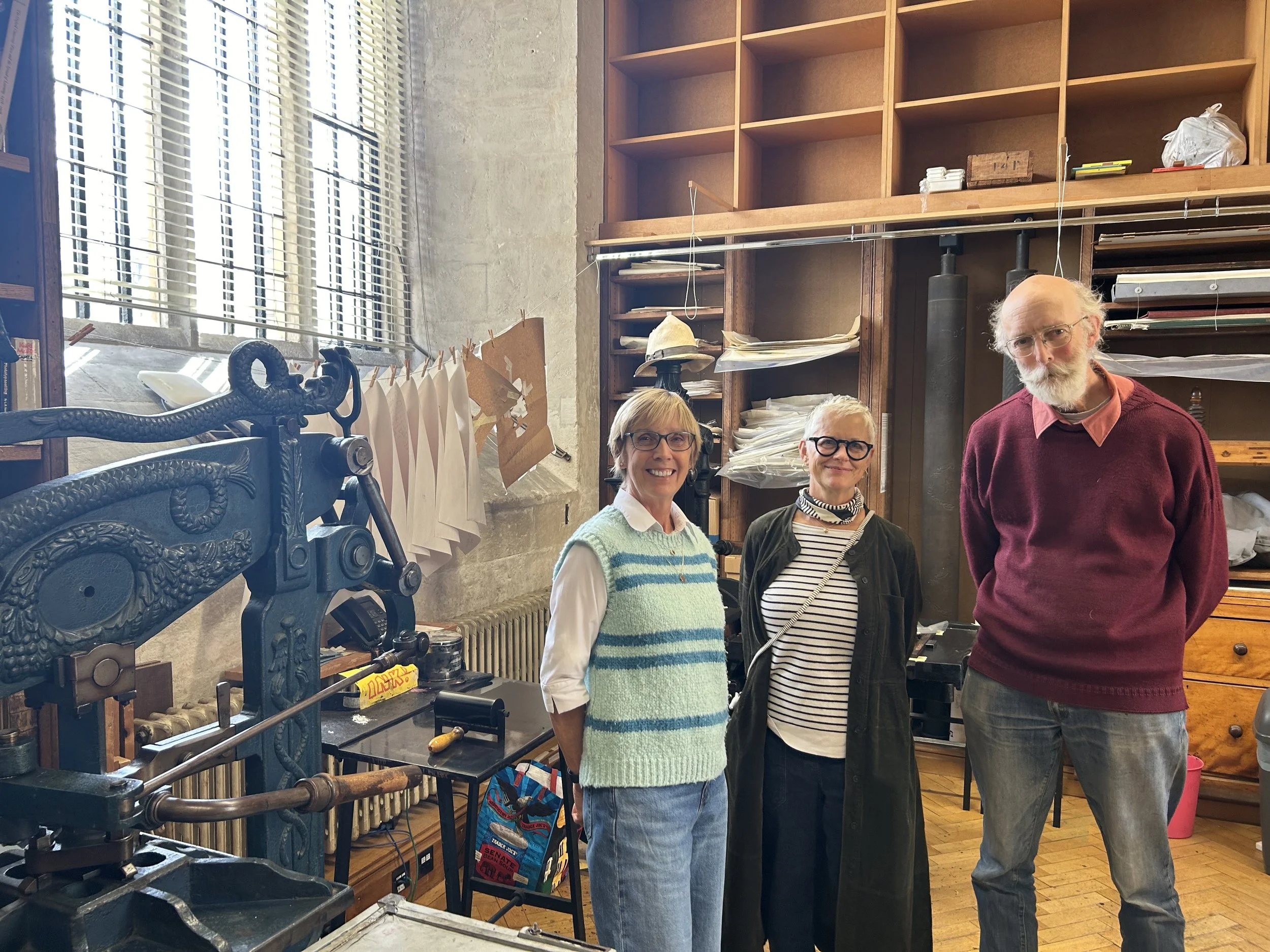
Bell House volunteers Tania and Sharon recently visited Oxford to follow in Thomas Wright’s footsteps, to see where he made the fortune that built Bell House and meet with university staff. Above is a photo of them with Richard Lawrence, Superintendent of The Bibliographical Press at the Bodleian Library, Oxford University - (as Sharon says: “They do like fancy titles!”)
Thomas Wright made his fortune from paper and books. That makes it all the more fitting that we now have a letterpress studio and a book bindery at Bell House. And what is extraordinary is that during their visit, Tania and Sharon were able to give the Oxford University Press staff new details about Thomas Wright’s printing techniques!
In 1765 his firm, Wright & Gill, won the contract to print religious books for Oxford University, when Oxford dismissed the previous contractors for printing books riddled with errors. One book was mocked as the ‘vinegar bible’, because the parable of the vineyard was printed as the parable of the vinegar.
Thomas Wright’s books were popular and within two years of winning the contract he had earnt enough to build Bell House.
Wright & Gill printed in the Clarendon Building which still stands opposite the Bodleian Library and there were ‘large and elegant’ apartments for entertaining university VIPs. Their bible became the standard Oxford text. It has a modern style with simplified spelling, fewer capital letters. The more important books within the bible begin on the right-hand page, resulting in extra white space - unusual for the time - given paper was expensive but making for a more visually pleasing and easier to navigate book.
During their visit to Oxford, Tania and Sharon spent time in the historic print workshop, now housed in the Schola Musicae, tucked away in the Bodleian Old Library quadrangle. The room has the original 17th century stands that Thomas Wright’s workers used, with their upper case for storing capital letters and their lower case for small letters and punctuation. Like Simon and Tania in our print room, the Oxford printers use innovative materials to print, even toy bricks! Tania talked about print activities for schoolchildren and swapped useful tips.
Tania and Sharon also visited the Oxford University Press and handled the extremely rare 17th century “Fell types” and usually kept securely locked away! (“Fell Types” is a collection of typographic materials assembled for The Oxford University Press by Dr John Fell, Bishop of Oxford, educator, author, editor and typographer.)
Our volunteers saw Oxford’s almanacs, like the ones Thomas Wright made in London. (Oxford University Press had a monopoly on publishing the annual almanacs for Oxford University from 1674 through to 2019.)
Our printers are now planning even more workshops and events for Bell House so look out for those as they get booked up very quickly.