
How did American artist James McNeill Whistler (1834-1903) change the direction of modern art?
Focusing on a small selection of works in Tate Britain’s exhibition – some of which are rarely, if ever seen in public – we will experience 19th-century London and Paris seen through Whistler’s unique and innovative lens. Our exploration will reveal how Whistler’s ethereal and evocative representations are amongst the most modern and affecting of his time.
James McNeill Whistler | Tate Britain (Until 27 September 2026)
About the Speaker
Jo Rhymer has taught and programmed for numerous prestigious museum and gallery learning departments and was formerly Head of Adult Learning programmes at the National Gallery. She is a freelance lecturer and teaches regularly for a range of public and private institutions including the V&A and the Wallace Collection; she is a Panel Tutor for Professional and Continuing Education at the University of Cambridge and is an accredited lecturer for The Arts Society. Her art history specialisms are 19th- and early 20th-century French art, and she is interested in the skills associated with looking slowly at paintings.
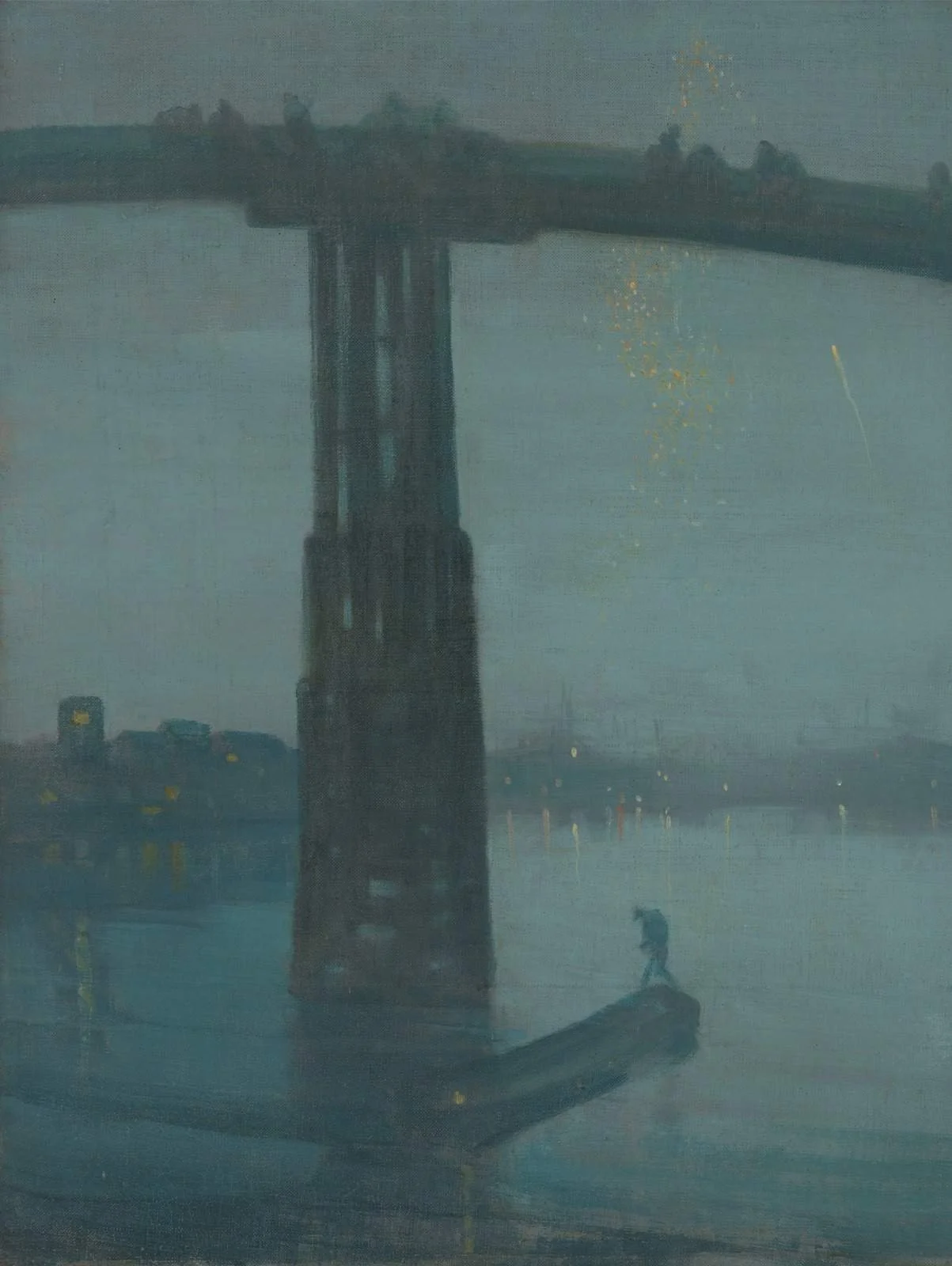
James McNeill Whistler, Nocturne: Blue and Gold - Old Battersea Bridge c.1872–5. Tate.